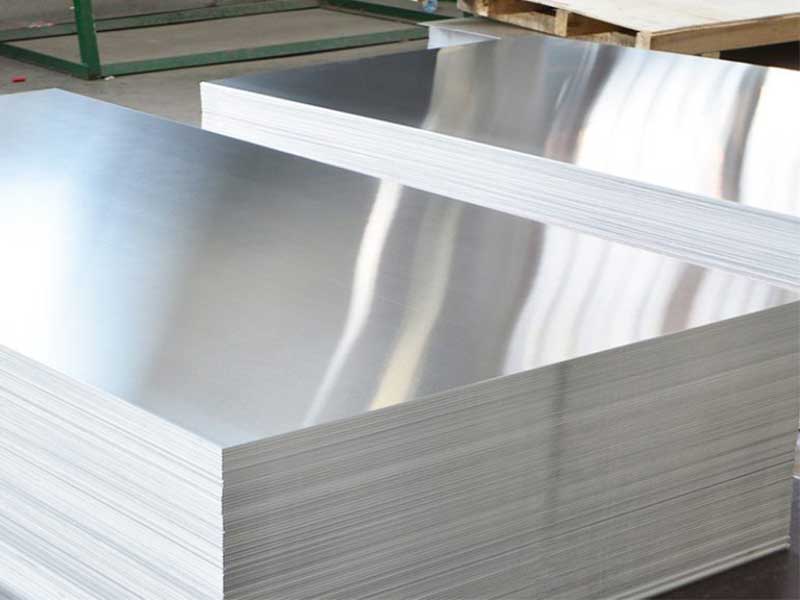
0.3mm thick sublimation blanks aluminum sheet
0.3mm Sublimation Blanks Aluminum Sheet: Where "Thin" Becomes a Technical Advantage
In dye-sublimation printing, the blank isn't just a substrate. It's a thermal tool. A 0.3mm thick sublimation blanks aluminum sheet sits in a sweet spot where heat moves quickly, the panel stays light, and the surface can be engineered for brilliant color transfer. Seen from a manufacturing perspective, 0.3mm is not "just a thickness"-it's a controllable heat-response layer that influences dwell time, color density, edge stability, and even how consistently an operator can run a press all day without chasing defects.
Why 0.3mm Matters in Sublimation: The Sheet as a Heat Conductor
Sublimation relies on temperature, pressure, and time to drive dye into a polymer coating. Aluminum is a strong thermal conductor, and at 0.3mm thickness it behaves like a "fast-response heat plate" compared with thicker signage panels.
That has practical consequences:
Fast thermal equalization helps reduce the temperature gradient from the press platen to the outer edges, which can otherwise cause softer color on corners or "shadowing" around contact points. With proper coating and flatness, 0.3mm blanks can stabilize cycle-to-cycle color performance, especially in high-throughput giftware production.
Lower thermal mass can shorten warm-up behavior and improve process rhythm. Operators often find that thin blanks reach transfer temperature predictably, which is valuable when running mixed designs or short batches.
Less weight improves handling for small-format products such as photo panels, nameplates, tags, ornaments, bookmarks, and decorative inserts-especially when the finished item is adhesive-mounted or framed.
Of course, thin sheet also demands tighter control of flatness, burrs, and coating uniformity. The right alloy and temper combination helps solve that.
Recommended Alloys and Tempers for 0.3mm Sublimation Blanks Aluminum Sheet
The most common alloys for sublimation blanks are chosen for formability, surface quality, corrosion resistance, and stable behavior in thin gauges.
Typical alloy options for 0.3mm sublimation aluminum sheet:
AA1050 / AA1060 (commercially pure aluminum)
High purity brings excellent corrosion resistance and very good anodizing consistency. It's widely used when superior surface appearance is required, and it tends to be friendly to coating adhesion when pretreated correctly. Strength is lower, so packaging and handling must prevent edge damage and waviness.
AA3003 (Al-Mn alloy)
A workhorse alloy with better strength than 1xxx series and good formability. It is frequently selected when the blank must resist minor bending, handling deformation, or when the downstream process includes light stamping.
Temper conditions that fit sublimation blank production:
H14 / H24
A common balance of strength and formability. These tempers help keep the sheet flatter and less prone to "oil canning" while still being workable for cutting, corner rounding, and light forming.
O temper (annealed)
Used when extreme forming is needed. For flat sublimation panels, O temper can be too soft and more susceptible to handling distortion unless supported by process controls.
For many sublimation blank producers, AA1050-H14, AA1060-H14, or AA3003-H14 are practical mainstream choices in 0.3mm, depending on the desired stiffness and final product geometry.
Implementation Standards and Quality Controls That Actually Affect Sublimation
A sublimation blank is a layered product: aluminum sheet plus coating system. The metal must meet base standards, and then the surface must be prepared for coating.
Common implementation standards and references used in production and QA:
ASTM B209 / EN 485
These cover aluminum and aluminum-alloy sheet general requirements, including thickness tolerance, mechanical properties, and dimensional control.
EN 573 / ASTM chemical composition references
Used to validate alloy chemistry for 1xxx and 3xxx series.
Surface and coating-related checks often draw from:
ASTM D3359 (cross-hatch adhesion)
Frequently used to evaluate coating adhesion after pretreatment and curing.
ASTM B117 (salt spray)
Used when the blank is intended for humid environments, signage, or coastal shipping/storage conditions. The coating system and sealing performance often dominate results, but base alloy cleanliness and pretreatment strongly influence failure modes.
In practice, the "standard that matters most" for sublimation is not only the metal spec; it's the repeatability of surface energy, cleanliness, and coating thickness uniformity. Dye transfer is unforgiving when the coating cures unevenly or when residual rolling oil interferes with wetting.
Parameters for 0.3mm Sublimation Aluminum Sheet Blanks
A technical buyer usually cares less about the slogan and more about the stable numbers. The parameters below are typical targets that align well with sublimation blank production.
Core sheet parameters:
Thickness: 0.30 mm (typical tolerance can be tightened upon request for press consistency)
Temper: H14 / H24 commonly, O optional for special forming
Alloy: AA1050, AA1060, AA3003 most common
Width: commonly supplied as coil or sheet; blank sizes cut to customer formats
Flatness: controlled to minimize waviness and edge lift under heat
Surface: degreased, uniformly pretreated for coating adhesion
Coating system parameters (typical for sublimation blanks):
Coating type: polyester-based sublimation receiving layer
Coating thickness: commonly in the range of about 15–25 μm depending on supplier formulation and intended color density
Gloss: high gloss, satin, or matte; gloss affects perceived contrast and scratch visibility
Protective film: optional PE film to protect during cutting/handling; must be compatible with press heat and removal requirements
Process compatibility:
Cutting: guillotine shear, CNC, laser (depending on coating tolerance), punch
Edge requirement: low burr, rounded corners available; burr control is important at 0.3mm to prevent film tears and handling cuts
Packaging: interleaving or film protection recommended to avoid micro-scratches that show through glossy finishes
Alloy Chemistry: Chemical Composition Table (Typical)
Below are typical composition limits for common alloys used in sublimation blanks. Exact limits depend on the governing standard and supplier certification; mill test certificates should be used for acceptance.
Typical Chemical Composition (wt.%)
| Alloy | Si | Fe | Cu | Mn | Mg | Zn | Ti | Al |
|---|---|---|---|---|---|---|---|---|
| AA1050 | ≤0.25 | ≤0.40 | ≤0.05 | ≤0.05 | ≤0.05 | ≤0.05 | ≤0.03 | ≥99.50 |
| AA1060 | ≤0.25 | ≤0.35 | ≤0.05 | ≤0.03 | ≤0.03 | ≤0.05 | ≤0.03 | ≥99.60 |
| AA3003 | ≤0.60 | ≤0.70 | 0.05–0.20 | 1.0–1.5 | ≤0.05 | ≤0.10 | ≤0.15 | Remainder |
From a sublimation angle, purity and cleanliness influence coating aesthetics, while Mn in AA3003 raises strength and can improve handling robustness. The coating system still plays the leading role in image vibrancy, but stable substrate chemistry helps keep pretreatment consistent.
Tempering and Micro-Behavior: A Distinctive View on "Print Stability"
When a 0.3mm aluminum blank is heated in a press, the sheet is asked to do two things at once: conduct heat rapidly and remain flat under pressure. Temper affects this "print stability."
H14 / H24 tempers provide a firmer base that resists small dents and reduces the chance of edge ripples that can telegraph into the image as gloss variation. Softer tempers can be more forgiving in forming but may show handling marks more easily, which becomes visible under glossy coatings and strong light.
If your sublimation workflow targets photo-grade output, the temper decision can be treated like a print parameter: it changes how repeatable the surface stays through cutting, packaging, shipping, and press cycles.
What Buyers Should Ask For When Sourcing 0.3mm Sublimation Blanks Aluminum Sheet
A purchasing spec that improves yield typically includes:
Certified alloy and temper with mill test certificate
Defined thickness tolerance at 0.30mm to keep heating behavior consistent
Surface cleanliness controls, including rolling oil limits or cleaning method
Coating specification: type, thickness range, gloss level, cure condition
Adhesion and durability test requirements, such as cross-hatch adhesion and humidity resistance
Film protection, interleaving, and packaging that prevent abrasion and corner damage
The most expensive sublimation defect is often not a dramatic failure-it's subtle inconsistency: slight color shifts, gloss mottling, edge haze, or micro-scratches. These issues are prevented by controlling both the aluminum sheet base and the coating interface as a single system.
A 0.3mm thick sublimation blanks aluminum sheet performs best when it's engineered like a thermal canvas: fast, uniform heat flow; controlled stiffness; clean chemistry; and a coating-ready surface that invites dye into a stable polyester layer. When those elements are aligned with recognized sheet standards and coating test methods, the result is not merely a printable blank-it's a reliable production material that keeps color, gloss, and yield predictable at scale.
https://www.alusheets.com/a/03mm-thick-sublimation-blanks-aluminum-sheet.html