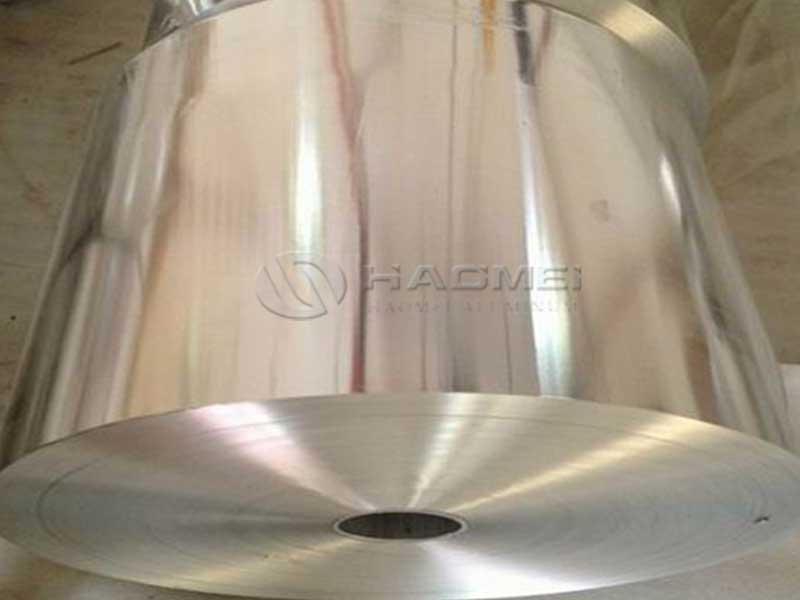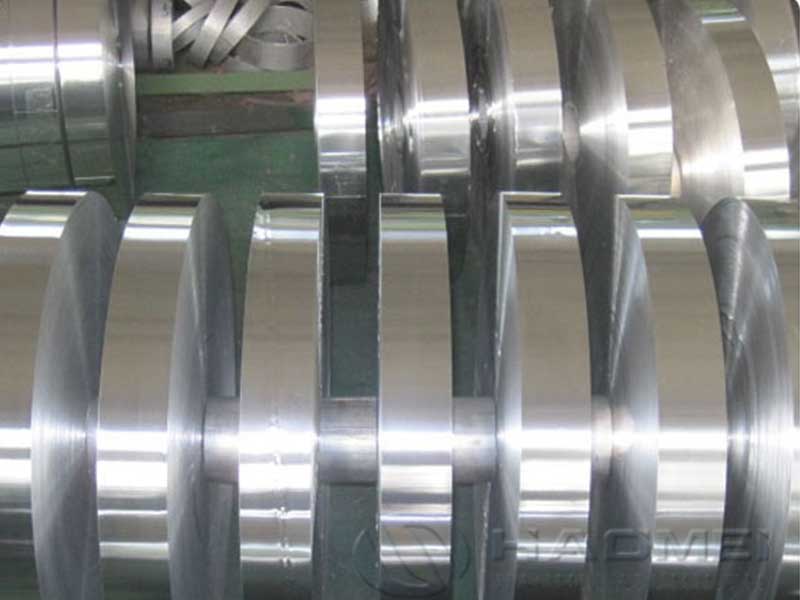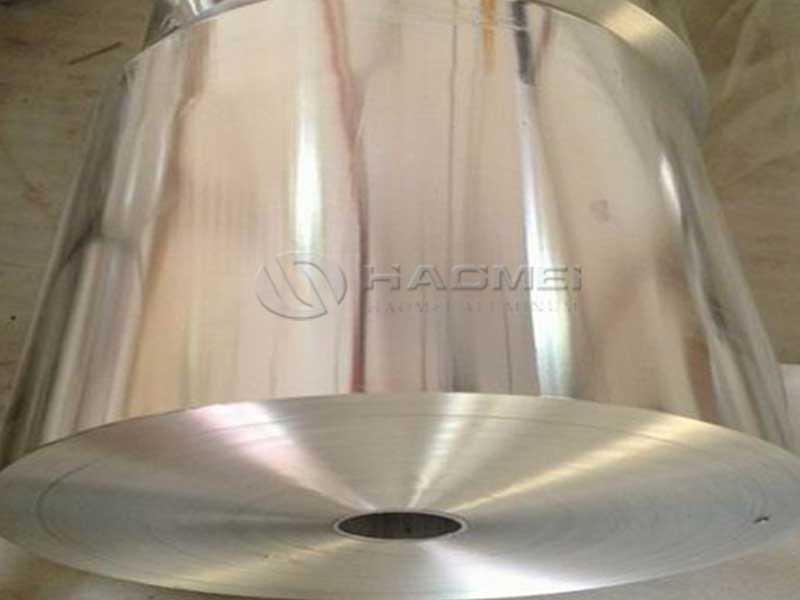
20 25mic Aluminium Foil For Medicine
In pharmaceutical packaging, "thin" is rarely a synonym for "simple." A 20–25 mic aluminium foil looks like an unassuming silver layer, yet it behaves more like a precision-made barrier instrument: it must block oxygen and moisture, tolerate heat-sealing, survive high-speed forming lines, resist pinholes, and remain chemically quiet beside sensitive active ingredients. From a distinctive viewpoint, this foil is best understood not as a standalone material, but as a calibrated "gatekeeper layer" whose job is to decide what the medicine is allowed to experience from the outside world.
Why the 20–25 mic range matters
In medicine, the barrier target is absolute. Many drugs have degradation pathways that are brutally efficient: moisture-driven hydrolysis, oxygen-driven oxidation, light-triggered photolysis, or aroma cross-contamination. Aluminium, when continuous and defect-free, is essentially impermeable to gases and water vapour. The practical challenge is maintaining that continuity while keeping the packaging economically and mechanically workable.
Foil at 20 mic and foil at 25 mic can serve similar barrier purposes, but their "processing personality" changes. Thinner gauges often improve formability and reduce material use, yet they become more sensitive to pinholing from inclusions, rough handling, or aggressive folding. Stepping up toward 25 mic increases puncture resistance and process robustness, which can matter in deep-draw blister forming, high line speeds, or packaging designs with tight radii and sharp folds. This thickness window is frequently chosen because it balances barrier certainty with converting performance and machine uptime.
Alloy and temper: the hidden levers behind performance
For pharmaceutical foil, alloy selection is typically driven by formability, pinhole resistance, and consistency. Common alloys include 8011, 8021, and 8079, with differences in iron/silicon balance and impurity control influencing ductility and surface quality.
Temper is equally decisive. Many medical foils are supplied in a soft temper, often described as O (annealed), to maximize elongation and minimize cracking during forming and converting. In blister lidding, the foil is not usually deep-drawn like cold-form blister; instead, it must seal cleanly and peel predictably. Soft temper helps the foil conform during sealing and reduces the tendency to create microcracks at creases. For some applications where stiffness and web handling are priorities, a slightly harder temper may be used, but pharmaceutical converters often default to annealed foil to protect barrier integrity under real-world abuse.
A practical technical profile of 20–25 mic medical foil
Think of the foil as a functional layer that must satisfy three domains simultaneously: barrier physics, converting mechanics, and regulatory chemistry.
Barrier physics is straightforward: intact aluminium foil provides near-zero transmission of water vapour and oxygen. In real packaging, the barrier outcome is governed by pinholes, scratches, and seal integrity rather than diffusion through the metal.
Converting mechanics depends on tensile strength, elongation, surface cleanliness, and flatness. The foil needs stable gauge across the width, low rolling defects, and controlled surface roughness so that coatings, primers, and heat-seal lacquers wet properly.
Regulatory chemistry is the "quiet requirement." Foil for medicine is expected to have low residual rolling oil, controlled heavy-metal content, and compatibility with inks and coatings used in drug packaging. The foil is typically used with protective coatings or laminated structures to ensure the drug product never contacts bare metal unless the package design intentionally permits it.
Typical chemical composition ranges (reference)
Below is a representative overview of commonly used pharmaceutical foil alloys. Actual limits depend on the applicable standard and the producer's specification.
| Alloy | Si (max/%) | Fe (max/%) | Cu (max/%) | Mn (max/%) | Mg (max/%) | Zn (max/%) | Ti (max/%) | Al |
|---|---|---|---|---|---|---|---|---|
| 8011 | 0.90 | 1.00 | 0.10 | 0.20 | 0.05 | 0.10 | 0.08 | Remainder |
| 8021 | 0.15 | 0.70 | 0.05 | 0.05 | 0.05 | 0.10 | 0.08 | Remainder |
| 8079 | 0.30 | 0.70 | 0.05 | 0.05 | 0.05 | 0.10 | 0.08 | Remainder |
In practice, 8021 and 8079 are often favored for demanding pharma foil because tighter impurity profiles and good ductility can reduce pinhole risk, especially at lower gauges.
Implementation standards and typical requirements
Medical foil sits at the intersection of material standards and pharmaceutical packaging controls. Commonly referenced material standards for aluminium foil include ASTM B479/B479M and EN 546 series for foil properties and tolerances, while the pharmaceutical side is governed by GMP expectations and pharmacopeial frameworks where applicable.
Converters and pharma buyers typically specify parameters such as:
- Thickness tolerance and gauge uniformity across the coil
- Pinhole limits, often tested by optical methods or electrical conductivity techniques
- Surface cleanliness, including limits on residual rolling oil and wetting tension targets for coating adhesion
- Mechanical properties appropriate for the process, usually with annealed temper for consistent sealing and reduced cracking
- Heat-seal performance requirements when lacquer-coated, including seal strength, hot tack behavior, and seal-through contamination resistance
- Coating grammage, curing quality, and migration-compliance expectations for lacquers and inks
This is where the "gatekeeper" concept becomes operational: the foil's job is not merely to exist, but to behave predictably in high-speed packaging lines and to create seals that stay intact through distribution, storage, and patient handling.
Features that matter in real pharmaceutical applications
Barrier dominance is the headline feature, but several quieter attributes determine whether 20–25 mic foil succeeds in medicine.
Pinhole resistance is critical because one microscopic defect can turn an "impermeable" layer into a vulnerability. Achieving low pinhole counts depends on melt quality, filtration, rolling practice, and careful handling in slitting and printing. Slightly thicker gauges often provide extra robustness against incidental damage during converting.
Seal reliability is another defining feature. Most pharmaceutical lidding foils are not bare aluminium; they are coated with heat-seal lacquers designed to bond to PVC, PVDC-coated films, PET, PP, or cold-form blister laminates. The lacquer must wet the foil properly, withstand sterilization or heat exposure when relevant, and deliver a peel profile aligned with patient use requirements. In child-resistant or senior-friendly designs, the foil-lacquer system becomes part of the usability engineering.
Printability and legibility matter because medicine packaging is a compliance interface. Batch codes, expiry dates, and dosing information must remain readable after abrasion, flexing, and environmental exposure. The foil surface and primer system influence ink anchorage and scuff resistance.
Chemical inertness is essential, even when the drug does not contact the metal directly. Volatile residues, coating monomers, or contaminants can create odor issues, interaction risks, or regulatory complications. Pharmaceutical foil supply chains emphasize controlled lubricants, effective degreasing/annealing, and documentation.
Applications: where 20–25 mic foil shows its strengths
Blister lidding is the classic application. A 20–25 mic foil, printed and lacquer-coated, seals to thermoformed blister cavities, creating unit-dose protection and tamper evidence. The foil's barrier and puncture resistance help preserve tablets and capsules against humidity and oxygen, especially for hygroscopic formulations.
Strip packs are another domain where thin foil becomes a structural participant. In strip packaging, the product is sealed between two webs, often including aluminium. Here, foil thickness influences tear behavior, seal integrity, and the ability to maintain a uniform seal across high-speed lanes.
Sachet and stick-pack laminates for powders and granules also use aluminium foil as the core barrier layer. In these structures, the foil is laminated with films that provide heat-sealability and toughness. The 20–25 mic range often gives a dependable barrier without making the laminate overly stiff or difficult to fold and crimp.
Medical device and diagnostic packaging can use foil in peelable lidding systems where sterility maintenance and peel consistency are paramount. While device packaging often leans on Tyvek and specialized films, aluminium foil laminates remain valuable where light and moisture exclusion are critical.
A distinctive viewpoint: treating foil as a "quality amplifier"
The most practical way to understand 20–25 mic aluminium foil for medicine is to see it as a quality amplifier. When the upstream alloy control, rolling practice, annealing, and surface preparation are excellent, the foil magnifies that excellence by delivering near-absolute barrier and dependable converting behavior. When upstream control is sloppy, the foil amplifies defects too, because pinholes, poor wetting, or inconsistent temper show up downstream as seal failures, shelf-life risk, or line stoppages.
In pharmaceutical packaging, the foil is not just a layer; it is a promise. At 20–25 mic, that promise becomes achievable at industrial scale: thin enough to convert efficiently, thick enough to be trustworthy, and engineered-through alloy, temper, surface, and coatings-to be silent beside the medicine it protects.
https://www.alusheets.com/a/20-25mic-aluminium-foil-for-medicine.html