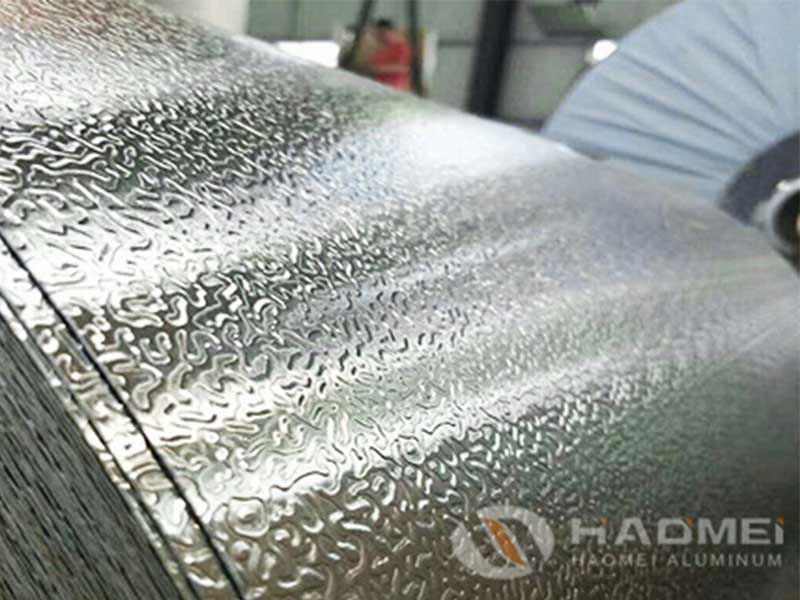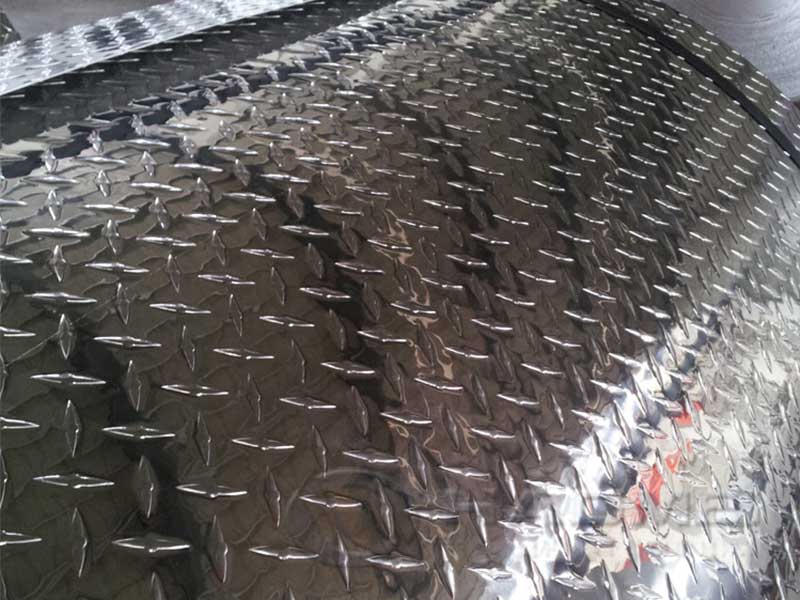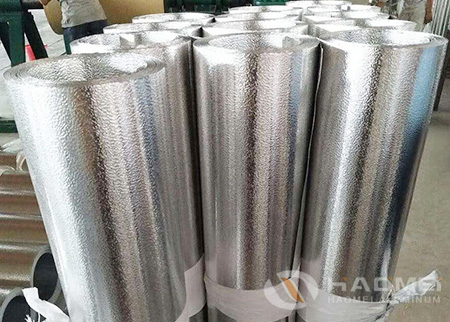
Aluminium checkered tread sheet plate for abrasive floor
An abrasive floor is honest work. It tells you, every day, where materials drag, where grit collects, where water tries to win, and where people actually walk instead of where the drawings said they would. Choosing a surface for that kind of environment is less about decoration and more about reading the floor like a map. Aluminium checkered tread sheet plate is often treated as a simple anti-slip skin, but from a practical viewpoint it is closer to a "wear strategy": you're not trying to make abrasion disappear, you're deciding where it is allowed to happen, how it is distributed, and how easy it is to clean up after it.
Why a checkered pattern behaves differently on abrasive floors
Abrasive floors punish broad, flat contact. Think of sand under a pallet jack wheel or metal chips under a boot sole: the more continuous the contact area, the more consistent the grinding. A checkered tread sheet interrupts that contact with raised diamonds or bars. The raised pattern does two useful things at once.
It creates micro-clearance paths. Grit, slurry, and small debris have somewhere to move rather than being trapped in a full-surface clamp that grinds every step into the plate. It also shifts wear to the peaks first. That sounds like a disadvantage until you consider maintenance: a surface that "sacrifices" its raised peaks while keeping the base plate intact tends to preserve structural integrity longer, especially when the plate is properly sized.
For abrasive floors, the pattern height and geometry matter as much as alloy choice. A deeper, sharper pattern may feel aggressively grippy at first, but it can also become a debris collector in wet grit conditions. A more moderate diamond pattern often balances traction and cleanability, particularly in industrial wash-down zones.
Aluminium's real advantage: corrosion control without weight penalty
Abrasive floors are rarely dry forever. Abrasion and moisture usually travel together, and once corrosion joins the party, steel tread plate needs coatings, repaint cycles, and constant attention to edge damage. Aluminium approaches the problem differently: the oxide layer is self-forming and stable. When the surface is scratched, it reforms; when it's worn, it reforms again. That makes aluminium tread plate especially attractive in coastal facilities, chemical-adjacent plants, food logistics corridors, and outdoor ramps where abrasive dust and water meet.
This corrosion behavior is not magic, though. Aluminium is still sensitive to galvanic coupling and certain chemical exposures. If the tread plate is fastened to carbon steel frames, isolation pads or compatible fasteners help prevent galvanic corrosion at wet joints. If the floor sees strong alkalis or harsh cleaners, selecting an alloy with better chemical resistance and controlling cleaning chemistry becomes part of the "floor system," not an afterthought.
Alloy and temper: choosing the plate like a tool, not a commodity
For abrasive-floor applications, the most common aluminium tread plate families are 3xxx, 5xxx, and occasionally 6xxx series. Each behaves differently under wear, impact, and bending.
AA3003-H22 or H24 tread plate is widely used because it forms easily, resists general corrosion well, and is cost-effective. It's a solid choice for moderate abrasion where the plate is supported well and not expected to take heavy point impacts.
AA5052-H32 and AA5754 (often H22/H111 depending on supply) are preferred when corrosion exposure is higher and strength is needed without sacrificing formability. 5xxx series alloys also tend to keep their properties better in outdoor or marine-influenced environments. For abrasive floors where traffic includes carts, wheeled bins, and frequent wet contamination, 5052-H32 is a common "workhorse" option.
AA6061-T6 tread plate exists but is less typical in highly formed tread products because T6 is stronger and stiffer but less forgiving in tight fabrication. It can be useful for structural decking where deflection control matters and the design avoids severe forming at edges.
For abrasive floors, temper selection is often overlooked. A harder temper can improve dent resistance, but it may reduce formability for site fitting and can increase the chance of edge cracking in aggressive bends. Many floor plates fail at edges and fastener lines rather than in the center, so the best temper is the one that survives your installation method.
Practical parameters that decide performance
A tread plate does not "wear out" evenly; it fails where stress concentrates. That's why the following parameters matter on abrasive floors.
Thickness selection should be tied to support spacing and point load, not just a generic catalog. Abrasive conditions often coincide with dynamic loads from trolleys and foot traffic. Under-sizing thickness invites flexing, and flexing accelerates wear at the pattern peaks and loosens fasteners over time.
Pattern type and orientation influence traction and cleaning. Diamond patterns provide multi-directional grip, while bar patterns can be aligned to traffic direction for certain ramps. On floors that see slurry, a pattern that sheds debris instead of trapping it is usually worth more than extra sharpness.
Surface finish is not only cosmetic. A mill finish is common, but in environments with frequent cleaning, a brighter finish can make contamination visible sooner, while a more matte texture can reduce glare. If slip risk is critical, secondary anti-slip treatments exist, but they must be evaluated for abrasion durability; some coatings trade early traction for rapid wear-through.
Edge detailing matters in abrasive zones. A clean deburred edge reduces injury risk and slows crack initiation. If the plate is welded, the heat-affected zone becomes a local property change, so design should place welds away from the highest traffic lanes when possible.
Implementation standards and fabrication realities
In practice, aluminium tread plate for industrial floors is often integrated into a broader compliance framework. Slip resistance, guarding, and platform design may follow local occupational safety regulations, while fabrication and tolerances typically reference recognized aluminium standards.
Material and temper definitions commonly align with ASTM B632 (aluminium tread plate) and EN 1386 (European coil and sheet specifications), while chemical composition and mechanical properties align with AA/EN alloy standards such as ASTM B209 for sheet and plate. For welding, AWS D1.2 is widely used for structural aluminium workmanship and acceptance criteria. If the tread plate becomes part of a walking-working surface, designers often cross-check with OSHA/EN ISO requirements for access, edges, and openings, even when the tread plate itself is not "certified" as a safety device.
On abrasive floors, fastening method is part of the wear design. Countersunk screws can become grit traps and wear accelerators. Raised-head fasteners can become trip hazards and impact points. Many installations use perimeter clamping, plug welding to subframes (with care to avoid distortion), or adhesive plus mechanical retention in corrosion-prone locations. The "best" method is the one that keeps the plate tight to the support with minimal movement; micro-movement is abrasion's best friend.
Recommended alloys at a glance: chemical composition (typical limits)
Below is a practical composition table for common tread-plate alloys. Values are typical maximums or ranges per widely used alloy definitions; always confirm with the mill test certificate for your supply standard.
| Alloy | Si (%) | Fe (%) | Cu (%) | Mn (%) | Mg (%) | Cr (%) | Zn (%) | Al |
|---|---|---|---|---|---|---|---|---|
| AA3003 | 0.6 | 0.7 | 0.05–0.20 | 1.0–1.5 | - | - | 0.10 | Balance |
| AA5052 | 0.25 | 0.40 | 0.10 | 0.10 | 2.2–2.8 | 0.15–0.35 | 0.10 | Balance |
| AA5754 | 0.40 | 0.40 | 0.10 | 0.50 | 2.6–3.6 | 0.30 | 0.20 | Balance |
| AA6061 | 0.40–0.80 | 0.70 | 0.15–0.40 | 0.15 | 0.8–1.2 | 0.04–0.35 | 0.25 | Balance |
Tempering and condition notes for tread plate
AA3003 is frequently supplied in H22/H24 for tread products, giving a useful compromise between strength and formability. AA5052 is commonly H32 for floor use, offering improved strength and corrosion resistance with good bending behavior. AA5754 is often selected for marine and vehicle flooring because it keeps good corrosion performance while remaining workable. AA6061-T6 is a higher-strength option when the plate is part of a structural deck and forming demands are low.
A final way to think about it: the floor as a consumable interface
The most useful perspective on aluminium checkered tread sheet plate in abrasive environments is that it is an interface layer designed to be walked on, washed, scratched, and forgiven. The alloy and temper decide how it resists corrosion and dents. The thickness and support decide whether it stays quiet under traffic or starts moving and wearing itself loose. The pattern decides whether grit is managed or invited to stay.
https://www.alusheets.com/a/aluminium-checkered-tread-sheet-plate-for-abrasive-floor.html