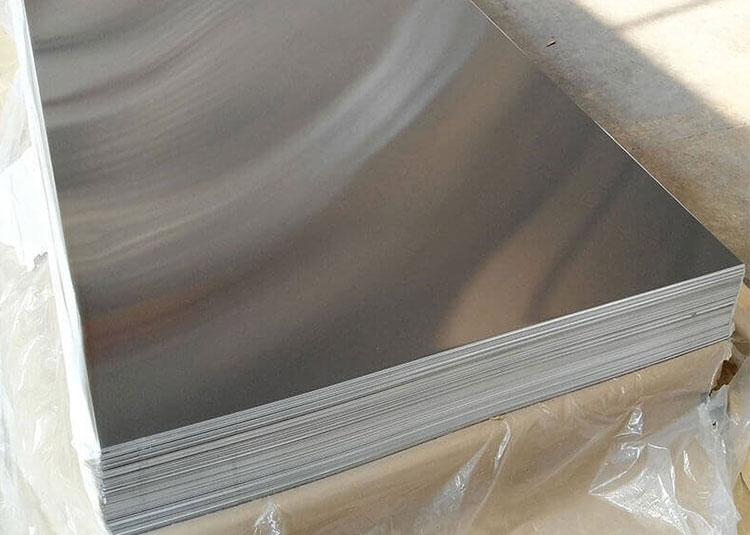
5083 6061 7075 Aluminium Plate
In the world of aluminium plate, the conversation often begins with strength and ends with price. Yet for engineers, buyers, fabricators, and OEM decision-makers, that is rarely enough. The better question is not simply which alloy is stronger, but which alloy keeps performing after welding, machining, marine exposure, anodizing, load cycling, and dimensional control are all taken into account. From that viewpoint, 5083 aluminium plate, 6061 aluminium plate, and 7075 aluminium plate are not just three popular grades. They are three very different problem-solving tools.
Why These Three Aluminium Plate Alloys Are Compared So Often
The reason buyers repeatedly search for 5083 6061 7075 aluminium plate is simple: together they cover a very wide range of industrial needs.
5083 aluminium plate is known for exceptional corrosion resistance, especially in marine and chemically aggressive environments. It is a classic choice where welding and durability matter more than maximum hardness.
6061 aluminium plate sits in the middle ground. It combines good strength, good machinability, reliable corrosion resistance, and excellent versatility. It is often the first recommendation for general structural and industrial use.
7075 aluminium plate represents high-strength aluminium at a different level. It is selected where load-bearing performance, stiffness, and weight reduction are critical, particularly in aerospace, high-performance transport, and precision components.
From a distinctive engineering viewpoint, these three alloys can be understood as three different balances:
- 5083 favors environmental resilience and weld integrity
- 6061 favors broad manufacturability and all-around utility
- 7075 favors peak mechanical performance and structural efficiency
The Most Useful Way to Understand 5083, 6061, and 7075 Plate
A technical datasheet gives numbers. A fabrication line, however, reveals behavior.
When aluminium plate enters production, it is cut, milled, drilled, bent, welded, stress-relieved, anodized, fastened, and exposed to humidity, salt, impact, and fluctuating temperatures. In this context:
- 5083 plate behaves like a corrosion-first structural alloy
- 6061 plate behaves like a process-friendly engineering alloy
- 7075 plate behaves like a strength-dominant performance alloy
That distinction is more valuable than comparing a single tensile strength figure.
If the project involves marine hull sections, LNG tanks, pressure-related structures, vehicle body components, or welded assemblies, 5083 often rises to the top because it retains practical value after fabrication.
If the project demands machined fixtures, automation frames, base plates, transport components, electronics structures, or mold-related applications, 6061 frequently offers the best balance between cost, workability, and stable performance.
If the project is driven by high static load, fatigue-sensitive geometry, aerospace requirements, defense components, sporting equipment, or precision high-strength parts, 7075 becomes the natural candidate.
5083 Aluminium Plate
5083 aluminium plate belongs to the Al-Mg family. Magnesium is the principal alloying element, which gives the alloy strong corrosion resistance and excellent performance in seawater and industrial atmospheres. It is also valued for good weldability and high strength among non-heat-treatable aluminium alloys.
This alloy is especially respected in industries where the plate must resist both structural stress and environmental attack. Shipbuilding, offshore modules, cryogenic tanks, rail vehicles, tank truck bodies, and pressure-related structures often rely on 5083.
A distinctive feature of 5083 is that its strength is not based on precipitation hardening like 6061 or 7075. Instead, it is a non-heat-treatable alloy, strengthened mainly by cold work and strain hardening. That means its mechanical profile and fabrication response differ significantly from heat-treatable plates.
6061 Aluminium Plate
6061 aluminium plate is an Al-Mg-Si heat-treatable alloy. It is one of the most widely used aluminium grades in the world because it offers a highly practical combination of moderate-to-good strength, corrosion resistance, machinability, weldability, and anodizing response.
In many supply chains, 6061 is the alloy that reduces risk. It is available in many thicknesses, tempers, and plate formats. It machines predictably, performs well in structural applications, and can serve in everything from transportation and construction to automation and tooling.
Its strength comes from heat treatment, especially in tempers such as T6 and T651. That makes temper selection extremely important when specifying 6061 aluminium plate.
7075 Aluminium Plate
7075 aluminium plate is an Al-Zn-Mg-Cu high-strength alloy, widely recognized for its outstanding strength-to-weight ratio. It is often compared with some steels in terms of strength, while still delivering the weight-saving benefits of aluminium.
In practice, 7075 plate is chosen when weight reduction has direct value and structural efficiency matters. Aerospace spars, bulkheads, high-load brackets, defense parts, molds, jigs, high-performance bicycle components, and motorsport structures are all common examples.
The technical tradeoff is that 7075 offers much higher strength but generally lower weldability and lower corrosion resistance than 5083 or 6061, especially in harsh environments if not properly protected.
Chemical Composition Table
Below is a typical reference table for the chemical composition of 5083, 6061, and 7075 aluminium plate. Exact limits may vary slightly depending on the applicable standard, customer specification, and regional implementation rules.
| Alloy | Si % | Fe % | Cu % | Mn % | Mg % | Cr % | Zn % | Ti % | Other Each % | Other Total % | Al % |
|---|---|---|---|---|---|---|---|---|---|---|---|
| 5083 | 0.40 max | 0.40 max | 0.10 max | 0.40–1.00 | 4.00–4.90 | 0.05–0.25 | 0.25 max | 0.15 max | 0.05 max | 0.15 max | Remainder |
| 6061 | 0.40–0.80 | 0.70 max | 0.15–0.40 | 0.15 max | 0.80–1.20 | 0.04–0.35 | 0.25 max | 0.15 max | 0.05 max | 0.15 max | Remainder |
| 7075 | 0.40 max | 0.50 max | 1.20–2.00 | 0.30 max | 2.10–2.90 | 0.18–0.28 | 5.10–6.10 | 0.20 max | 0.05 max | 0.15 max | Remainder |
From a metallurgical perspective, the chemistry already tells the story.
- The high magnesium content in 5083 supports corrosion resistance and marine durability
- The magnesium-silicon system in 6061 supports versatile heat treatment and balanced properties
- The high zinc with magnesium and copper in 7075 drives very high strength, while also making corrosion management more important
Common Temper Conditions and What They Really Mean
When buying aluminium plate, the alloy alone is never the full specification. Temper condition has a major effect on strength, workability, flatness, and suitability for downstream processing.
Common tempers for 5083 aluminium plate
Typical 5083 plate tempers include:
- O temper
- H111
- H112
- H116
- H321
Because 5083 is non-heat-treatable, these tempers reflect annealing or strain-hardening-related conditions rather than precipitation hardening.
O temper is softer and more formable.
H111 and H112 are common for structural work with moderate strengthening.
H116 and H321 are especially important in marine applications, where resistance to exfoliation corrosion and service in seawater environments are major concerns.
Common tempers for 6061 aluminium plate
Typical 6061 plate tempers include:
- T4
- T6
- T651
- O
T6 is the most commonly specified condition for high strength and general industrial use.
T651 is similar to T6 but includes stress relief by stretching, which helps improve dimensional stability during machining. This is especially valuable for precision parts, jigs, fixtures, and base plates.
T4 offers improved formability before final strengthening in some processing routes.
O temper is used where maximum softness and forming ability are needed.
Common tempers for 7075 aluminium plate
Typical 7075 plate tempers include:
- T6
- T651
- T73
- T7351
T6 delivers very high strength.
T651 adds stress relief, improving machining stability for thick plate and precision parts.
T73 and T7351 trade some strength for significantly improved resistance to stress corrosion cracking, making them attractive for critical structural applications in demanding service environments.
A buyer focused only on tensile strength may automatically choose 7075-T6. A more experienced engineer may instead choose 7075-T7351 if long-term reliability in a corrosive or stress-sensitive environment matters more than peak strength on paper.
Mechanical and Physical Parameters at a Practical Level
Typical values vary by thickness, standard, temper, and producer route, but the following table offers a useful comparative reference for widely used plate tempers.
| Alloy / Temper | Density g/cm³ | Tensile Strength MPa | Yield Strength MPa | Elongation % | Brinell Hardness Approx. | Features |
|---|---|---|---|---|---|---|
| 5083-H111 | 2.66 | 270–340 | 125–165 | 12–20 | ~75 | Marine corrosion resistance, excellent weldability |
| 5083-H116 | 2.66 | 305–385 | 215–275 | 10–16 | ~80 | Optimized for marine plate service |
| 6061-T6 | 2.70 | 290–340 | 240–275 | 8–12 | ~95 | Versatile structural and machining alloy |
| 6061-T651 | 2.70 | 290–340 | 240–275 | 8–12 | ~95 | Better machining stability due to stress relief |
| 7075-T6 | 2.81 | 510–570 | 430–505 | 5–11 | ~150 | Very high strength, limited weldability |
| 7075-T7351 | 2.81 | 470–540 | 390–455 | 6–13 | ~135 | High strength with improved SCC resistance |
These numbers reveal an important truth for aluminium plate selection:
- 5083 is not the strongest, but it often remains the most trustworthy after welding and seawater exposure
- 6061 is not the strongest or the most corrosion-resistant, but it often gives the smoothest overall manufacturing process
- 7075 is the strongest of the three, but demands stricter control over corrosion, joining method, and service environment
Implementation Standards and Supply Standards for Aluminium Plate
For international procurement, standards matter as much as alloy identity. Plate buyers should verify not only the alloy and temper, but also the applicable production and inspection standard.
Common implementation standards for 5083, 6061, and 7075 aluminium plate include:
- ASTM B209 for aluminium and aluminium-alloy sheet and plate
- EN 485 series for aluminium and aluminium alloy sheet, strip, and plate in Europe
- EN 573 for chemical composition and designation
- EN 515 for temper designation
- AMS standards for aerospace-oriented material requirements, especially relevant to 7075
- GB/T 3880 for aluminium and aluminium alloy plates and sheets in the Chinese standard system
- JIS H4000 / JIS-related standards in Japanese supply contexts
- ABS, DNV, LR, BV, CCS and other classification society requirements for marine-grade 5083 plate
For marine use, 5083 aluminium plate may need classification approval and documentation linked to shipbuilding standards. In aerospace and defense contexts, 7075 aluminium plate often requires tighter traceability, ultrasonic inspection, and more controlled mechanical property certification. For general engineering and CNC processing, 6061-T651 aluminium plate is frequently supplied with attention to flatness, stress-relief condition, and machining consistency.
A high-quality supplier should be able to provide:
- Mill test certificate
- Chemical composition report
- Mechanical property report
- Ultrasonic testing report where required
- Flatness and thickness tolerance data
- Temper and heat treatment traceability
- Classification society certificates for marine projects when applicable
Corrosion Resistance: The Hidden Cost Factor
One of the most overlooked aspects when selecting 5083 6061 7075 aluminium plate is that corrosion resistance affects total lifecycle cost more than many buyers expect.
5083: corrosion resistance as a structural asset
5083 performs exceptionally well in seawater, salt-laden atmosphere, low-temperature service, and many industrial environments. It is often chosen not because it has the best initial machining economics, but because it reduces long-term risk. In ship structures, deck plates, cryogenic tanks, and transport systems, this reliability can outweigh a higher purchase price.
6061: good general corrosion resistance
6061 has good atmospheric corrosion resistance and performs well in many industrial settings. It is suitable for outdoor structures, transport frames, automation equipment, and architectural or general engineering use. It is often anodized effectively, which further improves surface durability and appearance.
7075: corrosion must be managed, not assumed
7075 can be highly effective structurally, but corrosion protection deserves serious attention. Compared with 5083 and 6061, it is generally more vulnerable, especially in high-stress or aggressive environments. This is why 7075-T73 or T7351 is often preferred over T6 for certain critical uses. Surface treatment, coating, design details, and maintenance all become more important.
Weldability, Machinability, and Fabrication Logic
5083 in fabrication
5083 is widely appreciated for its excellent weldability. In fact, this is one of the most powerful reasons to choose it. If a structure is large, welded, and exposed to marine or industrial corrosion, 5083 often beats higher-strength alloys in real-world performance.
Its machinability is acceptable, though generally not as easy or clean as 6061 or 7075. For applications dominated by welded plate fabrication rather than precision CNC productivity, this is not usually a disadvantage.
6061 in fabrication
6061 is the classic all-round fabricator's alloy. It offers good machinability, good weldability, and predictable downstream performance. It is easy to understand why this alloy is so widely stocked and so frequently specified. If your part needs both CNC work and possible structural joining, 6061 is often the safest compromise.
However, welding can reduce strength in the heat-affected zone unless post-weld heat treatment is considered. That is a distinction versus 5083 in heavily welded structures.
7075 in fabrication
7075 is excellent for machining and ideal for high-strength precision parts, but it is generally not recommended for conventional fusion welding in most structural applications. Its real value appears when the part is machined from plate into a near-net geometry that benefits from its high strength and stiffness.
For this reason, 7075 aluminium plate is often favored in parts that are bolted, riveted, or machined as monolithic components, rather than heavily welded assemblies.
Typical Plate Specifications and Supply Parameters
Actual stock and custom supply ranges vary by mill, but common parameters for 5083, 6061, and 7075 aluminium plate often include:
- Thickness range from 6 mm to 250 mm or more, depending on alloy and mill capability
- Width range commonly up to 2000 mm, 2500 mm, or wider for selected products
- Length range commonly up to 6000 mm, 8000 mm, or customized
- Surface conditions such as mill finish, precision milled surface, or customer-defined finish
- Flatness options for CNC base plates and tooling applications
- Saw-cut blocks or cut-to-size plates for machining customers
- Protective film or paper interleaving where surface quality matters
For heavy plate procurement, buyers should also ask about:
- Residual stress control
- Internal soundness
- Ultrasonic inspection level
- Thickness tolerance
- Plate flatness after sawing
- Grain direction marking
- Heat number traceability
These details matter especially for 6061-T651 and 7075-T651/T7351 used in high-precision machining.
Application Scenarios: The Best Alloy Depends on What Failure You Fear Most
A distinctive way to compare these alloys is to ask: what kind of failure is least acceptable in the final application?
If the biggest concern is corrosion, weld degradation, or marine exposure, 5083 aluminium plate is often the most intelligent choice.
If the biggest concern is overall manufacturability, broad utility, moderate strength, and cost-effective machining, 6061 aluminium plate is usually the most balanced option.
If the biggest concern is maximum strength, weight reduction, and structural efficiency under high load, 7075 aluminium plate is often the premium solution.
Where 5083 plate excels
- Shipbuilding and boat structures
- Marine decking and superstructures
- LNG and cryogenic tank systems
- Tank trucks and pressure-related transport structures
- Rail vehicle body structures
- Corrosion-sensitive industrial equipment
Where 6061 plate excels
- CNC machined components
- Tooling plates and fixtures
- Structural frames and base plates
- Transport equipment
- Automation systems
- Construction and architectural engineering
- Electronic housings and support structures
Where 7075 plate excels
- Aerospace structures
- Defense and tactical equipment
- High-load transport parts
- Precision jigs and high-strength fixtures
- Performance sports equipment
- Molds requiring high strength and dimensional integrity
- Weight-critical structural components
5083 vs 6061 vs 7075 Aluminium Plate: A Practical Comparison
If the project is a welded marine structure, 5083 is usually more suitable than 6061 or 7075.
If the project is a general-purpose machined structural plate, 6061-T651 often provides the best combination of availability, processability, and value.
If the project is a high-strength aerospace-style machined part, 7075-T651 or 7075-T7351 will usually outperform the others mechanically.
If the part will be anodized and also needs broad commercial accessibility, 6061 is often a preferred grade.
If the environment includes seawater, salt spray, or long-term outdoor corrosion risk, 5083 generally carries the greatest confidence.
If the design is limited by weight and section thickness, and every gram matters, 7075 often unlocks the best design efficiency.
Procurement Advice: What Smart Buyers Ask Before Ordering
When sourcing 5083 6061 7075 aluminium plate, experienced buyers usually go beyond alloy and thickness. They verify:
- Final application environment
- Required temper
- Whether welding is involved
- Whether the plate will be heavily machined
- Whether stress-relieved condition is necessary
- Whether classification certification or aerospace documentation is required
- Surface quality expectations
- Flatness and thickness tolerance requirements
- Required corrosion performance
- Inspection and traceability needs
This matters because the wrong plate may still look correct on paper. A 7075 plate with the wrong temper can compromise corrosion reliability. A 6061 plate without stress relief may distort during machining. A non-marine-certified 5083 plate may not satisfy vessel approval requirements.
Final Insight: Aluminium Plate Selection Is Really About Performance After Processing
https://www.alusheets.com/a/5083-6061-7075-aluminium-plate.html