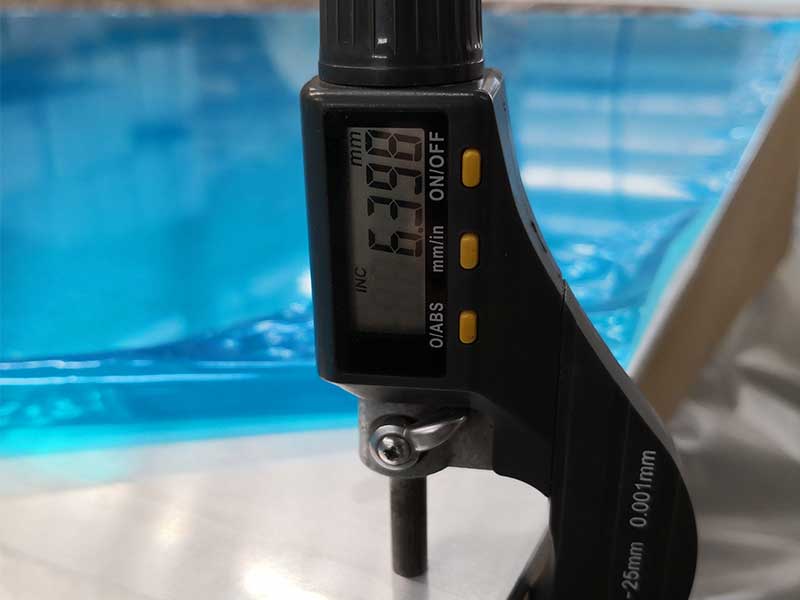
0.50MM Aluminum Sheets for Sublimation
In sublimation printing, the image usually receives the most attention. Yet behind every vivid panel, photo plaque, branded sign, or decorative insert is a material decision that quietly determines quality: the metal itself. 0.50MM aluminum sheets for sublimation occupy a particularly useful position in this field because they balance print performance, formability, light weight, and dimensional stability in a way that thicker or thinner materials often cannot.
From a practical viewpoint, 0.50mm is not simply a thickness specification. It is a working sweet spot. It is thin enough to be economical, easy to cut, and suitable for lightweight display products, while still offering enough body to stay flat during coating, transfer, and finishing when processed correctly. For customers selecting sublimation aluminum, this balance is far more valuable than seeing thickness as just a number on a datasheet.
Why 0.50MM Works So Well for Sublimation
Sublimation on aluminum depends on a chain of compatibility. The aluminum sheet must accept surface treatment, hold a specialized polyester or sublimation-ready coating, tolerate heat press conditions, and remain visually clean after transfer. At 0.50mm, the sheet supports these requirements efficiently.
This thickness is widely used for indoor signage, nameplates, souvenir panels, customized gifts, photo panels, decorative trims, and lightweight branded products. It is especially suitable where the final item needs crisp image definition without the unnecessary rigidity or cost of heavier gauges.
From a production perspective, 0.50mm sheets also help improve workflow. They are easier to stamp, corner-round, punch, and mount. Fabricators appreciate that they can be processed into small-format products with less tool wear and less handling effort. Print shops value the fast heat response during transfer, since thinner aluminum generally reaches press temperature more quickly than thicker plates.
Functional Value Beyond Printing
A distinctive way to understand sublimation aluminum is to think of it as a color carrier with structural discipline. It does not just receive an image; it protects the image through the metal's own properties.
Its main functions include:
- supporting high-resolution sublimation graphics with a smooth, uniform base
- providing low weight for wall displays, inserts, tags, and portable promotional products
- enabling easy fabrication for bending, cutting, embossing, punching, and laminating processes
- offering corrosion resistance that helps preserve appearance in indoor and light-duty decorative applications
- maintaining shape consistency for mass-produced printed panels
Compared with plastics, aluminum gives sublimation products a more premium feel, stronger dimensional accuracy, and better thermal tolerance during transfer. Compared with steel, it is lighter, more corrosion-resistant, and often easier to process into consumer-facing decorative items.
Common Alloys and Tempers for 0.50MM Sublimation Sheets
Not every aluminum alloy is equally suitable for sublimation applications. The best choice depends on whether the sheet will remain flat, be bent, or undergo secondary fabrication after coating.
The most common alloy families include 1xxx, 3xxx, and 5xxx series, with some projects also using selected 8xxx materials depending on cost and processing requirements.
Typical options are:
- 1050 / 1060: high aluminum purity, excellent surface quality, good corrosion resistance, soft and workable, often chosen where appearance and coating uniformity are priorities
- 3003: stronger than 1xxx series, good formability, good corrosion resistance, widely used for decorative and light industrial sheet applications
- 5005: valued for good anodizing and decorative surface quality, often used when visual consistency is important
Common tempers include:
- O temper: fully annealed, very soft, excellent for forming
- H14: strain-hardened to half-hard condition, a popular balance of strength and workability
- H24: strain-hardened and partially annealed, offering moderate strength with improved formability
- H16 / H18: harder tempers for applications requiring greater stiffness, though excessive hardness may reduce forming ease
For many sublimation sheet users, 1050 H14, 1060 H14, or 3003 H14 are practical choices because they combine flatness, processability, and reliable surface behavior.
Typical Parameters of 0.50MM Aluminum Sheets for Sublimation
The following parameters are commonly requested by buyers and processors:
| Parameter | Typical Range / Option |
|---|---|
| Thickness | 0.50 mm |
| Thickness tolerance | According to EN 485 / ASTM B209 or customer agreement |
| Width | 200 mm to 1500 mm |
| Length | 300 mm to 3000 mm, or custom cut |
| Alloy | 1050, 1060, 1100, 3003, 5005 |
| Temper | O, H14, H24, H16 |
| Surface | Mill finish, bright finish, coated for sublimation |
| Flatness | Controlled for printing and heat transfer use |
| Coating side | Single side or double side |
| Color base | White, silver, brushed silver, gold, mirror, custom shades |
| Protective film | PE film optional |
| Edge condition | Slit edge or deburred custom edge |
For sublimation, the sheet is usually supplied with a specially prepared coating layer rather than as untreated mill finish material. This coating is what receives the sublimation dye under heat and pressure.
Implementation Standards Often Referenced
Buyers often ask whether sublimation aluminum sheets follow a recognized standard. The answer is yes, though it is important to separate base metal standards from coating and print-process specifications.
Common implementation standards for the aluminum substrate include:
- ASTM B209 for aluminum and aluminum-alloy sheet and plate
- EN 485 for aluminum and aluminum alloy sheet, strip, and plate
- GB/T 3880 for aluminum and aluminum alloy sheets and strips
- JIS H4000 for aluminum and aluminum alloy sheets, strips, and plates
For chemical composition and alloy classification, references may include:
- ASTM B209 / ANSI H35
- EN 573
- GB/T 3190
For many customers, what matters most is not only compliance with these standards, but also practical control of surface cleanliness, flatness, coating adhesion, and heat-transfer consistency, because these directly affect the final printed image.
Chemical Properties Table
Below is a simplified chemical composition reference for common alloys used in sublimation sheet applications. Exact values may vary by standard and supplier specification.
| Alloy | Al (%) | Mn (%) | Mg (%) | Si (%) | Fe (%) | Cu (%) | Zn (%) | Other |
|---|---|---|---|---|---|---|---|---|
| 1050 | ≥ 99.50 | ≤ 0.05 | ≤ 0.05 | ≤ 0.25 | ≤ 0.40 | ≤ 0.05 | ≤ 0.07 | trace |
| 1060 | ≥ 99.60 | ≤ 0.03 | ≤ 0.03 | ≤ 0.25 | ≤ 0.35 | ≤ 0.05 | ≤ 0.05 | trace |
| 1100 | ≥ 99.00 | ≤ 0.05 | - | Si+Fe ≤ 0.95 | included | 0.05–0.20 | ≤ 0.10 | trace |
| 3003 | balance | 1.0–1.5 | - | ≤ 0.6 | ≤ 0.7 | 0.05–0.20 | ≤ 0.10 | trace |
| 5005 | balance | ≤ 0.20 | 0.50–1.10 | ≤ 0.30 | ≤ 0.70 | ≤ 0.20 | ≤ 0.25 | Cr ≤ 0.10 |
In simple terms, higher-purity alloys such as 1050 and 1060 are easier to process and often provide a very clean visual base, while 3003 and 5005 offer added mechanical advantages for certain fabricated or decorative products.
Applications in Real Markets
The applications of 0.50MM aluminum sheets for sublimation are broader than many buyers first expect. They are not limited to photo printing. They are used in:
- customized photo panels and art reproductions
- indoor signage and wayfinding panels
- promotional nameplates and brand tags
- trophies, awards, and commemorative plaques
- souvenir plates and tourism gift items
- furniture inserts and decorative trims
- appliance branding panels
- personalized home décor products
- control labels and information plates for light-duty use
A useful way to view these applications is by their demand for three qualities at once: image sharpness, manageable rigidity, and elegant metal texture. This is where 0.50mm performs especially well.
What Buyers Should Pay Attention To
When purchasing sublimation aluminum sheets, the question is not just "Which alloy?" but "How will this sheet behave through coating, transfer, and end use?" A good supplier should clarify coating compatibility, heat resistance, peel-film condition, sheet flatness, and tolerance consistency.
Customers should also confirm whether the product is intended for indoor decorative use or more demanding environments. Standard sublimation coatings are often ideal for interior applications, while outdoor exposure may require additional UV and weather-performance evaluation.
In the end, 0.50MM aluminum sheets for sublimation succeed because they are quietly efficient. They provide enough metal to feel real, enough stability to print cleanly, and enough flexibility to serve a wide variety of finished products. In an industry focused on color and customization, this thin aluminum sheet acts as the disciplined foundation that allows creativity to appear sharp, durable, and commercially repeatable. For fast-moving print businesses and product manufacturers alike, that makes it far more than a raw material-it becomes a precision surface for value creation.
https://www.alusheets.com/a/050mm-aluminum-sheets-for-sublimation.html