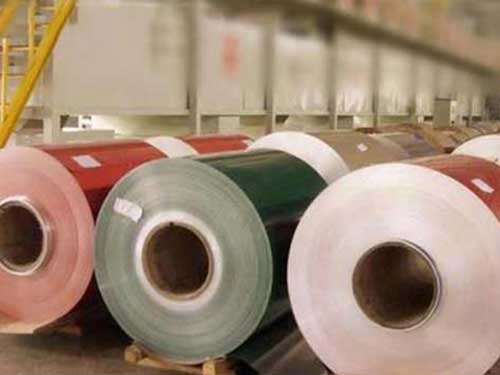
3003 aluminum coil coated for gutter
A gutter is often treated as the quiet edge of a building: always exposed, rarely admired, expected to work through heat, frost, acid rain, windblown debris, and years of neglect. Yet from a materials perspective, it is one of the most demanding architectural components. It must be light enough for long rooflines, formable enough for profiling, corrosion-resistant enough for permanent outdoor service, and attractive enough to disappear into the design of the house. This is where 3003 aluminum coil coated for gutter earns its reputation-not as a glamorous material, but as a deeply practical one.
What makes this product especially interesting is that its performance does not come from one single property. It is the result of a balance: alloy chemistry, temper condition, coil coating technology, and fabrication compatibility. In other words, a gutter coil is not simply "painted aluminum." It is a deliberately engineered strip material designed to survive where water repeatedly meets metal.
Why 3003 alloy fits the logic of gutters
From a distinctive viewpoint, 3003 aluminum is best understood as a material built for controlled compromise. Pure aluminum has excellent corrosion resistance, but it is too soft for many formed building products. Stronger alloys exist, but some lose formability or become less forgiving in outdoor environments. 3003 aluminum, an Al-Mn alloy, sits in the middle in a very useful way.
The manganese addition increases strength over commercially pure aluminum while preserving very good workability. For gutter manufacturers, that matters during roll forming, bending, hemming, beading, and seaming. A gutter profile may look simple after installation, but the coil must endure several stages of deformation before it reaches the eaves. If the material is too hard, it risks edge cracking or coating stress. If it is too soft, the finished gutter may deform during handling or under snow and ladder loads. 3003 offers a stable, shop-friendly solution.
Typical chemical composition of 3003 aluminum is shown below:
| Element | Content (%) |
|---|---|
| Aluminum (Al) | Balance |
| Manganese (Mn) | 1.0–1.5 |
| Copper (Cu) | 0.05–0.20 |
| Iron (Fe) | ≤ 0.70 |
| Silicon (Si) | ≤ 0.60 |
| Zinc (Zn) | ≤ 0.10 |
| Others, each | ≤ 0.05 |
| Others, total | ≤ 0.15 |
This chemistry helps explain the alloy's outdoor reliability. The aluminum base naturally forms a protective oxide film, while the modest alloying level avoids the more aggressive galvanic behavior associated with some higher-strength systems. In a gutter application, where water can remain temporarily trapped under leaves or ice, this quiet corrosion resistance is more valuable than headline-grabbing strength.
The role of temper: strength that still bends cleanly
For gutter coil, the temper is just as important as the alloy. Common tempers include H14, H16, and H24, depending on the producer's forming route and target stiffness. Among these, 3003 H24 is widely favored because it offers a practical combination of moderate strength and good bendability. H14 may also be used where easier forming is preferred.
Typical mechanical properties are approximately as follows:
| Temper | Tensile Strength (MPa) | Yield Strength (MPa) | Elongation (%) |
|---|---|---|---|
| 3003 H14 | 140–180 | ≥ 115 | 3–5 |
| 3003 H24 | 145–195 | ≥ 115 | 4–8 |
| 3003 O | 95–130 | ≥ 35 | 20–30 |
These values can vary by thickness and manufacturing standard, but they show the central idea clearly. The gutter industry does not need aerospace-level strength. It needs repeatable forming performance, enough rigidity to hold shape across long runs, and enough ductility to survive fold lines, lock seams, and installation adjustments.
Typical coil thickness for gutters is often in the range of 0.019 in to 0.032 in (about 0.48 mm to 0.81 mm), with widths selected according to K-style or half-round gutter production. The exact gauge depends on regional practice, profile size, wind and snow exposure, and whether the product is intended for residential or light commercial use.
Coating is not decoration; it is the second protective system
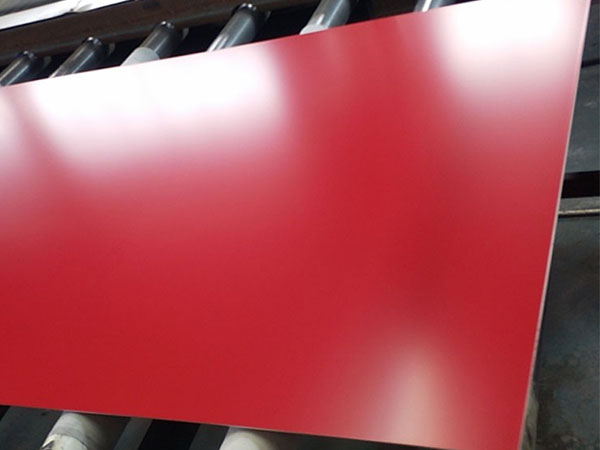
The coated surface gives gutter coil its market identity, but the coating should not be viewed merely as color. It is better understood as a second protective system layered over an already corrosion-resistant substrate. That combination is one reason coated 3003 performs so well in building exteriors.
Most gutter coils are finished with PE (polyester), SMP (silicone-modified polyester), or PVDF coating systems, depending on climate severity, gloss retention requirements, and budget. Polyester systems are common for residential gutters because they offer good color flexibility and cost efficiency. PVDF is selected when long-term chalk resistance, color retention, and UV durability are critical, especially in intense sun exposure or premium architectural projects.
A typical coated gutter coil structure may include:
| Layer | Typical Function |
|---|---|
| Topcoat | Weather resistance, color, gloss retention |
| Primer | Adhesion promotion, corrosion barrier |
| Pretreatment/conversion layer | Surface stabilization, coating bond improvement |
| Aluminum substrate 3003 | Structural base, corrosion resistance, formability |
| Back coat or service coat | Rear-side protection, fabrication support |
Typical coating thickness may be around 18–25 μm for the face side and 5–10 μm for the reverse side, though project-specific systems may differ. For premium products, thicker and more durable systems are available.
In practical terms, this coating architecture matters because gutters are exposed to repeated wet-dry cycling. Standing water, organic acids from leaves, airborne salts in coastal zones, and abrasion from debris all test the surface. A good coil coating reduces the speed at which environmental attack reaches the metal. More importantly, it allows the gutter to remain visually stable across years of service, which is essential for exposed rooflines.
A distinctive advantage: beauty after deformation
One of the least discussed advantages of coated 3003 gutter coil is its ability to remain visually convincing after fabrication. This may sound minor, but it is crucial. A material can have excellent corrosion resistance and still fail commercially if it crazes, powders, or loses gloss after roll forming.
Well-produced 3003 coated coil is optimized so that the substrate and coating deform together. The alloy contributes ductility; the temper controls springback and cracking tendency; the coating formulation supports adhesion and flexibility. This coordination is especially valuable at hems, edges, and corners, where stress concentration is highest. In gutter manufacturing, that means fewer visual defects during profiling and a cleaner finished line on the building.
Applications beyond the obvious roof edge
The primary application is, of course, residential and commercial rainwater gutters, including seamless gutter production. Yet the same material system is also used in related drainage and trim components where corrosion resistance, color consistency, and formability are equally important.
Common applications include:
- Seamless and sectional gutter systems
- Downspout accessories and matching drainage trim
- Fascia cover and soffit edge trim
- Roof drainage flashing and drip edge components
- Canopy runoff channels and light architectural drainage profiles
What ties these applications together is not simply exposure to weather, but exposure to intermittent water with aesthetic visibility. That is the real working environment of coated 3003.
Standards and purchasing considerations
For technical procurement, 3003 coated aluminum coil is generally supplied in accordance with aluminum sheet and coil standards such as ASTM B209 for the substrate, while the coating performance may be evaluated using architectural coil coating requirements and tests related to adhesion, impact resistance, T-bend, gloss, salt spray behavior, and UV exposure. In some markets, EN standards or customer-specific building product specifications are also applied.
When selecting a gutter coil, buyers should pay attention to:
- Alloy and temper, such as 3003 H24
- Coil thickness tolerance and width tolerance
- Coating type, color system, and gloss level
- Pretreatment quality and paint adhesion
- Reverse-side coating suitability for fabrication
- Indoor dry storage and proper handling to avoid wet staining
The coastal environment deserves special mention. While 3003 coated coil has excellent general atmospheric corrosion resistance, marine locations with chloride exposure require stricter attention to coating quality, cut-edge protection, drainage design, and maintenance. Material choice should always be linked to service environment, not only price.
The real value of 3003 coated gutter coil
The most useful way to describe 3003 aluminum coil coated for gutter is this: it is a material engineered for repetitive weather. Not dramatic weather alone, but the everyday cycle of dew, runoff, dirt, sunlight, and temperature change. Its value lies in endurance through ordinary abuse.
The 3003 alloy provides the metal with a forgiving structure. The temper gives it enough body to be fabricated into long, stable shapes. The coating adds color, weatherability, and a further barrier against corrosion. Together, they create a product that satisfies both the installer and the homeowner: easy to form, reliable in service, and visually consistent over time.
In building products, success often belongs not to the strongest material, but to the one that best understands its environment. For gutters, 3003 coated aluminum coil does exactly that.
https://www.alusheets.com/a/3003-aluminum-coil-coated-for-gutter.html