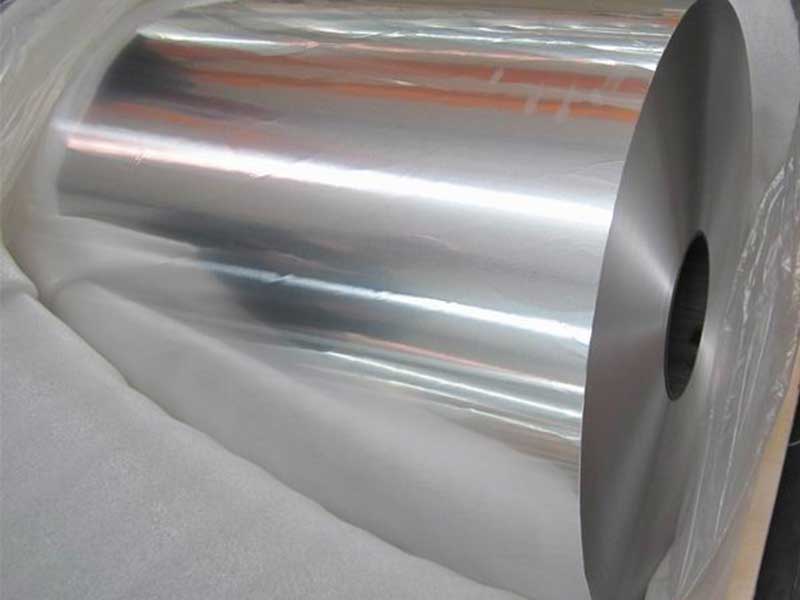
Aluminum coil 1050 1060 1100 3003 3105
When people ask for “aluminum coil,” they often assume all grades are roughly the same. In practice, the choice between 1050, 1060, 1100, 3003, and 3105 quietly decides whether a product will bend cleanly on the press brake, survive years of weather, or fail during forming or service. These five alloys form a kind of “workhorse family,” covering a spectrum from ultra‑pure, highly conductive metal to manganese‑strengthened sheet designed to live outdoors.
A useful way to think about them is not as isolated grades, but as three functional groups:
- Pure aluminum for conductivity and extreme formability: 1050, 1060
- Commercially pure aluminum for moderate strength and better corrosion: 1100
- Manganese‑alloyed aluminum for structural stability and coating performance: 3003, 3105
Within these groups, temper, thickness, and surface finish decide the final behavior of the coil in your process.
Chemistry as a Design Tool, Not Just a Certificate Line
Instead of treating chemical composition as a box to tick on a mill test report, you can see it as a tuning dial for performance.
Below is a typical chemical range for these alloys (mass %):
| Alloy | Si (max) | Fe (max) | Cu | Mn | Mg | Zn (max) | Others (each / total) | Al (approx.) |
|---|---|---|---|---|---|---|---|---|
| 1050 | 0.25 | 0.40 | 0.05 max | 0.05 max | – | 0.05 max | 0.03 / 0.10 | ≥ 99.50 |
| 1060 | 0.25 | 0.35 | 0.05 max | 0.03 max | – | 0.05 max | 0.03 / 0.10 | ≥ 99.60 |
| 1100 | 0.95 | – | 0.05–0.20 | 0.05 max | – | 0.10 max | 0.05 / 0.15 | ≥ 99.00 |
| 3003 | 0.60 | 0.70 | 0.05–0.20 | 1.0–1.5 | – | 0.10 max | 0.05 / 0.15 | Remainder (Al) |
| 3105 | 0.60 | 0.70 | 0.30 max | 0.30–0.80 | 0.20–0.80 | 0.40 max | 0.05 / 0.15 | Remainder (Al) |
From a process engineer’s perspective, three elements stand out:
- Purity (Al content) drives electrical and thermal conductivity and improves deep draw formability.
- Manganese is the quiet strength-maker in 3003 and 3105, raising yield strength without sacrificing too much ductility.
- Copper, even in tenths of a percent, tweaks strength and corrosion resistance; in 1100 and 3003 it is modest, tailored for general environments rather than aggressive industrial atmospheres.
By seeing these compositions as levers to pull rather than numbers to memorize, you can quickly match coil to duty.
Mechanical Behavior: How the Coil Will Actually Act in Your Line
Most practical problems with aluminum coil—cracking, orange peel, springback, unexpected waviness—come from a mismatch between alloy, temper, and forming path.
Typical room‑temperature properties (for thin coil in common tempers) are:
| Alloy | Typical Temper | Yield Strength Rp0.2 (MPa) | Tensile Strength Rm (MPa) | Elongation A50 (%) | Notes |
|---|---|---|---|---|---|
| 1050 | O / H14 | ~20 / 60 | ~60 / 100 | ~35 / 10 | Extremely ductile in O, good bendability even in H tempers |
| 1060 | O / H14 | ~20 / 65 | ~60 / 110 | ~35 / 10 | Similar to 1050, slightly higher purity, top conductivity |
| 1100 | O / H14 | ~25 / 80 | ~70 / 120 | ~35 / 10 | Better strength than 1xxx with modest loss in ductility |
| 3003 | O / H14 | ~35 / 95 | ~95 / 130 | ~35 / 10 | Noticeably stronger; familiar “medium‑soft” feel in forming |
| 3105 | H14 / H24 | ~80–130 | ~130–180 | ~8–15 | Built for painted sheet, fascia, roofing; good stiffness |
These values shift with thickness, processing route, and exact temper, but the patterns are reliable:
- O tempers are forgiving: deep draw, spinning, and roll forming with minimal risk of cracking.
- H tempers (H12, H14, H16, H24, etc.) are work‑hardened: they spring back more, resist denting better, and carry higher loads but demand more generous bend radii.
A practical rule: when moving from 1050/1060 to 3003 or 3105 in the same temper, assume the coil will feel “stiffer” on your tooling and will exhibit more springback. Bending dies and roll‑form passes often need a recalibration.
Viewing Each Alloy Through Its Natural Applications
Instead of listing uses mechanically, consider how each alloy “likes” to work and where it quietly excels.
1050 and 1060: The Conductive “Muscle” Behind Power and Heat
These alloys are exceptionally close to pure aluminum. That means:
- Electrical conductivity above roughly 55–57% IACS, suitable for bus bars, transformer windings, and power distribution components.
- High thermal conductivity, helping in heat transfer panels, HVAC fin stock (often further alloy-tailored), and heat spreaders.
In O temper and light H tempers, 1050 and 1060 behave almost like soft copper in sheet form: they can be folded sharply, deep‑drawn into contoured pans or lids, spun into lamp reflectors, or embossed without tearing.
Typical uses:
- Electrical bus duct and bar after slitting from coil.
- Chemical and food industry liners where maximum formability outweighs strength demands.
- Decorative reflective sheet and foil backing, where very clean surface and high purity are prized.
From a production viewpoint, these coils are extremely forgiving on tight‑radius bending and embossing. But their weakness is dent resistance and load capacity; they are not the first choice for structural or exterior building components.
1100: The Everyday “Commercial Pure” Workhorse
1100 takes a small step away from ultra‑purity to gain modest strength and slightly better corrosion resistance in many service environments, without sacrificing the essential ductility of the 1xxx series.
It is widely used where:
- Formability is still important, but strength requirements are not negligible.
- Decorative anodizing, basic pressure vessels, and low‑pressure storage tanks are involved.
- Heat‑exchange and insulation jacketing need a balance of formability, appearance, and service life.
For fabricators, 1100 is a comfort zone: easy to shear, punch, and bend, less prone to pickup on tools, and tolerant of small process deviations. It welds nicely by TIG and MIG with minimal hot cracking risk. If a design uses copper or steel attachments, galvanic compatibility must be evaluated, but in neutral, non‑chloride environments 1100 behaves very well.
3003: The Manganese‑Hardened All‑Purpose Sheet
When a design starts to demand “real” strength but cannot afford a big drop in workability, 3003 is usually the first step. Manganese in the 1.0–1.5% range refines the matrix and raises yield strength substantially compared with 1100.
This makes 3003 particularly suited to:
- Cookware bodies, deep‑drawn pans, and household utensils where repetitive heating and mild mechanical loads occur.
- Non‑pressurized fuel tanks, liquid transport covers, and roof panels of trucks and trailers.
- Insulation and jacketing on industrial piping systems exposed to weather and moderate mechanical abuse.
The alloy does not respond meaningfully to heat treatment; its strength is controlled by cold work. In coil supply, this translates into a clean, predictable set of temper choices:
- O for aggressive forming and deep drawing.
- H14 / H16 when the objective is to minimize denting and support light loads.
- H24 where a compromise between strength and residual formability is required.
For production lines, 3003 practically invites roll forming, profile bending, and stamping. Its improved strength over 1xxx means you can down‑gauge thickness in some cases without sacrificing rigidity, especially in corrugated or ribbed profiles.
3105: The “Coating Platform” for Building Envelopes
Among the five, 3105 has the most deliberately engineered composition for painted coils and architectural applications. Manganese plus magnesium lift strength while maintaining adequate formability for panel fabrication and hemming. The controlled copper and zinc content, combined with the manganese, provide a corrosion performance suited to most building environments when correctly coated.
Its natural territory includes:
- Pre‑painted roofing and wall cladding panels produced on coil‑coating lines.
- Rainwater systems: gutters, downspouts, fascia, soffit coil.
- Shutter, blind, and ceiling panels where stiffness and painted appearance matter more than extreme drawability.
The story of 3105 really begins after the mill: on the coil‑coating line. The alloy’s consistency in hardness and flatness across the width is crucial to obtain uniform rolling tension and smooth paint film formation. In H14 and H24 tempers, 3105 provides just enough hardness to resist coil set and handling damage, but still bends well around the relatively small radii used in roofing and trim profiles.
From a corrosion point of view, correctly pretreated and coated 3105 coil can withstand decades of exterior exposure in many climates. However, in highly industrial or coastal environments, paint system selection (primer type, topcoat chemistry, film thickness) becomes as critical as the alloy choice itself.
Temper, Forming Strategy, and Coating: Where Many Failures Start
Across these alloys, three technical levers control success in real applications:
Bend radius versus temper
Harder tempers such as H16 and H18 in any of these alloys, especially 3003 and 3105, require larger minimum bend radii. Ignoring this often leads to micro‑cracking along bends, which may not be visible until after painting or service exposure. For painted coil, it is good practice to perform bend tests (for example, 180° T‑bend tests) on production‑batch samples before committing to large‑volume runs.
Coil cleanliness before coating
Particularly for 3003 and 3105 destined for architectural paint, residual rolling oils, fines, and oxide variations must be tightly controlled. Surface cleanliness influences adhesion, filiform corrosion resistance, and gloss retention. Continuous degreasing, chromate‑free conversion coatings, and strict process control are now industry standards.
Welding and joining strategy
The 1xxx alloys weld easily but have low joint strength; 3003 and 3105 offer stronger welded joints but may require carefully matched filler alloys to avoid cracking and galvanic issues. For building products, mechanical joining (riveting, clinching, self‑drilling screws) is often preferred to maintain coating integrity and avoid burn marks or heat‑affected discoloration.
Selecting the Coil: A Functional Checklist
Seen through a functional lens, the five alloys can be aligned with design priorities:
- If conductivity and dead‑soft formability dominate, 1050 or 1060 in O or light H temper is the natural choice.
- If you want a balanced, easy‑to‑fabricate material with moderate strength for general sheet metal, 1100 remains a reliable standard.
- If you need a tougher coil that still forms well—tanks, cookware, vehicle panels—3003 is the classic answer.
- If your product is painted exterior sheet where long‑term appearance and stiffness matter, 3105 in controlled H temper is usually the best fit.
By treating alloy, temper, and surface preparation as a single, integrated decision rather than isolated specifications, you ensure that aluminum coil is not just a commodity input, but a precisely tuned material solution embedded in your product’s performance.
https://www.alusheets.com/a/aluminum-coil-1050-1060-1100-3003-3105.html