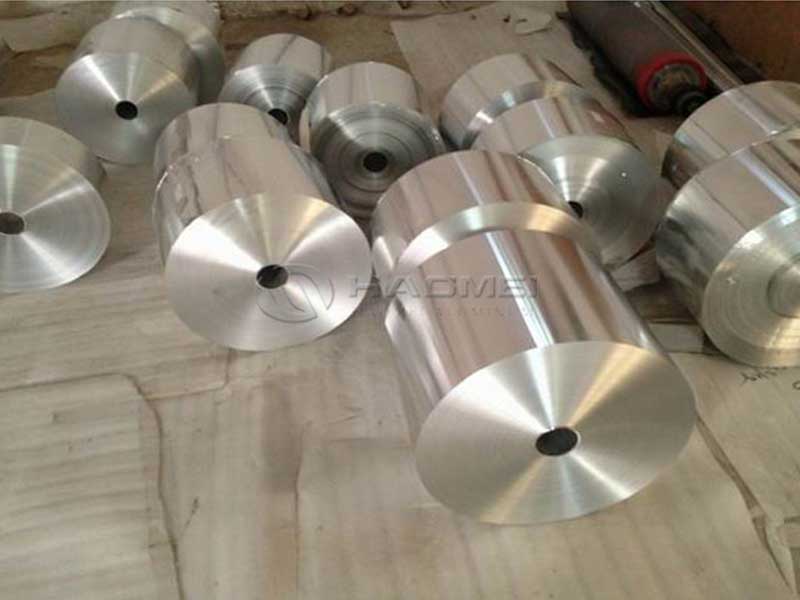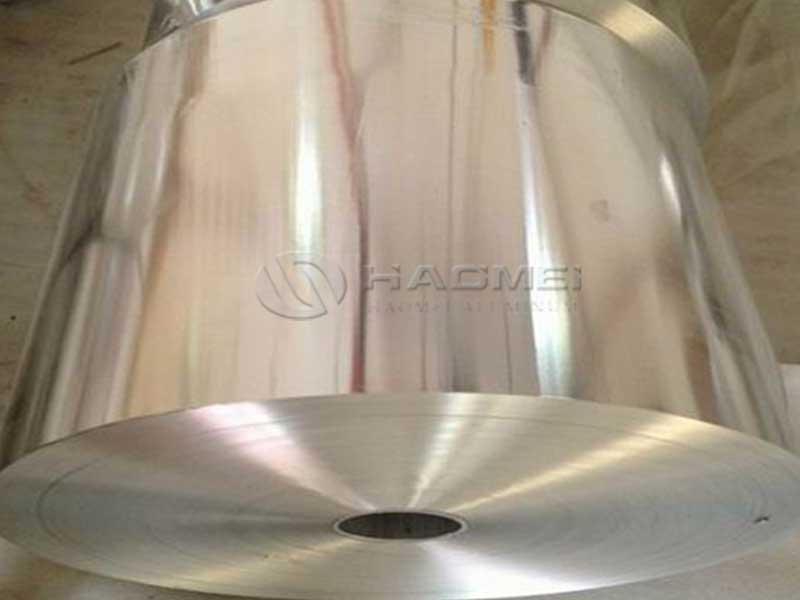
8011 Aluminium Foil Width 45cm Foil Kitchen Roll
“8011 Aluminium Foil Width 45cm Foil Kitchen Roll” sounds like a simple commodity, a quiet presence on a supermarket shelf. Yet behind that silver roll is a carefully tuned alloy system, precise dimensions, controlled temper, and a design logic that connects international standards to the very way you cook dinner or pack food for transport.
Looking at this product from the inside out—starting with the metal itself and ending at the kitchen counter—reveals why 8011 aluminium foil at 45 cm width has become a preferred, almost universal choice for serious kitchens, food service operators, and packaging lines.
The Alloy Behind the Everyday Roll
Alloy 8011 is not just “aluminum foil material.” It is a wrought aluminum alloy engineered specifically for foil and packaging applications, optimized for formability, barrier properties, and surface performance rather than strength alone.
From a metallurgical perspective, 8011 belongs to the 8xxx series, which are aluminum alloys with other elements—primarily iron and silicon—added to improve specific behaviors during casting and rolling into very thin sheet.
A typical chemical composition for 8011 foil-grade aluminum is:
| Element | Typical Range (%) |
|---|---|
| Al | Balance (approx. 97–99) |
| Fe | 0.60 – 1.0 |
| Si | 0.50 – 0.90 |
| Cu | ≤ 0.10 |
| Mn | ≤ 0.20 |
| Mg | ≤ 0.05 |
| Zn | ≤ 0.10 |
| Ti | ≤ 0.08 |
| Others (each) | ≤ 0.05 |
| Others (total) | ≤ 0.15 |
The subtle presence of iron and silicon in this alloy is what makes it particularly suited for foil:
- Iron contributes to strength and tear resistance at very low thicknesses.
- Silicon aids in castability and improves the alloy’s ability to be rolled repeatedly without cracking.
- Low levels of copper and magnesium help maintain corrosion resistance and food compatibility.
This composition also encourages excellent pinhole resistance when rolled to thin gauges. For food-contact foil, fewer pinholes mean better protection from oxygen, moisture, and aroma loss.
Tempering: Why “Soft” Foil Isn’t Weak Foil
The same alloy can feel very different in the hand depending on the temper, which is the way the metal has been processed after rolling. For household and kitchen roll use, common tempers for 8011 are:
- O (annealed, fully soft)
- H18 (full hard)
- H22/H24 (half-hard or quarter-hard, depending on the rolling reduction)
The 45 cm kitchen roll most people buy for cooking and food wrapping is usually in temper O or a very soft variant derived from controlled annealing. This softness is intentional:
- It allows the foil to conform tightly to containers.
- It prevents spring-back when pressed around food.
- It improves foldability, so seals made by hand are more secure.
Typical mechanical properties for 8011-O foil in kitchen gauges (about 9–18 microns) might be:
- Tensile strength: around 60–90 MPa
- Elongation: 10–20% (depending on thickness and direction)
These are modest values compared with structural aluminum sheet, but they are ideal for a foil you want to tear easily by hand and shape over irregular surfaces without tearing prematurely.
H18 foil, on the other hand, is harder and used more where machine-run forming, blister packing, or industrial laminations require higher stiffness and dimensional stability. That difference in temper explains why some industrial 8011 foil feels “crisp” and springy, while kitchen roll foil feels buttery and compliant.
Why 45 cm Width Matters in Real Kitchens
Width is more than a packaging choice; it is a direct reflection of how kitchens work.
A 45 cm roll intersects with standard dimensions in food service:
- Many commercial baking sheets and trays are around 40–45 cm wide.
- Typical home ovens in many markets accept pans up to roughly this width.
- Catering pans and GN (Gastronorm) pans often fall below this width, allowing single-sheet coverage.
By matching the working width of trays and pans, a 45 cm 8011 aluminium foil roll allows:
- Single-pass coverage of a baking tray without overlapping pieces.
- Fewer seams and folds, reducing the risk of leakage when roasting fatty or sauced foods.
- Faster prep times in busy commercial kitchens, where one pull and tear is more efficient than piecing together narrower strips.
Behind this simple width lies an industrial conversion process. Jumbo foil coils might be 1000–1600 mm wide; they are slit to 450 mm (or 44/45 cm depending on regional conventions) using high-precision slitting lines. Edge quality at this stage matters. Poorly slit edges can introduce tiny serrations or micro-cracks that grow into tears when you pull the foil off the roll.
For an apparently trivial consumer product, there is a quiet engineering goal: keep width tolerance tight (often within ±1–2 mm), maintain straight edges, and ensure coil winding tension is optimized so the roll does not collapse or telescope in use.
Surface Performance: Shiny Side, Dull Side, and Beyond
One of the most visible quirks of 8011 kitchen foil is the difference between shiny and dull sides. This is not a coating; it is a result of the final rolling pass, where two sheets are rolled together. The side in contact with the polished rolls becomes shiny, while the sides in contact with each other emerge matte.
Functionally, for everyday cooking, the thermal performance difference between sides is negligible. What matters more is the surface cleanliness and the way the foil interacts with food, coatings, and the environment.
Proper 8011 kitchen foil must comply with food-contact regulations such as:
- EU Regulation (EC) No 1935/2004 and related guidelines on materials intended to come into contact with food
- U.S. FDA CFR Title 21 provisions related to aluminum food contact materials
- National standards such as GB/T 3198, GB 4806 series (China), or equivalent regional standards
These regulations focus on:
- Migration limits: ensuring no harmful substances migrate into food.
- Surface cleanliness: minimal residual rolling oils and contaminants.
- Corrosion resistance in contact with acidic or salty foods.
Manufacturers typically apply controlled degreasing, annealing, and surface finishing so that residual oil content and contaminants stay well within regulatory limits. Some foils are also lacquered or laminated with paper or plastic for specific uses; a plain kitchen roll is usually bare metal but carefully cleaned and processed.
Thickness, Barrier, and Real-World Use
At around 12–15 microns, 8011 foil offers:
- Excellent light barrier: essentially opaque to visible and UV light.
- Very good oxygen and moisture barrier: limiting oxidation and dehydration of wrapped foods.
- Sufficient tear resistance for most domestic uses, while still easy to cut on a serrated box edge.
Thicker 18–25 micron “heavy duty” versions are favored in commercial kitchens where:
- Large roasts are handled.
- Foil is used for wrapping sharp-edged foods, like bones or shellfish.
- Pans are lined and then used repeatedly during a shift.
The barrier performance of aluminum itself is absolute as long as the sheet remains pinhole-free; what really counts are pinholes and mechanical damage. That is where the 8011 alloy design helps—its composition and processing help reduce pinhole density and improve uniformity during high reduction rolling.
Standardization, Traceability, and Implementation
When a kitchen roll of 8011 foil reaches a chef or home cook, it has already passed through a chain of standards and testing steps. Typical reference standards and controls include:
- Alloy designation and chemical composition per EN 573, ASTM B209 or equivalent.
- Mechanical properties and thickness tolerance per EN 546 series (for packaging foil) or regional equivalents.
- Surface quality criteria addressing pinholes, rolling marks, and inclusions.
- Winding and core dimensions to suit standard dispensers and box designs.
Serious manufacturers track:
- Coil identification from cast slab to final roll.
- Annealing curves to ensure the required temper.
- Slitting parameters and roll hardness to prevent telescoping or crushing.
From a customer’s practical standpoint, this translates into:
- Foil that tears where you intend it to, not halfway across the sheet.
- Consistent behavior from roll to roll, so cooking times and methods remain reliable.
- Minimal risk of off-odors or discoloration during use.
The Hidden Sustainability Story
8011 aluminium foil is also part of a broader material cycle. Aluminum, unlike many packaging plastics, is indefinitely recyclable with minimal property loss. Even thin foil, once collected, can be remelted and reused in casting alloys for automotive parts, building products, or even new packaging stock.
The alloy design of 8011 is forgiving enough to accept certain levels of recycled content in the melt, as long as tight control of impurities such as lead, nickel, and others is maintained. In practice, high-quality kitchen foil is often produced from controlled mixes of primary and secondary aluminum, balancing environmental performance with surface cleanliness and food safety.
From the user’s side, simple habits—removing gross food contamination, combining thin scraps, and using local recycling streams where available—help close this loop.
A Precision Tool Masquerading as a Simple Roll
Seen through a metallurgist’s lens, the “8011 Aluminium Foil Width 45cm Foil Kitchen Roll” is not just a household consumable. It is a thin, highly engineered laminate of alloy design, temper, width, and thickness, refined over decades to match the geometry of ovens and trays, the needs of industrial fillers and caterers, and the stringent requirements of food safety regulations.
Every time it seals in aroma, shields a baking tray, or keeps a prepared dish ready for service, it quietly demonstrates the value of choosing the right alloy, in the right temper, at the right width.
https://www.alusheets.com/a/8011-aluminium-foil-width-45cm-foil-kitchen-roll.html