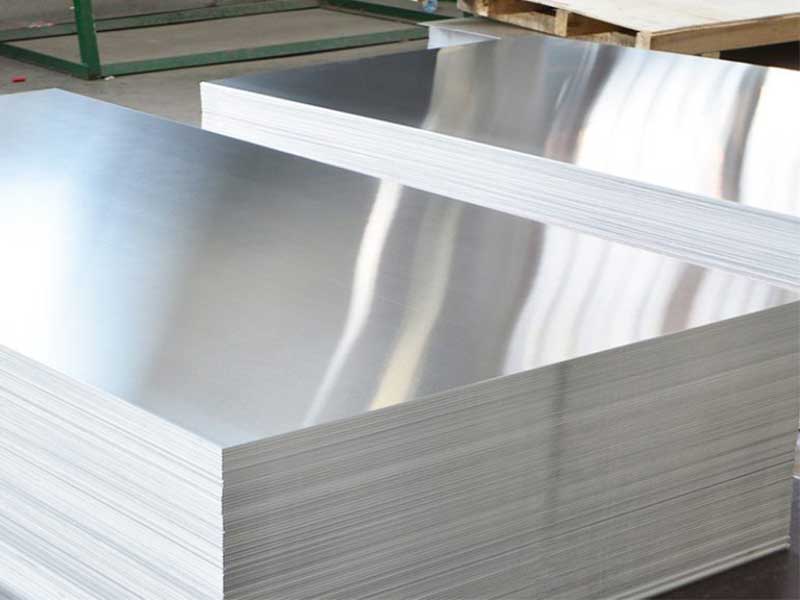
Aluminium Sheet A5005 5052 H14 H24 H32 H34 H36 O
Aluminium Sheet A5005 5052 H14 H24 H32 H34 H36 O
People often shop for aluminium sheet as if it were a single material with a single personality: light, corrosion-resistant, easy to fabricate. In practice, aluminium sheet behaves more like a cast of characters. Two alloys can look identical on the rack yet respond very differently to a press brake, a forming die, a welding arc, or a salty roadside winter. Even within the same alloy, the temper is the "life experience" that changes how it moves, yields, hardens, and holds shape.
A5005 (commonly written as 5005) and 5052 are classic examples in the 5xxx family, where magnesium is the main strengthening element. They are close relatives, but they are not interchangeable in every situation. Then come the tempers-H14, H24, H32, H34, H36, and O-which can turn a good design into a smooth production run, or a frustrating series of cracks, springback, and cosmetic surprises.
Two alloys, two personalities: 5005 vs 5052
5005 is often chosen when the job is asking for clean appearance, uniform anodizing response, and reliable corrosion resistance without pushing strength too far. It's frequently used in architectural trim, appliance panels, interior cladding, and decorative sheet work. When you hear someone say "I need it to anodize nicely," 5005 is usually in the conversation.
5052 carries more magnesium and is generally considered the sturdier sibling: better strength, excellent marine and industrial corrosion resistance, and very good weldability. It's the alloy that shows up in fuel tanks, marine components, pressure vessels (where permitted by design codes), enclosures, and formed parts that must keep their integrity after bending and vibration.
Both are non-heat-treatable alloys, meaning they don't gain strength by solution heat treatment and aging the way 6xxx or 7xxx alloys do. Their strength comes mainly from work hardening and controlled stabilization-exactly what the H tempers are describing.
Temper as a promise: what H14, H24, H32, H34, H36, and O really mean
The temper designation is not decoration; it's the sheet's "contract" for mechanical behavior.
O temper is annealed. This is the soft, most formable condition. If your part needs deep drawing, severe forming, spinning, or complex shaping with minimal cracking risk, O temper is the safest starting point. The trade-off is low strength and more susceptibility to denting.
H tempers indicate strain-hardened conditions. The second digit describes how the material is stabilized.
H14 is strain hardened to about half-hard. It is a common balance of strength and formability for general sheet metal work, with moderate bendability.
H24 is strain hardened and then partially annealed. Compared with H14 at similar "hardness level," H24 typically improves formability and reduces residual stresses, making it more forgiving in forming and helping with flatness consistency.
H32, H34, H36 are strain-hardened and stabilized (the "3" indicates stabilization). In 5xxx alloys, stabilization is important because it helps reduce the risk of property changes in service and improves stress corrosion cracking resistance in certain conditions. As the last digit rises, the sheet is harder and stronger but less formable. H32 is roughly quarter-hard stabilized, H34 is a step higher, and H36 higher again.
In real production terms, moving from H32 to H36 can feel like swapping a cooperative sheet for one that resists bending radius, springs back more, and punishes sharp tooling. Yet the reward is strength and stiffness, which can allow thinner gauges, tighter panel spans, or better dent resistance.
A practical way to choose: "Will it be formed, will it be seen, will it live outdoors?"
When choosing between 5005 and 5052, and among these tempers, it helps to ask three simple questions.
Will it be formed aggressively? If yes, O temper is the first stop, especially for deep draws or complex shapes. If you need some strength but still want good forming, H24 or H32 are often comfortable middle grounds depending on alloy.
Will it be seen? If the surface finish and anodizing uniformity are critical, 5005 tends to be favored for decorative anodized applications. You can anodize 5052 too, but color and appearance uniformity can vary more depending on process and batch. For painted applications, both can work very well, with proper pretreatment.
Will it live outdoors, near salt, or in chemical exposure? 5052 is a safe bet for harsh environments, marine atmospheres, and many industrial conditions. 5005 is corrosion-resistant as well, but 5052's reputation in marine service is hard-earned.
Typical applications by alloy and temper
5005-O is often selected for spinning and deep forming where final strength is not critical, then finished by anodizing or painting.
5005-H14 is common for general sheet metal panels and architectural flashings where moderate forming and good stiffness are needed.
5052-O is a go-to for serious forming: complex ducting, drawn covers, and parts that will be welded after forming.
5052-H32 is a very common specification for enclosures, marine sheet parts, brackets, and general fabrication where bending is needed but the part must remain robust.
5052-H34 and H36 appear when higher strength and dent resistance matter, such as protective panels, equipment housings, and structural-ish sheet components that still must retain corrosion resistance and weldability.
Implementation standards that keep purchasing honest
A frequent failure mode in aluminium sheet procurement is under-specification. Saying "5052 H32 sheet" is better than "aluminium sheet," but it still leaves room for miss about tolerances, flatness, inspection, and test requirements.
Common standards used in practice include ASTM B209 for aluminium and aluminium-alloy sheet and plate, and EN 485 series for European supply (with EN 573 for chemical composition). JIS standards are also used in Asian supply chains. If you operate globally, it's worth specifying the standard explicitly, plus required mechanical testing, thickness tolerances, and surface condition.
Also consider clarifying whether you need sheet with protective film, the direction of grain (rolling direction) for bending-critical parts, and whether you accept coil-to-cut-length conversion, which can influence flatness and residual stress.
Welding, forming, and corrosion notes you only learn after a few jobs
5052 welds very well with common filler alloys, and its corrosion resistance generally remains excellent after welding, though the heat-affected zone softens because work hardening is locally removed. If your design counts on base-metal strength, remember that welded assemblies behave closer to annealed properties in the weld region.
Bending performance is strongly tied to temper and bend radius. O temper is forgiving. H14 and H24 bend well with sensible radii. H34 and H36 demand larger radii, careful tooling, and attention to grain direction; bending across the grain is typically safer for tighter radii.
For 5xxx alloys, sustained exposure to elevated temperatures can change properties. Stabilized tempers such as H32/H34/H36 are used to help control such changes. If your product sees warm environments for long periods, that stabilization is not an abstract detail-it is part of long-term reliability.
Chemical composition snapshot (typical limits)
Below is a practical reference aligned with commonly used specifications (exact limits depend on the governing standard revision and product form):
| Alloy | Si (max) | Fe (max) | Cu (max) | Mn (max) | Mg | Cr | Zn (max) | Ti (max) | Al |
|---|---|---|---|---|---|---|---|---|---|
| 5005 | 0.30 | 0.70 | 0.20 | 0.20 | 0.50–1.10 | 0.10 (max) | 0.25 | 0.20 | Remainder |
| 5052 | 0.25 | 0.40 | 0.10 | 0.10 | 2.20–2.80 | 0.15–0.35 | 0.10 | 0.15 | Remainder |
The table shows the difference immediately: 5052's higher magnesium and defined chromium range contribute to its strength and corrosion performance.
Temper and mechanical behavior, in plain terms
Mechanical properties vary with thickness and standard; suppliers should certify to the governing specification. Still, the general trend is consistent:
O temper offers the highest elongation and lowest yield strength, making it best for deep forming.
H14 and H24 sit in the middle, with H24 typically giving a little more formability for a similar strength class due to partial annealing.
H32, H34, H36 climb in strength and stiffness, while elongation drops. They are good choices when you want the "feel" of a firmer panel and reduced denting, and you can afford the forming radius and springback control.
The most reliable aluminium sheet specs read like a description of intended behavior. Instead of choosing "a metal," you choose how the sheet should act during forming, joining, finishing, and service life. A5005 is the sheet that behaves politely under anodizing lights. 5052 is the sheet that keeps its composure near saltwater and weld seams. O temper is generosity in forming. H36 is discipline in stiffness.
https://www.alusheets.com/a/aluminium-sheet-a5005-5052-h14-h24-h32-h34-h36-o.html