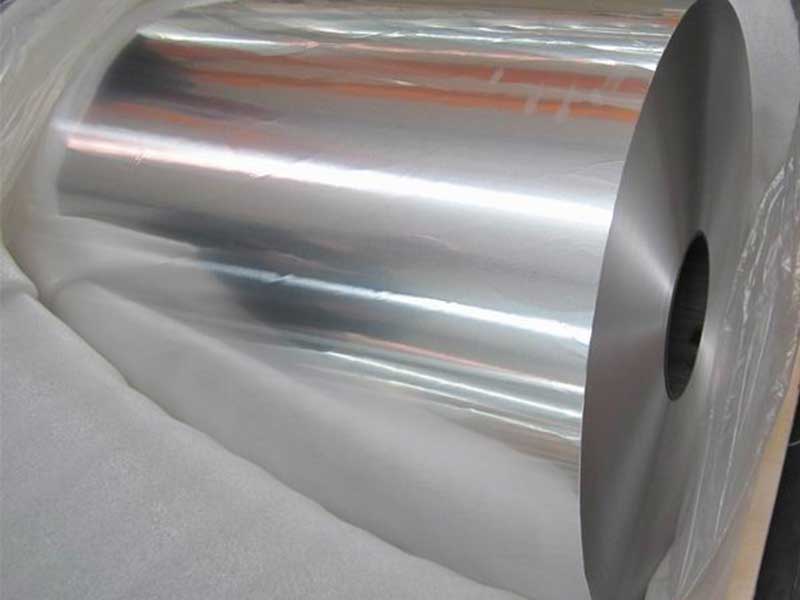
Aluminum sheet Coils for Channel Letters
Channel letters look deceptively simple: a crisp face, a clean return, a confident glow. Yet anyone who has bent a coil into a tight "S," chased a seam that wants to oil-can, or tried to keep a deep blue finish from scuffing on a brake knows the real story. In practice, channel letters are a materials problem disguised as a design job. From that angle, aluminum sheet coils are not just "stock"-they're the silent partner that decides whether your letters assemble smoothly, stay flat in the sun, and keep their finish after years of rain, salts, and UV.
What makes aluminum coil so central is its role as the "return" material: the sidewall band that defines letter depth, carries structural loads, and frames illumination. Coil form matters because it matches how channel letters are made. A roll-fed coil can be slit, edge-guided, and formed with consistent temper and thickness across long runs. That process stability is the difference between a return that bends predictably and one that cracks at the radius, or a letter set whose corners look uniform instead of "handed."
The return's job: bend, hold, and stay honest
In a channel letter, the return is asked to do several things at once. It must accept tight bends without microcracking. It must keep enough stiffness to hold shape and resist denting during handling and installation. It must provide a reliable bonding or fastening surface for backs and trims. And it must remain dimensionally stable outdoors, where thermal cycling tries to warp every seam.
Aluminum's particular advantage here is its balance: low weight, good corrosion resistance, and the ability to tune formability through alloy selection and temper. With the right coil, a shop can run faster, scrap less, and reduce rework caused by seam mismatch and surface marring.
Alloy selection through a channel-letter lens
Most coil used for channel letter returns comes from the 3xxx and 5xxx aluminum families, and occasionally 1xxx for ultra-formable needs. From a sign-fabrication viewpoint, the alloy choice is less about textbook properties and more about "how it behaves at the machine."
The 3003 alloy is a classic return material because it bends smoothly and tolerates tight radii. It is forgiving on small letters and complex fonts where the return must snake around sharp transitions. If your jobs involve intricate scripts, dense spacing, or deep returns where the forming radius is small, 3003 typically reduces cracking risk compared to stronger alloys.
The 5052 alloy adds strength and better resistance to marine or de-icing salt environments. It's often favored for large letters, exposed rooftops, coastal installs, and projects where return stiffness is critical. The tradeoff is that higher strength can mean less forming latitude; for very tight bends, you may need larger radii or a more formable temper.
For highly reflective trim or specialty finishing, 1100 can appear in the supply chain, prized for its excellent formability and surface brightness. It's not the go-to for structural returns, but it has a place where extreme bending without cracking is the priority.
Temper: where speed meets risk
Temper is the underappreciated dial that controls your shop's comfort level. In return forming, the sweet spot is usually "half-hard" to "soft," depending on how tight the design is.
Common temper choices include H14 and H24 for coil that needs a mix of stiffness and formability, and O temper when the job is dominated by tight curves and small geometry. Softer tempers reduce springback and minimize edge microfractures, helping corners close cleanly. Harder tempers resist dents and keep a straighter edge in long runs, which matters on big block letters where a wavy return becomes visible in grazing light.
A practical way to think about temper is to match it to font complexity and letter size. Intricate letters reward softness. Large, simple letterforms can benefit from extra stiffness. Many high-volume fabricators standardize on a temper that runs "well enough" across most jobs, then keep an alternative temper for demanding scripts.
Thickness and width: engineering the look
Return coil thickness is often selected by a mixture of habit and experience, but it has clear technical consequences.
Typical return thickness ranges around 0.040"–0.063" (about 1.0–1.6 mm), with thinner gauges used for small indoor letters and thicker gauges for large outdoor sets or high-wind zones. Thickness influences dent resistance, fastener pull-through, and how the return holds its curvature without "telegraphing" waves. Thicker isn't always better: overly thick material can fight tight radii and exaggerate springback, making it harder to keep seam alignment.
Coil width usually matches the letter depth plus allowances for hems, trim cap engagement, or bonding flanges. Clean, burr-minimized slitting is crucial; a rough edge can print through paint films, snag protective masking, and initiate corrosion at cut edges-especially if dissimilar fasteners or aggressive cleaners enter the picture.
Surface finish: the customer sees it first
Even when the return is not the primary visible surface, it gets inspected. Dark colors show handling marks. Metallic finishes reveal waviness. Gloss films highlight every tiny forming defect.
That is why prefinished aluminum coil-polyester (PE) or PVDF-based coatings-has become so valuable. Prefinished coil offers color consistency and eliminates a painting step, but it raises the bar for forming quality. Coating flexibility, film thickness, and cure quality determine whether tight bends create "crazing" or edge chipping.
For demanding outdoor signage, PVDF (commonly referenced as 70% PVDF) is often specified because it holds color and gloss longer under UV exposure. Polyester systems can be excellent for budget-conscious jobs or interior applications, but they may chalk sooner outdoors depending on resin quality and exposure severity.
Anodized coil also appears in architectural-inspired signage where metallic depth is desired. Anodizing brings hardness and corrosion resistance, but bends must be designed carefully to avoid visible strain lines, especially on darker anodized tones.
Coil quality details that decide your yield
From a fabrication standpoint, the most "expensive" part of a coil is not the invoice-it's the scrap created by inconsistency. Several coil attributes directly affect yield and speed.
Flatness and residual stress control whether the return stays planar after forming or twists like a ribbon. Consistent mechanical properties across the coil prevent one batch from bending like butter and the next from cracking at corners. Surface cleanliness and coating adhesion determine whether tapes, silicones, and acrylic foams bond reliably, particularly in illuminated letters where thermal cycling can test every joint.
If your process uses automated channel letter benders, tight thickness tolerance and predictable springback reduce calibration drift. That translates into corners that meet without wrestling and seams that align without forcing, which protects coatings and improves water resistance.
Standards and practical specifications
While signage is not an aerospace application, referencing recognized standards helps remove ambiguity between buyer and mill. Commonly used material standards include ASTM B209 for aluminum and aluminum-alloy sheet and coil, and ASTM B221 for extrusions used elsewhere in the system. For coated coil, requirements often align with AAMA 2603/2604/2605 for performance tiers, with 2605 typically associated with PVDF systems for long-term exterior durability.
In purchase specifications, it's wise to define alloy, temper, thickness, width tolerance, coating system and color standard, gloss range, protective film requirements, and acceptable surface class. These details prevent "close enough" substitutions that behave differently on the bender.
Where aluminum coil shines in application
Aluminum sheet coils support a surprisingly wide range of channel-letter styles. Traditional illuminated letters rely on aluminum returns for rigidity and corrosion resistance. Halo-lit letters benefit from stable, straight returns that maintain consistent standoff spacing and light wash. Large raceway-mounted sets prefer lightweight returns to reduce overall load on the mounting system.
Beyond standard storefronts, aluminum coil returns are increasingly used in hybrid builds that mix acrylic faces, aluminum backs, and LED modules, where thermal management matters. Aluminum's conductivity helps spread localized heat, improving LED environment stability when combined with sensible venting and assembly design.
Typical chemical composition reference
Below is a simplified composition table for common coil alloys used in channel letter work. Actual mill certificates should be consulted for precise limits and heat-specific values.
| Alloy | Si (%) | Fe (%) | Cu (%) | Mn (%) | Mg (%) | Zn (%) | Cr (%) | Ti (%) | Al |
|---|---|---|---|---|---|---|---|---|---|
| 1100 | ≤1.0 (Si+Fe) | ≤1.0 (Si+Fe) | 0.05–0.20 | ≤0.05 | ≤0.05 | ≤0.10 | - | ≤0.05 | Remainder |
| 3003 | ≤0.6 | ≤0.7 | 0.05–0.20 | 1.0–1.5 | ≤0.05 | ≤0.10 | - | ≤0.10 | Remainder |
| 5052 | ≤0.25 | ≤0.40 | ≤0.10 | ≤0.10 | 2.2–2.8 | ≤0.10 | 0.15–0.35 | ≤0.10 | Remainder |
A distinctive takeaway: treat the coil as part of the typography
The most useful perspective is to treat aluminum coil not as a commodity but as part of the typeface. Every font asks for a different bending behavior; every finish demands a different surface discipline. When you specify alloy and temper to match the letter geometry and exposure, you're not just buying metal-you're buying predictability. And in channel letters, predictability is what turns a glowing concept into a crisp, durable sign that still looks intentional years after the grand opening.
https://www.alusheets.com/a/aluminum-sheet-coils-for-channel-letters.html