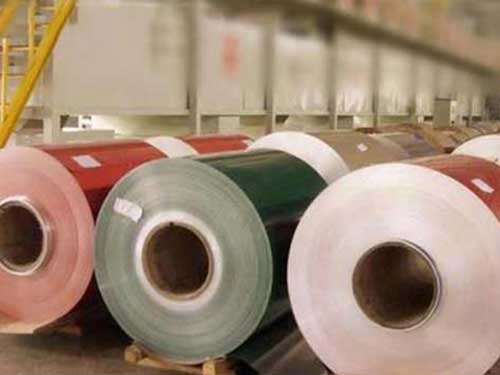
3003 3105 PVDF Alloy color coated Aluminum coil
3003 3105 PVDF Alloy Color Coated Aluminum Coil: When Corrosion Resistance Meets "Architectural Color Engineering"
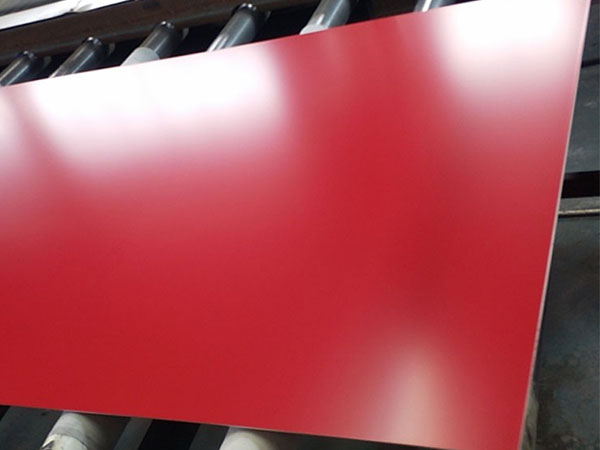
In many projects, buyers treat a PVDF color coated aluminum coil as a finish choice: pick a color, pick a gloss, approve a sample, move on. A more useful way to judge 3003/3105 PVDF alloy color coated aluminum coil is to see it as a layered engineering system designed to keep its appearance stable while the substrate quietly handles forming, wind load, humidity, salt, exhaust gases, and time.
From that perspective, the "color" is not decoration. It is the visible output of an entire performance stack: alloy chemistry and temper control the coil's formability and long-term stiffness; pretreatment determines adhesion and corrosion resistance; PVDF chemistry anchors UV stability; curing locks everything together. When all layers are aligned, the coil behaves less like painted metal and more like a durable architectural skin.
Why 3003 and 3105 are the Workhorse Alloys Behind PVDF Coated Coil
Both AA3003 and AA3105 belong to the Al-Mn family, which is widely selected for prepainted aluminum coil used in roofing, façade cladding, ceiling systems, roller shutters, and general building envelope products.
AA3003 is often chosen for its balanced forming behavior. It tends to "flow" smoothly during bending, roll forming, and shallow drawing operations, making it friendly for profiles where consistency matters more than high strength.
AA3105 adds a small Mg component, which generally provides a modest strength lift and good processing stability for continuous coil coating and roll forming lines. In practical purchasing terms, 3105 frequently appears in building applications where a slightly stronger substrate is desirable without moving into higher-strength, less-formable alloy families.
The distinctive viewpoint here is simple: PVDF is the "weather shield," while 3003/3105 are the "shape and structure." If you choose PVDF without considering alloy and temper, you may get excellent color retention on a substrate that wrinkles, cracks at bends, or oil-cans in wide panels. If you choose alloy/temper without the right coating system, you may get strong panels that chalk or fade too quickly. Performance is cumulative, not additive.
PVDF Coating: What It Really Contributes (Beyond "High Weather Resistance")
PVDF (polyvinylidene fluoride) coatings used on aluminum coil are prized because fluorocarbon bonds resist UV degradation exceptionally well. In real-world exterior exposure, that translates into slower gloss loss, slower chalking, and better long-term color integrity compared with many polyester systems.
In coil coating practice, PVDF systems are commonly supplied as 70% PVDF resin formulations (often referenced in the industry as "70% PVDF") for architectural durability. The coating system is only as strong as the pretreatment and primer beneath it, which is why "PVDF" should always be understood as a system: pretreatment + primer + topcoat (and often a back coat).
Typical Parameters for 3003/3105 PVDF Color Coated Aluminum Coil (Integrated for Ordering)
Specifications vary by application, but the following parameter ranges are commonly used when ordering 3003 3105 PVDF color coated aluminum coil for construction and general exterior products:
Substrate thickness
Commonly about 0.20 mm to 2.00 mm, with many architectural skins and cladding systems falling around 0.30 mm to 1.20 mm depending on profile design and span.
Coil width
Often supplied in wide coils for slitting and roll forming; typical supply depends on mill capability and customer line, commonly several hundred millimeters up to 1500 mm or more.
Coating structure
PVDF topcoat over primer on the weather side; service back coat on the reverse side. Single-side or double-side coating is selected based on end use.
Coating thickness (dry film)
For architectural PVDF, the topcoat is commonly specified around the mid-20-micron class, with primer typically several microns. Back coat is frequently thinner. Actual targets are set by the coating supplier system and the performance requirement.
Surface finish options
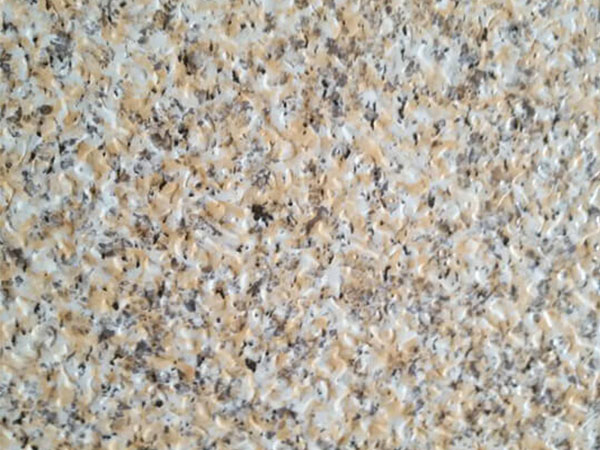
High gloss, medium gloss, matte; solid, metallic, pearlescent; textured options depending on line capability.
Common colors
RAL and custom-matched colors; color control is typically managed by ΔE tolerances agreed at approval stage.
Core performance intent
Stable forming (no micro-cracking on bends within design radius), strong adhesion after forming, and long-term exterior durability.
Implementation Standards and Practical Compliance Targets
Because coated aluminum coil sits at the intersection of metallurgy and organic coatings, standards typically come from both worlds. Commonly referenced frameworks include:
Aluminum alloy and temper standardization
AA/ASTM designations for wrought aluminum alloys and tempers are commonly used to define what "3003 H14" or "3105 H24" actually means in terms of strain hardening and processing state.
Coil coating paint and process expectations
Coil coating quality is often evaluated through test methods for film thickness, gloss, color difference, hardness, flexibility, impact resistance, adhesion, solvent rub, and corrosion testing. Depending on region and project type, buyers frequently align with established coil coating specifications used in architectural cladding supply chains.
Why standards matter from a "system viewpoint"
A PVDF coil can pass a film thickness check yet fail prematurely if the pretreatment is not compatible with the primer, or if curing is off and residual solvents weaken the network. Implementation standards provide a shared language for controlling those invisible risks.
Alloy Tempering: The "Hidden Dial" That Controls Forming and Flatness
For 3003 and 3105, temper selection is not a minor checkbox. It is the dial that tunes yield strength, elongation, and springback.
Commonly used tempers for coated coil include:
H14
A strain-hardened temper that balances strength and formability. Often selected where roll forming needs stability, but bends are not extremely tight.
H24
Strain-hardened and partially annealed, frequently chosen to improve forming latitude compared with H14 while still retaining useful strength and panel stability.
O (annealed)
Maximum ductility, used when deep forming is required, though it may be more prone to waviness or oil canning if panel design is not supportive.
A distinctive way to choose temper is to start from the forming geometry rather than the strength target. Tight radii, hemming, or aggressive profiling generally benefits from more ductility; long flat spans and stiffness-driven designs may benefit from slightly higher hardness. The best choice is the one that protects both the coating integrity at the bend and the final panel aesthetics in service.
Chemical Composition: What 3003 and 3105 Bring to the Substrate
Below is a concise chemical composition reference for AA3003 and AA3105 (typical limits in weight percent). Exact limits should be confirmed against the governing material standard and the mill test certificate for a specific order.
Chemical Properties (Composition) Table, wt%
| Alloy | Si | Fe | Cu | Mn | Mg | Cr | Zn | Ti | Al |
|---|---|---|---|---|---|---|---|---|---|
| AA3003 | ≤ 0.60 | ≤ 0.70 | 0.05–0.20 | 1.0–1.5 | ≤ 0.05 | - | ≤ 0.10 | - | Remainder |
| AA3105 | ≤ 0.60 | ≤ 0.70 | ≤ 0.30 | 0.30–0.80 | 0.20–0.80 | ≤ 0.20 | ≤ 0.40 | ≤ 0.10 | Remainder |
How to read this table as a performance story
Manganese is the backbone for both alloys, supporting strength and corrosion performance without sacrificing workability. The small magnesium content in 3105 is one reason it's frequently considered a slightly stronger, very steady option for building products that rely on roll forming consistency.
Conditions That Decide Real Service Life: Pretreatment, Curing, and Bend Integrity
PVDF often gets all the credit, but long-term durability is usually decided by process discipline:
Pretreatment quality
A conversion layer (often chromate-free in modern lines) improves corrosion resistance and adhesion. Poor pretreatment is a common cause of edge creep and delamination after years of exposure, especially in coastal or industrial atmospheres.
Curing window control
Under-cure can leave a weaker film that chalks or stains; over-cure can embrittle the coating and reduce flexibility. Coil coating lines manage this through peak metal temperature control and consistent dwell.
Bend performance
A PVDF coil intended for roll forming should be validated in the same way it will be shaped. Bend radius expectations should be aligned with temper and coating system so the finish remains intact at critical corners.
Where 3003/3105 PVDF Color Coated Aluminum Coil Fits Best
This material combination is especially compelling for:
Architectural roofing and wall cladding where long-term color retention is a visible value
Composite panel skins where flatness, coating integrity, and weather resistance are all required
Ceilings, soffits, fascia, and trims where forming is frequent and finish must remain uniform
Shutters and roll-formed profiles where coil consistency and paint adhesion under forming stress matter
The unique advantage is not "PVDF plus aluminum." It is the ability to specify a stable, repeatable coil that moves cleanly through fabrication, then holds its appearance in service with minimal maintenance.
Purchasing Notes That Prevent Mismatches (Natural Fit for RFQs)
When specifying 3003 3105 PVDF alloy color coated aluminum coil, it helps to align these conditions in the inquiry so the delivered coil matches the application:
Alloy and temper matched to forming severity
Coating system designation (PVDF topcoat type, primer type, back coat requirement)
Weather-side coating thickness target and gloss range
Color standard reference and acceptable ΔE tolerance at approval
Intended environment (coastal, industrial, high UV) to confirm pretreatment and testing expectations
Packaging, protective film needs, and handling requirements for painted surfaces
A PVDF color coated coil is often the first thing people see and the last thing they want to repair. With AA3003 or AA3105 underneath, the coil becomes a carefully balanced interface between metal mechanics and polymer durability. If you evaluate it as a system-substrate chemistry, temper, pretreatment, primer, PVDF topcoat, and curing-you end up selecting not just a color, but a predictable long-term surface.
https://www.alusheets.com/a/3003-3105-pvdf-alloy-color-coated-aluminum-coil.html