Black aluminium plate sheets
Black aluminium plate sheets sit at an interesting intersection: they are not merely "aluminium painted black," and they are not only a styling choice. From a technical viewpoint, black surfaces are a way to control how aluminium behaves in real environments-how it sheds heat, resists fingerprints, survives UV exposure, avoids galvanic staining, and maintains visual consistency across production lots. In modern manufacturing, black aluminium is often selected as a functional surface system where the coating, the alloy, and the temper work together as one engineered stack.
For buyers comparing black aluminium plate sheets for enclosures, architectural trims, transportation panels, appliance skins, solar frames, or industrial guards, the most useful question is not "Is it black?" but "What kind of black, on what alloy, with what temper, and to which standard?"
What "Black Aluminium Plate Sheet" Really Means
In commercial practice, black aluminium plate sheets usually refer to aluminium plate or thick sheet with a black surface finish created by one of the following approaches:
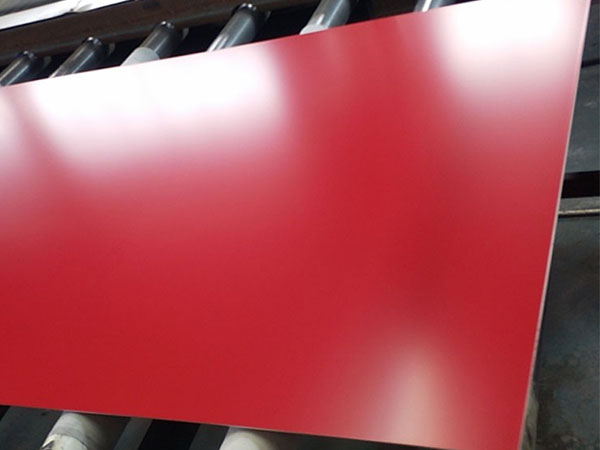
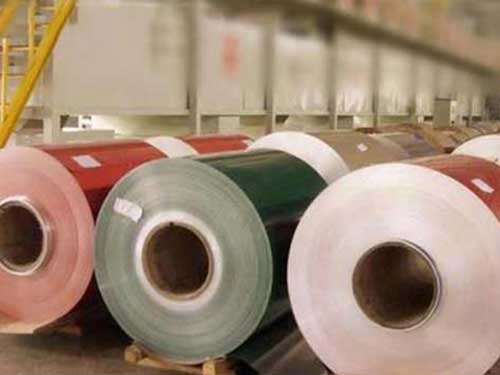
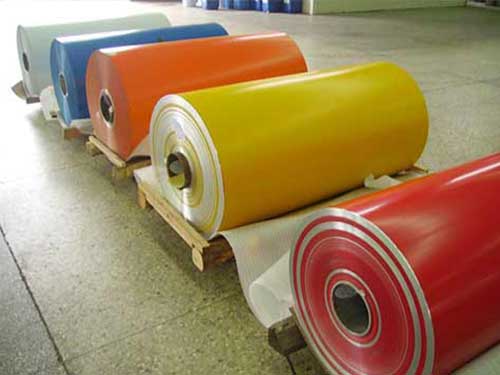
Black coated aluminium sheet is the most common route for consistent color and scalable production. Coil coating or sheet coating applies a controlled, baked organic coating system (typically polyester, SMP, PVDF, or polyurethane) over a pretreatment and primer.
Black anodized aluminium is an electrochemical oxide layer with dyeing or electrolytic coloring. It offers excellent abrasion resistance and metallic depth, often used in architecture and consumer products.
Black hard anodized aluminium is thicker and more wear-resistant than decorative anodizing, often used for industrial parts.
Black electrophoretic coating and other specialty finishes appear in niche applications where edge coverage or specific corrosion behavior is needed.
The distinction is that "plate" and "sheet" are thickness concepts, while "black" is a surface system. The final performance depends on both.
The Distinctive Viewpoint: Black as a Performance Dial, Not a Color
A black surface changes the "physics profile" of aluminium. The most overlooked advantage is radiative heat behavior. Many black coating systems exhibit higher thermal emissivity than bare aluminium, which can help panels release heat more effectively in passive cooling situations. In enclosures, LED housings, power cabinets, and electronic chassis, this can be a quiet performance boost that doesn't require redesigning the part.
At the same time, surface engineering is where risk concentrates. If a black finish is chosen without aligning coating chemistry to forming requirements, the first failure may appear as micro-cracking at bends, edge creep after salt exposure, chalking under UV, or visible color shift between batches. So the "unique" way to spec black aluminium is to treat it like a laminated structure:
Aluminium alloy and temper determine strength, bendability, and fatigue behavior.
Pretreatment determines adhesion and corrosion resistance at cut edges.
Primer and topcoat determine UV stability, chemical resistance, and color uniformity.
Curing conditions and film thickness define hardness, flexibility, and long-term stability.
Typical Parameters for Black Aluminium Plate Sheets
Common thickness ranges for coated black aluminium used in fabrication run from thin gauge sheet for skins up to thicker plate for machine guards and structural covers. In many supply chains, "thick sheet" and "plate" are produced as cut-to-length sheets rather than coil.
Common dimensional and performance parameters are typically specified as:
Thickness commonly from 0.3 mm up to 6.0 mm for coated sheet and plate applications, with thicker gauges possible depending on coating line capability and handling.
Width commonly from 1000 mm to 2000 mm, with customized widths depending on slitting and leveling.
Length commonly from 2000 mm to 6000 mm, or custom cut-to-size.
Coating system options including PE (polyester) for general use, SMP for enhanced weathering, PVDF for architectural UV resistance, and PU for high chemical resistance and toughness.
Coating film thickness often specified as a total dry film thickness around 20–35 μm for interior/general use and higher builds such as 35–60 μm for exterior durability, depending on system.
Gloss levels ranging from matte/low-gloss to high-gloss, with matte black often preferred for anti-glare panels and premium consumer finishes.
Color control commonly referenced to RAL or customer master sample, with ΔE tolerances agreed by project requirement.
Adhesion, flexibility, and impact resistance commonly validated by cross-hatch adhesion tests, T-bend tests, and impact tests depending on the application.
Because "black" exaggerates visual defects, buyers often require tight controls on coating uniformity, surface cleanliness, and coil-to-coil color consistency.
Alloy Selection: Matching Black Finish to Mechanical Reality
The alloy under a black surface determines how the sheet forms and how it holds flatness. Several aluminium alloy families dominate black coated plate sheet use:
The 1xxx series (such as 1050, 1060, 1100) offers excellent formability and high thermal conductivity, making it attractive for decorative panels, signage, and applications where deep bending is needed but strength is secondary.
The 3xxx series (such as 3003, 3004) balances formability and strength and is widely used in general fabrication, cladding, housings, and appliance panels.
The 5xxx series (such as 5052, 5005, 5083) delivers stronger mechanical properties and better marine corrosion behavior, often chosen for transportation, coastal architecture, and industrial environments. 5005 is also popular for anodizing quality when the finish route is black anodized rather than coated.
The 6xxx series (such as 6061) is common for structural plate and machining, though coated sheet supply in 6xxx depends on availability and the manufacturing route.
A practical rule: if the part requires tight bend radii, choose a softer temper in a formable alloy; if it requires stiffness and dent resistance, increase thickness first, then choose a stronger temper, because excessive strength can reduce coating formability at bends.
Tempering Conditions That Matter for Black Coated Aluminium
Temper is more than a mechanical label-it affects surface strain during forming, which affects whether a black coating stays intact at corners and hems.
Common tempers used for black aluminium plate sheets include:
O temper for maximum ductility and deep forming.
H14 or H24 for moderate strength with good forming, common for 3003 and 5052 sheet.
H32 for higher strength while retaining workable formability, widely used for 5052 in transportation and industrial panels.
T4 or T6 tempers appear more in 6xxx plate applications; for coated sheets, the chosen temper should be checked against minimum bend radius and coating flexibility requirements.
In coated aluminium, it's wise to align temper choice with a bend test requirement such as a T-bend performance target, because the substrate strain at the outer radius is what challenges the coating most.
Implementation Standards and Quality References Used in Trade
Black aluminium plate sheets are usually specified through a combination of aluminium material standards and coating standards, plus project-specific performance requirements.
Commonly referenced aluminium material standards include:
ASTM B209 for aluminium and aluminium-alloy sheet and plate.
EN 485 series for aluminium wrought products in Europe (mechanical properties and tolerances).
JIS H4000 / JIS H4040 related specifications in Japanese supply chains depending on product form.
For prepainted/coated aluminium sheet, references may include:
EN 1396 for continuously organic coated aluminium strip and sheet (coil coated).
AAMA 2603, AAMA 2604, AAMA 2605 as performance specifications for architectural coatings, often tied to polyester, SMP, and PVDF systems respectively.
ISO 2409 for cross-cut adhesion classification.
ISO 9227 for salt spray testing.
ISO 16474 for UV exposure testing methods.
Not every project needs architectural-grade standards, but aligning to a known standard reduces ambiguity when evaluating chalking, gloss retention, and corrosion resistance.
Coating Chemistry and "Chemical Properties" in Real-World Use
When buyers ask for "chemical properties," they often mean two related things:
The chemical composition of the aluminium alloy, which influences corrosion behavior and mechanical performance.
The chemical resistance of the black coating system, which determines how the surface tolerates cleaners, oils, fuels, salt, and mild acids/alkalis.
The most useful way to spec chemical resistance is to define the exposure environment: indoor dry, outdoor UV, coastal salt, industrial pollutants, frequent cleaning, contact with cutting fluids, or occasional chemical splash. A black PE coating might excel indoors but not match PVDF outdoors in UV retention, while a PU system may outperform in scratch and chemical resistance.
Chemical Composition Table of Common Alloys for Black Aluminium Plate Sheets
Below is a practical reference table for typical chemical composition limits. Actual mill certificates govern each shipment, and limits may vary slightly by standard and producer. Values are given as wt% (mass fraction).
| Alloy | Si | Fe | Cu | Mn | Mg | Cr | Zn | Ti | Al |
|---|---|---|---|---|---|---|---|---|---|
| 1050 | ≤0.25 | ≤0.40 | ≤0.05 | ≤0.05 | ≤0.05 | - | ≤0.05 | ≤0.03 | Balance (≥99.5%) |
| 1060 | ≤0.25 | ≤0.35 | ≤0.05 | ≤0.03 | ≤0.03 | - | ≤0.05 | ≤0.03 | Balance (≥99.6%) |
| 1100 | ≤0.95 (Si+Fe) | included | 0.05–0.20 | ≤0.05 | - | - | ≤0.10 | ≤0.05 | Balance (≥99.0%) |
| 3003 | ≤0.60 | ≤0.70 | 0.05–0.20 | 1.0–1.5 | - | - | ≤0.10 | - | Balance |
| 3004 | ≤0.30 | ≤0.70 | ≤0.25 | 1.0–1.5 | 0.8–1.3 | - | ≤0.25 | - | Balance |
| 5005 | ≤0.30 | ≤0.70 | ≤0.20 | ≤0.20 | 0.5–1.1 | ≤0.10 | ≤0.25 | ≤0.20 | Balance |
| 5052 | ≤0.25 | ≤0.40 | ≤0.10 | ≤0.10 | 2.2–2.8 | 0.15–0.35 | ≤0.10 | - | Balance |
| 6061 | 0.40–0.80 | ≤0.70 | 0.15–0.40 | ≤0.15 | 0.8–1.2 | 0.04–0.35 | ≤0.25 | ≤0.15 | Balance |
Notes that matter in black-finish applications: higher Mg alloys like 5052 typically bring better strength and corrosion resistance, which can be helpful for outdoor or transport panels; 3xxx alloys like 3003 are forgiving in forming and are often the "safe" general-purpose choice for coated panels with bends.
Choosing a Black Finish That Matches the Job
A black aluminium plate sheet for outdoor architectural use is usually judged on long-term color stability. In that context, PVDF-based black coatings are often chosen for excellent UV resistance, gloss retention, and chalk resistance. For indoor enclosures, PE systems may deliver a cost-effective and uniform black with good manufacturability. For chemical-heavy environments, a polyurethane or specialized system may be more appropriate.
Also consider edge behavior. Aluminium is corrosion-resistant, but cut edges can become the weak point of a coated system if the pretreatment and primer are not robust or if aggressive environments are involved. Good specifications often include requirements for pretreatment type, coating build, and corrosion testing around scribes and cut edges.
Manufacturing and Processing Considerations Buyers Often Miss
Black surfaces are unforgiving during fabrication. Handling marks, roller streaks, and micro-scratches show more readily than on lighter colors.
Protective film selection is part of the product, not an afterthought. For laser cutting or CNC, the adhesive type and heat behavior matter.
Bending requires alignment between coating flexibility and substrate temper. A "stronger" sheet may reduce denting but can increase coating stress at bends, so bend radius and T-bend targets should be part of the conversation.
Welding and high-heat operations will damage organic coatings locally; if welding is required, consider leaving weld zones uncoated or planning for post-finish touch-up.
Why Coated Aluminum Sheet Is the Most Scalable Path to Consistent Black
From a production perspective, coil-coated or sheet-coated black aluminium offers repeatable film thickness, consistent curing, and efficient large-batch color control. That makes it a preferred choice when projects require uniform black across multiple lots-such as facade trims, equipment panels, or branded industrial enclosures. The coating becomes a controlled industrial process rather than a variable post-paint step, which improves predictability in assembly and long-term appearance.
Practical Spec Checklist You Can Copy Into an RFQ
To keep the "black" you saw in the sample the same black you install months later, a good RFQ typically defines alloy and temper, sheet thickness and tolerances, coating system type, coating thickness, gloss target, color reference and ΔE tolerance, required adhesion and bend performance, corrosion and UV performance standards, protective film requirement, and the intended service environment.
https://www.alusheets.com/a/black-aluminium-plate-sheets.html