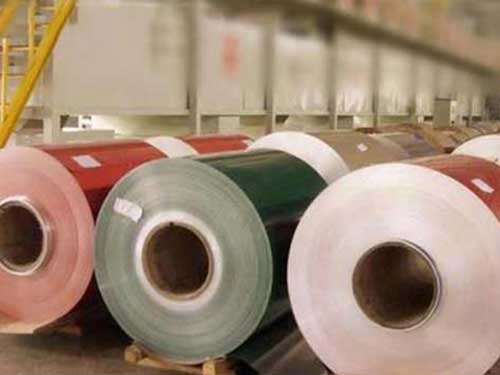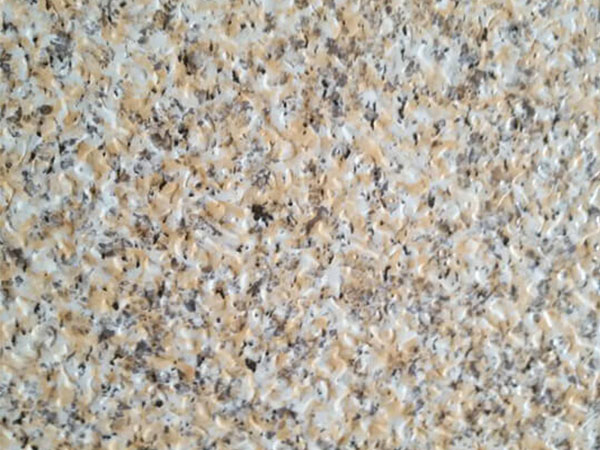
3003 5052 Color Coated Aluminum Plates
Color coated aluminum plate is often introduced as a "decorative" product, but that label undersells what is really happening. A painted surface is not simply a color layer; it is a deliberate engineering decision that changes how the metal behaves in daylight, salt air, urban soot, cleaning chemicals, and even in the hands of fabricators. When the substrate is 3003 or 5052 aluminum alloy, the coating becomes a kind of translator between environment and metal-shaping durability, appearance retention, and long-term cost in ways that raw sheet cannot.
From this perspective, choosing between 3003 and 5052 color coated aluminum plates is less about picking a catalog item and more about aligning three systems: the alloy's metallurgy, the temper's forming behavior, and the coating's weathering chemistry.
Seeing the substrate through the paint
Both 3003 and 5052 belong to the family of wrought aluminum alloys used broadly in building skins, transportation trims, appliance panels, and signage. Yet they speak different "mechanical languages."
3003 is an Al-Mn alloy. Manganese is a quiet strengthener: it improves strength over pure aluminum and enhances resistance to certain forms of corrosion without making the material hard to form. When color coated, 3003 often feels like the pragmatic choice for broad, gently formed panels where cost efficiency and stable processing matter.
5052 is an Al-Mg alloy. Magnesium brings higher strength and better marine corrosion resistance, particularly against salt-laden atmospheres. It is also more resilient in applications that see vibration, impact, or tighter forming-within reasonable limits. Under the same coating system, 5052 tends to provide a more robust foundation when the job is physically demanding.
If color is the "face" of the product, 3003 and 5052 are the "bones." The coating protects the surface, but the substrate determines how well that surface stays intact after bending, fastening, thermal cycling, and years of stress.
Temper is where fabrication meets reality
Tempering is often treated as a footnote, but for color coated plate it is the practical hinge point: too soft and panels can dent during handling; too hard and coating may crack at bends if radii are tight.
Common tempers for coil-coated or pre-painted applications include H14, H24, and H32, along with O temper for deep forming. In plain terms, H14 is strain hardened to a moderate level; H24 includes partial annealing to restore some ductility; H32 is strain hardened and stabilized, offering good strength and improved resistance to softening at moderate temperatures. For 5052, H32 is especially common in architectural and marine-adjacent uses because it balances strength, formability, and stability.
A subtle but important detail: pre-painted sheet is typically formed after coating. That means the coating must survive bending. In practice, this pushes many projects toward tempers that can bend without microcracking the paint film, and toward coating systems with adequate flexibility.
Coating chemistry: not all "color" is equal
A color coated aluminum plate is usually produced by coil coating, where the aluminum is cleaned, pretreated, primed, top-coated, and baked in controlled conditions. The value is consistency: uniform film thickness, controlled curing, and repeatable gloss and color.
Typical systems include:
Polyester, a widely used exterior/interior coating with a good balance of cost and performance. It is common for general cladding, appliance housings, and signage where extreme UV resistance is not the highest requirement.
PVDF, often chosen for high-end architectural facades. Its strength is long-term color and gloss retention in harsh UV exposure, along with chemical resistance. PVDF is usually specified where the building's appearance is expected to remain stable for decades.
SMP, a middle-ground solution, often selected when better weatherability than standard polyester is desired.
Coating selection should be tied to service environment and cleaning regime. An industrial area with periodic wash-down, a coastal façade, and an interior ceiling panel are three different "weather stories," even if they share the same color code.
Implementation standards and practical acceptance
In engineering procurement, what matters is not only alloy designation but also what standard defines chemistry, mechanical properties, and tolerances. Common references include ASTM B209 for aluminum sheet and plate, EN 485 for European supply, and JIS H4000/H4006 in Japanese contexts. For coating performance and coil coating process requirements, specifications may reference AAMA standards for architectural coatings, or internal OEM standards that define adhesion, bend, impact, and salt spray targets.
A good purchasing description typically includes alloy, temper, thickness, coating type, coating thickness, gloss level, color reference, surface finish, and intended application class. When those details are clear, disputes about "same color but different performance" become far less likely.
Chemical composition: the small percentages that change outcomes
Below are typical composition limits used in mainstream standards for wrought aluminum alloys. Exact limits can vary slightly by standard and supplier practice, so these should be treated as representative unless a specific standard is stated on the order.
Typical chemical composition (wt.%)
| Alloy | Si | Fe | Cu | Mn | Mg | Cr | Zn | Ti | Al |
|---|---|---|---|---|---|---|---|---|---|
| 3003 | ≤0.6 | ≤0.7 | 0.05–0.20 | 1.0–1.5 | - | - | ≤0.1 | - | Balance |
| 5052 | ≤0.25 | ≤0.4 | ≤0.10 | ≤0.10 | 2.2–2.8 | 0.15–0.35 | ≤0.10 | ≤0.10 | Balance |
A useful way to read this table is to focus on the "active" elements. 3003's Mn supports strength and workability in a cost-effective way. 5052's Mg and Cr are there to create higher strength and better corrosion performance in challenging environments.
Mechanical expectations in real projects
Mechanical properties depend on temper and thickness, but broad expectations are well-known in fabrication shops: 5052 in H32 is significantly stronger than 3003 in H14/H24, while 3003 can feel smoother and more forgiving in general forming.
In color-coated work, strength is not only about load. It also affects flatness, oil canning tendency in wide panels, and how resistant the surface is to handling dents before installation. Coating can hide small scuffs, but it cannot erase a dent that changes reflected light across a façade.
Choosing between 3003 and 5052: a "failure mode" mindset
An effective way to select is to imagine how the part might fail.
If the risk is deformation, vibration fatigue, edge damage during transport, or long-term exposure near coastlines, 5052 often gives a wider safety margin.
If the risk is cost pressure, high-volume production, moderate service environment, and the geometry is not severely demanding, 3003 is frequently the efficient choice.
When the coating is premium PVDF, many buyers prefer pairing it with 5052 for exterior architectural use because the coating is intended to last a long time; the substrate should not be the weak link. For interior or short-to-medium service life applications, polyester on 3003 can be an excellent value proposition.
Processing details that protect the coating
Color coated aluminum plate rewards disciplined fabrication. Clean gloves, protected worktables, and controlled bending radii are not "cosmetic fussiness"; they directly impact the perceived quality after installation. Edge protection is also crucial because cut edges expose bare aluminum, which can develop different visual aging compared to the coated face. In aggressive environments, edge sealing or thoughtful joint design can prevent staining trails and crevice effects.
Another practical point is fastener compatibility. Mixed metals can create galvanic couples, especially in coastal conditions. Choosing appropriate fasteners and isolating layers helps preserve the overall system, coating included.
The "unique" value of color coated plate
Raw aluminum ages honestly; it shows fingerprints, oxidation shifts, and surface variation. Color coated aluminum, by contrast, offers controlled identity. It does not merely resist weather; it manages appearance. That is why architects specify gloss bands and ΔE color tolerances, and why manufacturers care about batch-to-batch consistency.
In the end, 3003 and 5052 color coated aluminum plates are not competing products so much as different strategies. 3003 is the steady workhorse that suits a wide range of coated applications with economical confidence. 5052 is the sturdier platform when environment and mechanics demand more. When alloy, temper, and coating are aligned with the project's real risks, the result is not just a colorful surface-it is a durable promise made visible.
https://www.alusheets.com/a/3003-5052-color-coated-aluminum-plates.html