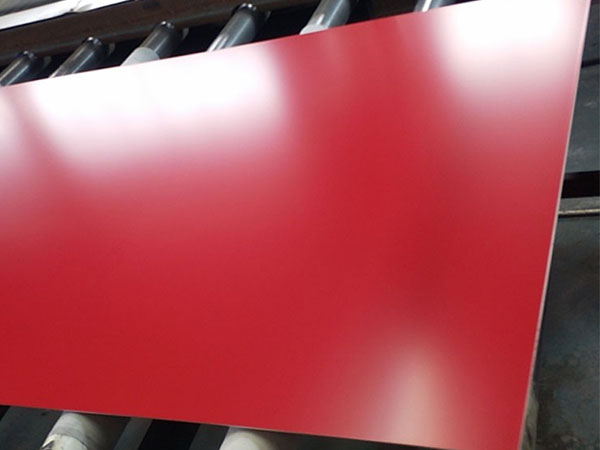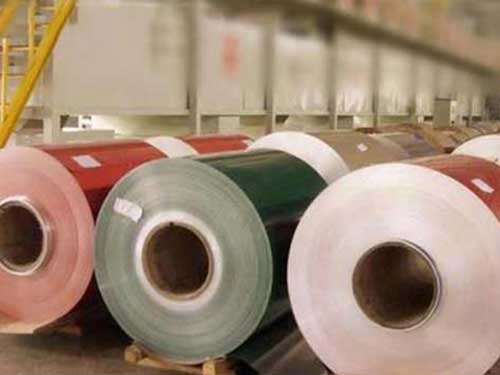
1050 1060 1100 3003 H0 H14 H24 H26 color coated Aluminium Coil
Color coated aluminium coil sits at the crossroads of aesthetics and engineering. When you look at 1050, 1060, 1100 and 3003 H0, H14, H24, H26 color coated aluminium coil from the outside, you see gloss, color and brand image. Under the paint, however, you are dealing with controlled crystal structures, precisely balanced trace elements, standardized tempers and coating systems that are designed to survive decades of service.
Inside the Metal: 1050, 1060, 1100 and 3003 as Functional Substrates
In color coated coil, the paint is the visible hero, but the alloy is the silent foundation that determines formability, corrosion resistance and coating reliability.
1050 – The Purist for High Ductility
1050 aluminium is essentially pure aluminium with a minimum Al content of about 99.5%. This very high purity means:
- Extremely soft and ductile in annealed tempers, ideal for deep drawing and tight bending of color coated sheets
- Excellent thermal conductivity, beneficial for HVAC components, radiators and fin stock when coated
- The lowest strength among the four, so its use is focused where forming and conductivity matter more than structural load
1060 – Balanced Purity and Industrial Robustness
1060 aluminium, with a minimum Al content around 99.6%, is similar to 1050 but slightly optimized for large‑scale industrial use.
- High conductivity for electrical and thermal applications
- Good corrosion resistance due to the absence of significant alloying additions
- Stable, predictable forming behavior in coated architectural panels and decorative strips
In coated coil, 1050 and 1060 are often chosen when high reflectivity, easy shaping and smooth paint appearance are more critical than mechanical strength.
1100 – Corrosion-Focused Commercially Pure Alloy
1100 aluminium introduces controlled amounts of Fe and Si while keeping Al at about 99.0%. This slight shift delivers:
- Enhanced corrosion resistance in atmospheric and mildly chemical environments
- Better stiffness than 1050/1060, while retaining good formability
- Good response to organic coatings, primers and pretreatments, providing a strong bond with polyester, PVDF or polyurethane topcoats
Color coated 1100 coils are frequently used in building façades, interior ceilings, signage and household appliances where corrosion resistance and visual quality must coexist.
3003 – The Workhorse with Manganese Reinforcement
3003 aluminium is a manganese‑alloyed material, typically containing around 1.0–1.5% Mn. This subtle addition transforms performance:
- Strength significantly higher than 1xxx series while keeping good formability
- Improved resistance to general corrosion and atmospheric attack
- Better dent resistance and panel rigidity for external cladding and roofing
For color coated applications, 3003 is often the substrate of choice for roofing sheets, curtain walls, rainwater systems and high‑traffic decorative panels where a tougher backbone is essential.
Temper as a Design Lever: H0, H14, H24, H26 from a Microstructural View
Temper is not just a code on a datasheet; it is a design lever that tunes the internal grain structure and dislocation density of the aluminium.
H0 – Fully Annealed, Maximum Freedom to Form
H0 (often denoted O) is the fully annealed condition.
- The alloy has undergone recrystallization heat treatment
- Soft, low yield strength and excellent elongation
- Ideal for color coated coils that will be deep drawn, folded into complex profiles or embossed after coating
In practice, 1050/1060/1100/3003 H0 coated coils are selected for deeply formed parts such as lamp housings, decorative 3D panels and intricate profile claddings.
H14 – Half-Hard, Everyday Structural Stability
H14 is a strain-hardened temper at approximately half-hard state.
- Achieved by controlled cold rolling after annealing
- Balanced strength and ductility, suitable for moderate forming
- Good dimensional stability, reducing panel spring-back
For color coated 1100 and 3003 coil, H14 gives enough rigidity for flat façade panels and soffits while still allowing cutting, bending and light roll forming on site.
H24 – Strain Hardening plus Light Anneal
H24 reflects a combination: strain-hardened and then partially annealed.
- Higher strength than H14 but with some stress relief to keep formability
- Good dent resistance for roofing and wall cladding
- Reduced risk of cracking at bends compared with fully hard tempers
3003 H24 color coated coils are typical in roofing systems where sheets are profiled into trapezoidal or corrugated shapes and then exposed to wind loads and mechanical impacts.
H26 – Extra Hard for High Rigidity Profiles
H26 indicates a higher degree of strain hardening than H24.
- Elevated yield and tensile strength
- Limited elongation compared with H14 or H24
- Best used where panel deflection must be minimized and forming demands are modest
Color coated H26 sheets are suitable for long-span roofing, structural cassette panels and rigid soffit systems where stiffness governs design.
Chemical Composition: Why Trace Elements Matter for Coating Performance
The following table summarizes typical chemical composition ranges (weight percentage) for the four alloys used as color coated coil substrates. Exact values can vary slightly with standards such as EN, ASTM, GB/T or customer-specific specifications.
| Alloy | Si (%) | Fe (%) | Cu (%) | Mn (%) | Mg (%) | Zn (%) | Ti (%) | Others each (%) | Others total (%) | Al (approx. %) |
|---|---|---|---|---|---|---|---|---|---|---|
| 1050 | ≤ 0.25 | ≤ 0.40 | ≤ 0.05 | ≤ 0.05 | ≤ 0.05 | ≤ 0.05 | ≤ 0.03 | ≤ 0.03 | ≤ 0.10 | ≥ 99.50 |
| 1060 | ≤ 0.25 | ≤ 0.35 | ≤ 0.05 | ≤ 0.03 | ≤ 0.03 | ≤ 0.05 | ≤ 0.03 | ≤ 0.03 | ≤ 0.10 | ≥ 99.60 |
| 1100 | ≤ 0.95* | ≤ 0.05* | 0.05–0.20 | ≤ 0.05 | — | ≤ 0.10 | ≤ 0.05 | ≤ 0.05 | ≤ 0.15 | Remainder |
| 3003 | ≤ 0.60 | ≤ 0.70 | ≤ 0.05–0.20 | 1.0–1.5 | — | ≤ 0.10 | ≤ 0.05 | ≤ 0.05 | ≤ 0.15 | Remainder |
*For 1100, Si and Fe are often specified as a combined maximum.
These minor elements influence coating behavior in subtle but important ways:
- Iron and silicon content affect the surface roughness and the formation of surface oxides, which in turn influence how primers and conversion coatings adhere.
- Manganese in 3003 increases strength and contributes to a slightly different corrosion pattern compared with pure alloys; this impacts the choice of primer and thickness of the conversion layer.
- Copper, although tightly limited in 1xxx and 3xxx series, must be controlled because excessive Cu can reduce corrosion resistance in coastal or industrial atmospheres.
For consistent color coated quality, coil producers monitor and control these elements because a paint system developed for a 3003 substrate will not behave identically if the actual chemistry drifts toward a 1100-like profile.
From Bare Coil to Color System: Process and Implementation Standards
The journey from bare alloy to finished color coated aluminium coil is governed by a chain of standards and production controls. Here, the alloy, temper and coating system intersect with recognized norms.
Substrate and Coil Standards
Typical baseline standards for 1050, 1060, 1100 and 3003 coil include:
- ASTM B209 or EN 485 / EN 573 for wrought aluminium sheet and strip
- GB/T 3880 (in Chinese production context) for rolled aluminium and aluminium alloy plates and strips
These define chemical compositions, mechanical properties, dimensional tolerances and delivery conditions for H0, H14, H24, H26 tempers.
Pre-treatment and Coating Standards
For color coated coil, the surface and paint are usually aligned with coil-coating specific standards such as:
- EN 1396 or EN 10169 (for continuously organic coated coils and sheets)
- AAMA 2603 / 2604 / 2605 as performance references for polyester, superdurable and PVDF systems
- ISO standards for coating thickness, adhesion, impact, gloss and color difference testing
A typical color coated product based on 3003 H24 might claim:
- Substrate: EN AW-3003 H24, EN 573, EN 485 compliant
- Coating: PVDF or high-durability polyester, coil-coated per EN 1396
- Performance: UV, salt spray, humidity and adhesion performance tested to AAMA or equivalent criteria
Coating Architecture: Layered Engineering Above the Alloy Core
Think of a color coated coil as a laminated composite built on an aluminium core. Each layer has a function:
- Cleaned and chemically pre-treated metal: Oil and contaminants are removed; a conversion layer or modern chromium-free pretreatment is applied to enhance adhesion and corrosion performance.
- Primer: A thin layer, often epoxy or polyester, bridging the inorganic conversion layer and the organic topcoat.
- Topcoat: Polyester, silicon-modified polyester (SMP), polyurethane or PVDF depending on required UV and chemical resistance.
- Back coat: A thinner protective layer on the reverse side, often an epoxy or polyester backing paint.
Alloy and temper decisions influence how this stack performs:
- Softer H0 or H14 coils undergo more deformation after coating. The chosen paint must have enough flexibility and adhesion to avoid cracking or micro-fissures during bending and profiling.
- Harder H24/H26 tempers create less post-coating deformation, so the coating can focus more on weathering resistance, gloss retention and color stability rather than extreme flexibility.
- 3003’s higher strength and slightly different oxide characteristics may require fine-tuned conversion chemistry compared with 1050 or 1060 to achieve optimal underfilm corrosion resistance.
Mechanical and Surface Parameters That Matter in Real Use
Beyond alloy name and coating color, a color coated coil can be “tuned” through parameters.
Mechanical Property Window
While exact values vary by standard and gauge, typical ranges are:
- 1050/1060/1100 H0: Very low yield strength, elongation often above 25–30%, designed for maximum formability
- 1100/3003 H14: Moderate yield and tensile strength with elongation roughly 15–25%, ideal for general architectural forming
- 3003 H24/H26: Higher yield and tensile strength, elongation in the range of 8–20% depending on thickness, giving stiff yet workable panels
Producers target these mechanical windows carefully because excessive strength in a supposedly formable coil can cause cracking of the paint layer in the field.
Surface Roughness and Thickness Control
For visually critical applications, substrate roughness and thickness tolerance directly affect coating quality:
- Controlled roughness ensures even wetting and leveling of the coating, reducing orange peel and pinholes.
- Tight thickness tolerances across the strip help maintain uniform blister resistance and mechanical behavior after profiling.
Color coated coils for external cladding often specify both base metal gauge tolerance and final coating thickness, for example:
- Base metal thickness: 0.20–1.50 mm with tight tolerance
- Topcoat thickness: roughly 15–25 μm for polyester, 25–30 μm for PVDF systems, plus primer and backcoat
Applications Seen Through the Lens of Alloy and Temper
Once you understand the underlying metallurgy, application choices become much more logical.
Architectural Facades and Curtain Walls
- Preferred alloys: 1100 H14, 3003 H14/H24
- Why: Good planar stiffness, stable coating adhesion and corrosion resistance; easy to cut and bend into cassettes or panels.
- Coatings: High-durability polyester or PVDF, especially in UV-intense climates.
Roofing and Rainwater Systems
- Preferred alloys: 3003 H24/H26, sometimes 1100 H24
- Why: Extra strength resists hail, wind suction and handling damage; controlled elongation allows profiling without coating failure.
- Coatings: Polyester, SMP or PVDF depending on lifespan requirements.
Internal Decoration, Ceilings and Furniture Panels
- Preferred alloys: 1050/1060/1100 H0 or H14
- Why: Maximum formability for complex ceiling systems, louvered panels or decorative trims, combined with smooth, bright coatings.
- Coatings: Polyester or polyurethane with high gloss control and color versatility.
HVAC, Thermal and Industrial Panels
- Preferred alloys: 1050/1060 H0 or H14 and 3003 H14
- Why: Excellent thermal conductivity for fins and casings, ability to form channels and folds; coated surfaces protect against humidity and mild chemicals.
- Coatings: Polyester, epoxy-polyester or specialized functional coatings when chemical exposure is expected.
A conventional approach starts with the alloy and ends with color. A more advanced design philosophy in coated coil starts the other way around: define the environmental stress, then work backwards into alloy and temper.
For example:
If a façade is specified for a marine atmosphere with a 30‑year color and gloss warranty, the first decision is a high-performance PVDF coating system tested to stringent standards. Once the paint’s flexibility and curing profile are known, you select a temper that will not over-deform the coating in bending – often 1100 or 3003 in H14 or H24 – and then refine alloy choice based on structural and corrosion requirements.
If a deep-drawn decorative component with tight radii is required, the coating supplier provides flexibility parameters (T-bend capability, impact resistance). You then choose a very formable substrate such as 1050 or 1060 H0, and configure the pre-treatment and primer system to ensure that adhesion remains intact at the most severe bend points.
This “paint backwards” logic leads to fewer failures in the field, better aesthetic stability and a more rational specification of 1050, 1060, 1100 or 3003 H0/H14/H24/H26 for each project.
Integrating Standards, Chemistry and Temper into a Coherent Product
High-performance 1050, 1060, 1100 and 3003 H0, H14, H24, H26 color coated aluminium coils are more than a combination of alloy and paint. They are precisely engineered systems where:
- Alloy chemistry controls corrosion patterns, conductivity and the “feel” of forming operations.
- Temper defines how far the coil can be pushed in post‑processing without sacrificing coating integrity.
- Implementation standards guarantee minimum mechanical values, thickness consistency and coating performance.
- Pre-treatment and coating architecture convert bare metal into a durable, UV‑resistant, color-stable surface over the service life of the building or product.
When these elements are chosen in concert, a color coated aluminium coil becomes not only a decorative material but a predictable, engineered solution tailored for its operating environment. For architects, fabricators and OEMs, the interplay between 1050, 1060, 1100 and 3003 alloys and H0, H14, H24, H26 tempers is the to specifying coils that look right on day one and perform reliably for decades.
https://www.alusheets.com/a/1050-1060-1100-3003-h0-h14-h24-h26-color-coated-aluminium-coil.html