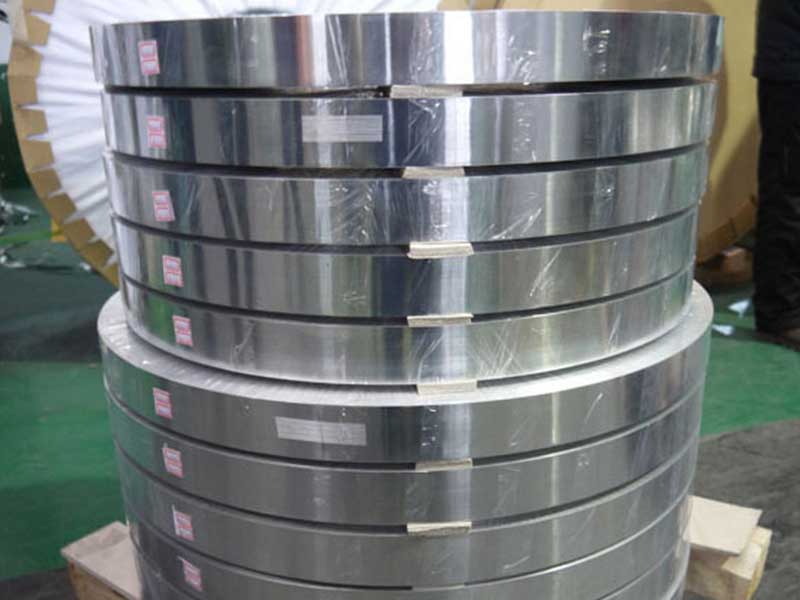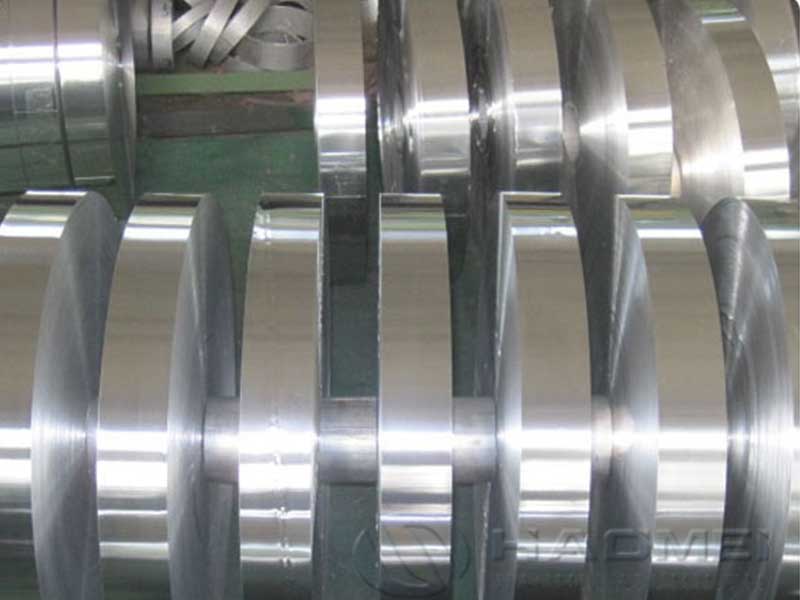
Aluminum foil roll 8011 8079 1235
When people talk about aluminum foil, they often talk about thickness, shine, or whether it "keeps food fresh." In industry, foil is less like a kitchen accessory and more like a carefully tuned barrier system. From that angle, the alloys 8011, 8079, and 1235 feel less like three product names and more like three "dial settings" on the same machine-each one chosen to balance purity, strength, formability, and sealing behavior. If you look at an aluminum foil roll as a functional membrane rather than a simple metal sheet, the logic of these three alloys becomes unusually clear.
A foil roll is a barrier with a mechanical agenda
Aluminum foil works because it is simultaneously impermeable to light and gases, resistant to many chemicals, and thin enough to conform to complex shapes. But those benefits only matter if the foil survives real processing: rolling, annealing, slitting, printing, lamination, pouch forming, blister packing, or container forming. The alloy selection becomes an exercise in managing three competing forces:
Strength and pinhole resistance, which protect against cracking during converting and use
Surface and microstructure stability, which affect coating adhesion, printing clarity, and uniformity
Purity-driven ductility and barrier continuity, which support deep draw, smooth folding, and consistent sealing
8011, 8079, and 1235 are widely used because they occupy distinct "zones" in that balancing act.
8011: the workhorse barrier that tolerates production reality
In practical terms, 8011 foil rolls often shine in packaging laminates, container stock, household foil, semi-rigid trays, and insulation-facing applications. In flexible packaging, it is frequently used as the aluminum barrier layer in structures like PET/AL/PE or paper/AL/PE, where the foil must endure lamination tension, thermal cycles, and sometimes aggressive inks or adhesives.
A distinctive technical point about 8011 is how it "forgives" converting variability. Slight changes in coating weight, adhesive chemistry, or tension control can expose weak foil behavior. 8011's higher mechanical robustness can reduce edge cracking during slitting and improve resistance to handling damage before lamination. For many plants, that reliability is worth more than squeezing the last increment of elongation.
Typical temper selections also align with this role. Soft tempers such as O are chosen for forming and lamination, while H18 or other harder tempers can be used where stiffness and dead-fold properties matter more than deep formability. In food-contact packaging, the alloy choice is only part of compliance; surface cleanliness, rolling oil control, and pinhole standards often determine acceptance.
8079: where ductility, deep-draw, and pinhole control become the story
Alloy 8079 is often associated with high-end pharmaceutical and hygiene packaging, especially when the foil must be thin yet reliable. The alloy chemistry is still in the 8xxx family, but industrial practice tends to position 8079 as a premium foil alloy for demanding barrier and forming needs. One reason is its favorable combination of elongation and tensile strength in thin gauges, which helps reduce the risk of pinholes and cracking during deep draw or tight folding.
In blister packaging, particularly cold-form blister, the foil is pushed into cavities under substantial forming stress. If the foil fractures or thins unevenly, the barrier integrity fails. 8079 is frequently chosen for that environment because it can maintain continuity while being drawn, especially when the rolling and annealing schedule is optimized for a fine, uniform grain structure.
8079 also appears in battery pouch materials and high-performance laminated packaging where pinhole control at low thickness is critical. That is not purely "alloy magic"; it is a combined effect of composition, melt cleanliness, filtration, casting quality, rolling reduction strategy, and annealing control. The alloy simply gives process engineers a wider safe window.
When the perspective shifts from "foil thickness" to "barrier reliability per micron," 8079 becomes less of a luxury and more of a risk-management tool.
1235: purity-driven softness for sensitive lamination and clean barrier layers
Alloy 1235 is, essentially, very high-purity aluminum, commonly around 99.35% minimum aluminum. That purity brings excellent ductility, high electrical and thermal conductivity, and a naturally smooth forming behavior. If 8011 is the foil that tolerates production reality, 1235 is the foil that rewards careful process control with superb softness and surface consistency.
1235 is widely used as a lamination foil in food packaging, cigarette foil, label stock, and some insulation and cable-wrap constructions. It is also common in applications where the foil's role is primarily barrier and appearance rather than mechanical strength.
For applications that demand an extremely soft foil temper, 1235-O is a frequent choice. It conforms easily, bonds well in laminates, and supports clean folding behavior. In the hands of a disciplined converter, it performs like a high-fidelity barrier layer.
Temper and processing: where performance is actually decided
Alloy names matter, but foil performance is often decided by temper and metallurgy. Annealing governs grain size, texture, and residual stress, which influence everything from dead-fold to tearing behavior. In packaging, the O temper is common for lamination and forming; harder tempers like H18 are used when stiffness, print handling, or converting speed requires it.
Industry commonly references standards such as ASTM B479 for aluminum foil and EN 546 series in European contexts, while pharmaceutical foils also face stringent dimensional tolerance, pinhole criteria, and surface cleanliness expectations. For food contact, regulatory compliance depends on the entire manufacturing chain: alloy composition, lubricant selection, degreasing/annealing practices, and migration behavior of coatings or adhesives.
A practical lens: choosing 8011, 8079, or 1235 by "failure mode"
A useful, distinctive way to choose among these alloys is to ask: how would this foil fail in my product?
If the likely failure is mechanical damage during converting, slitting edge cracks, or handling dents before lamination, 8011 often reduces that risk through higher robustness.
If the likely failure is forming-related cracking in blisters, deep draws, or very thin gauges where pinhole risk rises sharply, 8079 is frequently the safer option.
If the likely failure is poor lamination behavior, inconsistent surface, or the need for exceptional softness and conformity in a barrier layer that is protected by other films, 1235 often delivers the cleanest solution.
This "failure mode" perspective usually leads to better decisions than simply choosing by habit.
Below is a commonly used reference range for these alloys. Exact limits can vary by standard and supplier practice, and foil producers may optimize within the allowed window for specific applications.
| Alloy | Al (min, %) | Si (%) | Fe (%) | Cu (%) | Mn (%) | Mg (%) | Zn (%) | Ti (%) | Typical foil strengths and notes |
|---|---|---|---|---|---|---|---|---|---|
| 8011 | Balance | 0.5–0.9 | 0.6–1.0 | ≤0.10 | ≤0.20 | ≤0.05 | ≤0.10 | ≤0.08 | Higher strength than high-purity foils; strong processing tolerance; widely used in packaging and container foil |
| 8079 | Balance | ≤0.05–0.30 | 0.7–1.3 | ≤0.10 | ≤0.10 | ≤0.05 | ≤0.10 | ≤0.08 | Premium thin-gauge behavior; good forming and pinhole control; common in pharma/hygiene and demanding laminations |
| 1235 | ≥99.35 | ≤0.10 | ≤0.65 | ≤0.05 | ≤0.03 | ≤0.03 | ≤0.10 | ≤0.06 | Very soft and ductile; excellent lamination foil; barrier/appearance focused; lower mechanical robustness |
Mechanical properties for foil are strongly thickness- and temper-dependent, so specifications usually define tensile strength and elongation by both gauge and temper rather than by alloy alone.
Applications where these foil rolls quietly shape performance
In flexible packaging for coffee, dairy, snacks, and retort pouches, the foil layer is the barrier backbone. 8011 and 1235 are both common, with selection driven by converting conditions and required durability. In pharmaceutical blister packs, especially cold-formed types, 8079 often stands out for its formability and barrier reliability at thin gauges. In household and catering foils, 8011 dominates due to its balance of strength and cost-efficiency. In insulation facings and HVAC laminates, 8011 and 1235 appear depending on the needed stiffness and lamination behavior.
The takeaway: three alloys, three philosophies of reliability
An aluminum foil roll is not just "metal wound on a core." It is a designed barrier that must survive manufacturing, converting, and end use without losing its continuity. 8011 offers production-friendly toughness, 8079 prioritizes thin-gauge reliability under forming stress, and 1235 brings purity-driven softness and lamination elegance. Selecting among them is less about choosing a label and more about choosing the kind of reliability your product needs most.
https://www.alusheets.com/a/aluminum-foil-roll-8011-8079-1235.html