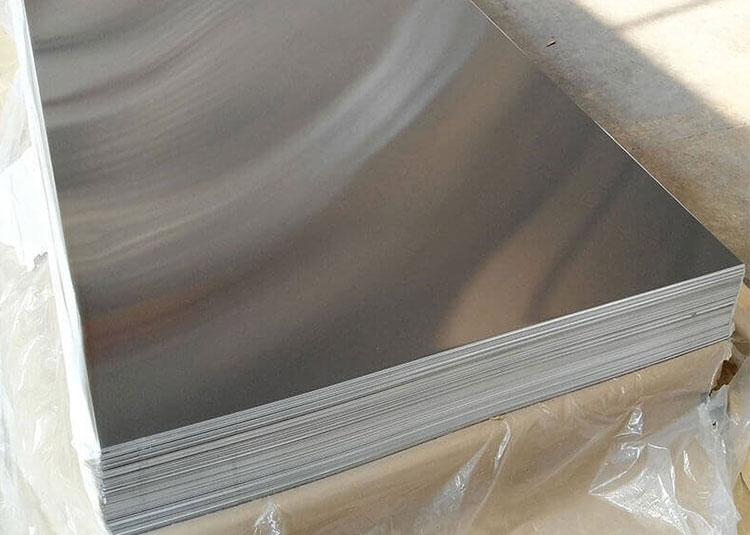
Aluminum sheet 7075 t4
Aluminum Sheet 7075 T4: A Practical Engineer’s View
When engineers reach for aluminum sheet 7075 T4, they are not just choosing a material; they are choosing a performance strategy. This alloy is a solution for designs that demand high strength with controlled formability, especially where final hardening will be done later. 7075 T4 from this “in‑process” perspective helps explain why it is so widely used in aerospace, transportation, and high‑load structural components.
Instead of seeing 7075 T4 as a finished, “ready‑to‑install” sheet, think of it as a performance halfway point: strong enough for handling and preliminary assembly, still workable for forming, and optimized to become even stronger through subsequent aging.
What 7075 T4 Really Is: The Temper Story
Alloy 7075 is a high‑strength, heat‑treatable aluminum alloy based mainly on aluminum, zinc, magnesium, and copper. The “T4” temper describes its thermal and mechanical history, which directly defines its behavior in your workshop.
T4 means:
- The material has been solution heat treated
- Then naturally aged to a substantially stable condition
- Without artificial (elevated temperature) aging
From a designer’s viewpoint, this temper offers a balance between strength and ductility. It is easier to form than 7075 T6, yet still much stronger than common non‑heat‑treatable alloys. Manufacturers often choose T4 for bending, shaping, or drawing operations, and then perform artificial aging later to reach higher-strength tempers such as T6 or T651.
Why Choose 7075 T4 Over T6 or Other Alloys?
Seeing 7075 T4 in context is important:
Compared with 7075 T6
T4 has lower yield and tensile strength but noticeably better formability. If your process involves complex forming, flanging, or deep drawing, T4 helps reduce cracking and springback issues. Parts can then be artificially aged to achieve near-T6 properties after forming.Compared with mid‑strength alloys like 6061
7075 starts from a fundamentally higher strength level. Even in T4, it delivers superior strength‑to‑weight ratio. When every gram counts, such as in aircraft or performance automotive parts, 7075 T4 provides a lighter design path.Compared with non‑heat‑treatable alloys like 5052
7075’s microstructure is engineered for heat treatment. That means your process can tune final strength by selecting the right aging treatment after forming in T4.
In short, 7075 T4 is the “workable high‑strength stage” in a controlled material lifecycle.
Typical Applications: Where 7075 T4 Makes a Difference
Because 7075 T4 sits between softness and ultimate hardness, its applications usually fall into two categories: components formed in T4 and used as is, or parts formed in T4 and then aged to a harder temper.
Common uses include:
Aircraft skins and structural panels
Wing skins, fuselage sections, stiffened panels, and access covers often start as 7075 T4 because they need to be contour‑formed accurately. After forming and riveting, sections may undergo artificial aging to increase in‑service strength.Precision machined and formed parts
Brackets, ribs, frames, and fittings can be cut or machined from sheet or plate in T4, then aged to T6 or T73. Beginning with T4 makes certain forming and minor adjustments easier prior to final hardening.High‑performance sporting and transportation components
High‑load bicycle parts, racing car panels, motorsport brackets, and drone airframes benefit from the high strength‑to‑weight of 7075. Using T4 at the forming stage allows complex shapes; final age hardening ensures durability in service.Tooling, jigs, and fixtures
Temporary or lightweight tooling often uses 7075 T4 sheets, taking advantage of its stability and adequate strength while simplifying forming operations.
In every case, the choice of T4 is less about the final environment and more about the manufacturing journey: when and how you want strength to “arrive” during the process.
Mechanical and Physical Properties of 7075 T4 Sheet
Values vary with thickness and exact specification, but the following range gives a realistic design snapshot:
- Tensile strength (Rm): about 400–470 MPa
- Yield strength (Rp0.2): about 280–340 MPa
- Elongation (typically over 2–3 mm sheet): about 10–16%
- Density: about 2.8 g/cm³
- Modulus of elasticity: about 71 GPa
- Brinell hardness: typically around 130–150 HB
From a practical standpoint, the elongation and yield strength combination in T4 allows:
- More reliable bending without edge cracking
- Easier forming of compound curves
- Greater tolerance for minor rework during assembly
Once your geometry is locked, artificial aging can significantly increase tensile and yield strength, moving closer to the performance of 7075 T6.
Chemical Composition: What Is Inside 7075
The strength of 7075 comes from its alloying package, especially zinc and magnesium, which are responsible for strong precipitation hardening after heat treatment. A typical composition range (mass percent) is:
| Element | Content (%) |
|---|---|
| Aluminum (Al) | Balance |
| Zinc (Zn) | 5.1 – 6.1 |
| Magnesium (Mg) | 2.1 – 2.9 |
| Copper (Cu) | 1.2 – 2.0 |
| Chromium (Cr) | 0.18 – 0.28 |
| Iron (Fe) | ≤ 0.50 |
| Silicon (Si) | ≤ 0.40 |
| Manganese (Mn) | ≤ 0.30 |
| Titanium (Ti) | ≤ 0.20 |
| Others (each) | ≤ 0.05 |
| Others (total) | ≤ 0.15 |
Zinc and magnesium form MgZn₂ precipitates during aging, which are the main source of high strength. Copper contributes additional hardening but also influences corrosion behavior, which is one reason why proper surface treatment and design are important for 7075 components.
Standards and Implementation: What to Look For in Specification Sheets
When specifying 7075 T4 sheet, engineers often work under recognized international standards. Typical references include:
- ASTM B209 for aluminum and aluminum‑alloy sheet and plate
- EN 485 / EN 573 series for European aluminum sheet standards
- ISO standards for chemical composition and product form
Specifying points clearly helps supplier and end user align expectations:
- Alloy and temper: “7075 T4” must be stated together
- Product form: sheet or plate, with thickness range clearly defined
- Tolerances: dimensional tolerances and flatness standards suitable for your process
- Surface condition: mill finish, brushed, or pre‑treated as required
- Certification: material test reports (MTRs) or mill certificates confirming chemistry and mechanical properties
In many projects, the true value comes when the sheet supplier understands your downstream heat treatment intentions. If you plan to age to T6 or another temper after forming, specify this early so the initial T4 condition and thickness selection can be optimized for distortion control and dimensional stability.
Processing Behavior: Forming, Machining, and Joining
From a process engineer’s angle, 7075 T4 sheet behaves differently in each step:
Forming
T4 is the preferred forming temper for 7075. It offers:
- Reduced cracking risk during bending and deep drawing compared to T6
- More predictable springback than softer non‑heat‑treatable alloys with similar thickness
Die radii, forming speeds, and lubrication should be chosen to respect its relatively high strength even in T4. Proper grain direction alignment with bend lines improves results.
Machining
While 7075 is famous for excellent machinability in harder tempers, T4 still machines well and allows fine surface finishes. Slightly adjusted cutting parameters may be required to account for its lower hardness compared with T6, but tool wear is generally manageable.
Welding and joining
Direct fusion welding of 7075 is not typically recommended because of hot cracking and significant strength loss in the heat‑affected zone. Instead, common joining methods include:
- Mechanical fastening (riveting, bolting)
- Adhesive bonding combined with mechanical support
- Friction stir welding in specialized cases
For sheet structures, riveted and bolted joints remain the dominant solution, especially in aerospace and high‑reliability applications.
Corrosion and Surface Protection
In T4 or any temper, 7075 does not match the corrosion resistance of some other aluminum alloys like 5052 or 5083. For demanding environments, protection strategies are essential, such as:
- Anodizing (often with sealing)
- Conversion coatings
- Primers and multi‑layer paint systems
- Clad sheet (Alclad 7075), where a thin, more corrosion‑resistant aluminum layer is metallurgically bonded to the core
When the structure requires high fatigue resistance and operates in a corrosive environment, combining T4 forming, proper stress‑relief aging, and robust surface treatment yields the best lifecycle performance.
A Material Designed for a Process, Not Just a Product
The unique value of aluminum sheet 7075 T4 lies in its role as a process‑optimized state. It is not simply “weaker than T6” or “stronger than 6061.” Instead, it is the temper that lets you:
- Form complex, high‑strength parts reliably
- Control when and how final strength is developed
- Combine shaping, machining, and aging into a coherent manufacturing route
For engineers and buyers, choosing 7075 T4 is a strategic decision about workflow, not just material data. When specified correctly and paired with suitable heat treatment and surface protection, 7075 T4 becomes the foundation of lightweight structures that deliver long‑term performance where it matters most.