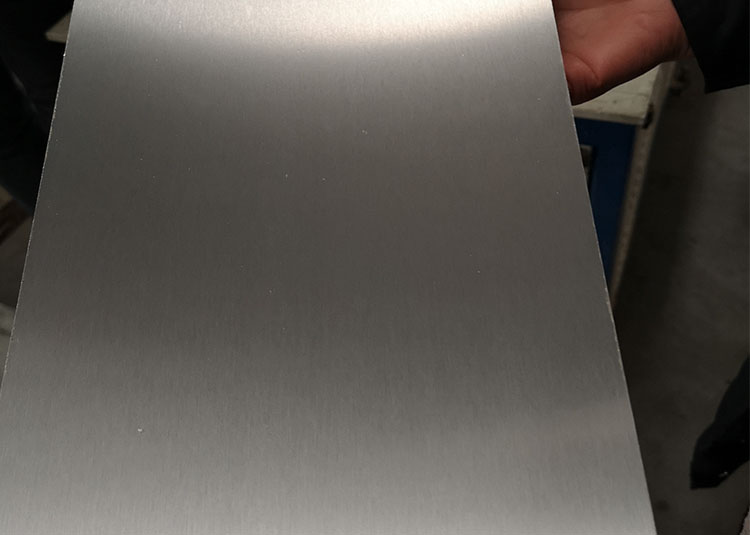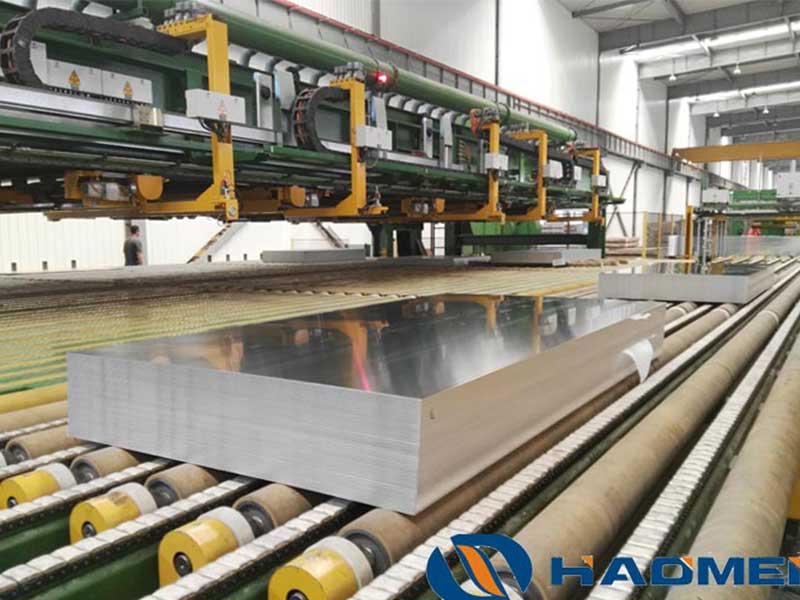
Elliptical aluminum sheet
Elliptical aluminum sheet is what happens when a simple metal sheet is asked to do a more sophisticated job. Instead of being judged only by thickness and alloy, it's evaluated by how an ellipse behaves in the real world: how it guides airflow, softens impact, reduces stress concentration, and looks "finished" even before any decorative treatment. In many projects, the ellipse is not an aesthetic afterthought-it's a performance geometry. That makes elliptical sheets a quiet workhorse for transportation interiors, architectural screens, acoustic panels, equipment guards, filtration covers, and lightweight cladding where you want openness without the harshness of round or sharp-cornered patterns.
From a manufacturing point of view, "elliptical" usually refers to one of two things. The first is an aluminum sheet that is cut into an elliptical outline for end caps, housings, ducts, and covers. The second, more common in metal architecture and industrial guarding, is an aluminum perforated sheet using elliptical holes. In practice, customers often mean the second: an elliptical perforated aluminum plate that balances visibility, ventilation, drainage, and strength while keeping a refined surface rhythm. Compared with round perforations, elliptical holes can deliver a similar open area with fewer perforations, and compared with long slots, the ellipse avoids sharp ends that can initiate tearing during forming.
Why the ellipse changes the engineering feel
A circular hole distributes stress evenly, but it's visually plain. A rectangular slot offers strong directionality, but its ends can behave like stress risers if the sheet is bent, vibrated, or cyclically loaded. The ellipse sits in the middle: directional like a slot, but with smooth curvature at the ends. That geometry matters when sheets are rolled into cylinders, pressed into shallow forms, or installed on vibrating equipment. It also matters for perception: an elliptical pattern tends to look "lighter" and more architectural, even at high metal thickness.
If you are selecting elliptical aluminum sheet for protective covers, HVAC panels, speaker grilles, platform screens, or façade elements, you are often optimizing four competing outcomes: open area, rigidity, weight, and edge quality. The ellipse gives you a surprisingly flexible tuning dial because the major axis and minor axis can be adjusted independently to control openness and line-of-sight.
Common specifications customers ask for
Elliptical aluminum sheets are typically specified by alloy, temper, thickness, perforation pattern (hole size and pitch), open area, and sheet size. For perforated variants, the hole orientation is also important; rotating an ellipse relative to the long dimension of the panel can change stiffness and the way the panel visually "flows."
Typical thickness range for architectural and industrial perforated sheets is around 0.8 mm to 6.0 mm, with heavier gauges used for platforms and guards. Common panel sizes include 1000 × 2000 mm, 1220 × 2440 mm, and 1500 × 3000 mm, with custom sizes and coil-fed fabrication available depending on alloy and pattern.
Elliptical hole sizes are usually expressed as major axis × minor axis, such as 10 × 5 mm, 12 × 6 mm, 15 × 8 mm, 20 × 10 mm, and similar. Pitch is often given as center-to-center spacing in the longitudinal direction and transverse direction. In design practice, the open area is the bridge between appearance and performance: higher open area improves airflow and acoustic transparency but reduces rigidity, so it should be matched with framing, edge returns, or thicker sheet.
Alloy and temper: choosing "bendability" versus "strength"
Alloy selection for elliptical aluminum sheet is less about a single "best" grade and more about how the sheet will be formed, finished, and loaded.
For general-purpose perforated and decorative applications, 1050, 1060, and 1100 (commercially pure aluminum) offer excellent corrosion resistance and formability, making them friendly for complex bending and rolling. They are also a good base for anodizing, giving a clean, bright finish.
For architectural screens and exterior cladding that require a better strength-to-weight ratio, 3003 is a classic choice. It provides improved strength over pure aluminum, good corrosion resistance, and reliable forming characteristics.
For higher strength requirements, such as transportation panels or structural guards, 5052 is often preferred due to its stronger mechanical properties and excellent corrosion resistance in marine or humid environments. If you need even higher strength, 6061 can be used, but it is less forgiving in tight-radius forming and may require different fabrication strategies.
Temper is where the sheet's personality is set. O temper (annealed) is the most formable for deep bending or rolling. H14 and H24 are common for 1xxx and 3xxx alloys when you want a balance of stiffness and workable forming. H32 is frequently used with 5052 because it offers good strength with practical bendability. For 6061, T6 is strong but less formable; T4 is more formable but lower strength.
Implementation and quality standards that matter in purchasing
Elliptical aluminum sheet and perforated aluminum plate are typically produced and supplied under widely recognized standards. Material chemistry and mechanical properties for wrought aluminum are commonly aligned with ASTM B209. Perforation manufacturing tolerances and sheet flatness are often controlled by internal factory standards or customer-approved tolerances because hole geometry, pitch, and edge margins can be application-specific.
If the sheet will be anodized, coated, or used architecturally, it's worth aligning finishing expectations with standards such as AA (Aluminum Association) guidelines and common coating specifications. For powder coating quality, AAMA-related requirements are frequently referenced in architectural projects, especially for exterior exposure.
In procurement, clarify these conditions early because they affect yield and appearance: permissible burr direction, perforation method (punching versus laser), edge margin, camber/flatness after perforation, and protective film requirements.
Chemical composition (typical) for common alloys
Values below are typical ranges; exact limits depend on the governing standard and mill certificate.
| Alloy | Si (%) | Fe (%) | Cu (%) | Mn (%) | Mg (%) | Cr (%) | Zn (%) | Ti (%) | Al (%) |
|---|---|---|---|---|---|---|---|---|---|
| 1050 | ≤0.25 | ≤0.40 | ≤0.05 | ≤0.05 | ≤0.05 | - | ≤0.05 | ≤0.03 | ≥99.50 |
| 1060 | ≤0.25 | ≤0.35 | ≤0.05 | ≤0.03 | ≤0.03 | - | ≤0.05 | ≤0.03 | ≥99.60 |
| 1100 | Si+Fe ≤0.95 | - | 0.05–0.20 | ≤0.05 | - | - | ≤0.10 | - | ≥99.00 |
| 3003 | ≤0.60 | ≤0.70 | 0.05–0.20 | 1.0–1.5 | - | - | ≤0.10 | - | Bal. |
| 5052 | ≤0.25 | ≤0.40 | ≤0.10 | ≤0.10 | 2.2–2.8 | 0.15–0.35 | ≤0.10 | - | Bal. |
| 6061 | 0.40–0.80 | ≤0.70 | 0.15–0.40 | ≤0.15 | 0.80–1.20 | 0.04–0.35 | ≤0.25 | ≤0.15 | Bal. |
Fabrication and installation: how to avoid the usual surprises
Elliptical patterns behave differently depending on rolling direction and hole orientation. If the panel will be bent, specify the bend line relative to the ellipse orientation, because bending across the long axis can change the way ligaments between holes stretch and may increase the chance of distortion. When clean appearance is critical, request controlled burr direction, deburring, and, if needed, leveling after perforation.
For outdoor installations, galvanic corrosion is a quiet risk when aluminum contacts carbon steel framing. Use isolating gaskets or compatible fasteners, and consider anodizing or high-quality powder coating to stabilize appearance. If sound or airflow performance matters, treat the sheet as part of a system: backing mesh, acoustic fabric, and cavity depth can outweigh small changes in open area.
The distinctive advantage: engineered openness
Elliptical aluminum sheet is essentially engineered openness. It offers a way to let air, light, and sound pass through while still feeling stable, safe, and intentional. For customers, the smart buying decision is to specify it like a component, not a commodity: define alloy and temper based on forming and environment, define the ellipse size and pitch based on open area and stiffness, and define standards and finishing expectations based on how visible the panel will be. When those details are aligned, elliptical perforated aluminum plate becomes one of the most efficient ways to make a structure feel lighter without making it weaker.