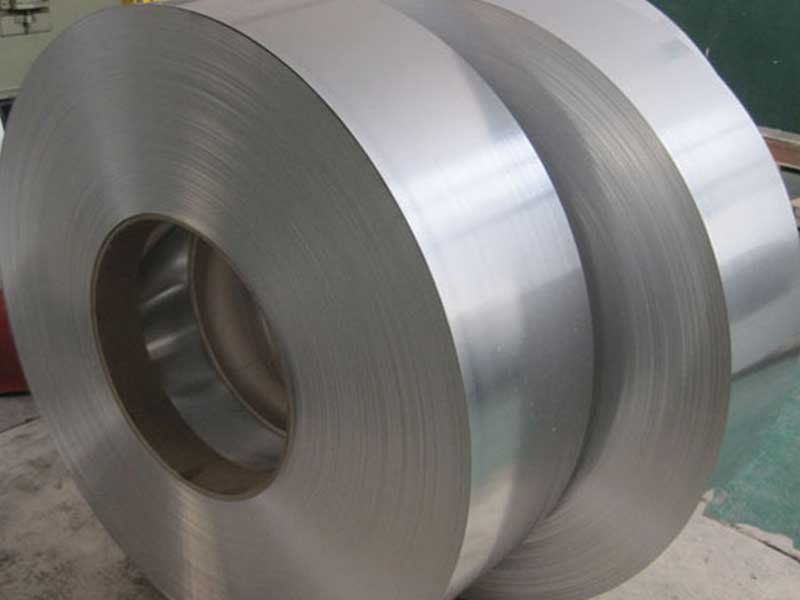
Light Reflector Mirror Aluminum Strip 1060
A light reflector is often judged by what it gives back: brightness, uniformity, control. Yet from the manufacturing side, the more interesting story is what the material chooses not to do. It must not scatter light unnecessarily, not crack under forming, not stain during storage, not distort when the fixture warms up, and not complicate mass production. From that perspective, 1060 mirror aluminum strip is less a simple metal product and more a disciplined optical substrate disguised as a coil.
What makes this alloy especially compelling is its honesty. Aluminum 1060 belongs to the commercially pure aluminum family, typically with Al content of 99.6% minimum. It does not promise the high strength of magnesium- or silicon-bearing alloys. Instead, it offers something more valuable for reflective applications: excellent formability, stable surface quality, high thermal conductivity, strong corrosion resistance, and a natural compatibility with mirror finishing processes. In reflector manufacturing, these traits often matter more than mechanical bravado.
Why 1060 Works So Well for Mirror Reflector Strip
In practical reflector design, the surface is the performance. The strip must accept polishing, chemical brightening, or anodized mirror treatment with minimal surface defects. The purity of 1060 supports this very well. Because the alloy contains relatively low levels of other elements, it can achieve a cleaner and more uniform reflective surface than many stronger but more compositionally complex alloys.
This is why 1060 aluminum strip is widely used for lighting reflectors in indoor luminaires, LED lamp cups, grille lamps, industrial lighting hoods, decorative lighting systems, and daylight management components. Its role is not limited to "looking shiny." It helps shape the beam, reduce energy loss, and maintain a stable optical effect over long service cycles.
A manufacturer may describe a reflector sheet or strip in terms of reflectivity percentage, but experienced buyers know that reflectivity alone is not enough. A useful reflector material must also allow consistent slitting, stamping, bending, spinning, and roll forming. Here, 1060 shows its practical strength. In softer tempers such as O, H14, H18, and H24, it can be selected according to processing depth and rigidity requirements. Softer tempers are often preferred for deep forming and complex shaping, while harder tempers are suitable when dimensional stability and surface retention are priorities.
Typical Product Range and Supply Conditions
For mirror reflector applications, 1060 is commonly supplied as strip or coil with relatively tight dimensional control. Typical ranges include:
| Parameter | Typical Range |
|---|---|
| Alloy | 1060 |
| Aluminum purity | ≥ 99.60% |
| Thickness | 0.20–2.00 mm |
| Width | 20–1250 mm |
| Temper | O, H14, H18, H24 |
| Surface finish | Mill finish, bright finish, mirror finish, anodized mirror finish |
| Inner diameter | 150 mm, 300 mm, 405 mm, 508 mm |
| Reflectivity | Depending on treatment, often 80%–95%+ |
| Standard supply form | Coil, strip, slit coil |
The exact specification depends on whether the customer prioritizes decorative reflection, optical efficiency, secondary forming, or resistance to environmental attack.
Chemical Composition of 1060 Aluminum Alloy
The chemical simplicity of 1060 is central to its behavior. A typical composition is shown below.
| Element | Content (%) |
|---|---|
| Al | 99.60 min |
| Si | 0.25 max |
| Fe | 0.35 max |
| Cu | 0.05 max |
| Mn | 0.03 max |
| Mg | 0.03 max |
| Zn | 0.05 max |
| Ti | 0.03 max |
| V | 0.05 max |
| Others, each | 0.03 max |
| Others, total | 0.15 max |
This chemistry supports high ductility, good conductivity, and favorable polishing response. It also reduces the risk of uneven appearance after bright treatment, which is especially important in visible lighting products.
Mechanical and Physical Properties
Reflector applications do not usually demand extreme tensile strength, but the strip still needs reliable handling performance on stamping and forming lines.
| Property | Typical Value |
|---|---|
| Density | 2.70 g/cm³ |
| Melting range | Approx. 643–657°C |
| Thermal conductivity | Approx. 230–235 W/m·K |
| Electrical conductivity | Approx. 61% IACS |
| Tensile strength, O temper | Approx. 60–95 MPa |
| Yield strength, O temper | Approx. 15–35 MPa |
| Elongation, O temper | Approx. 25%–35% |
| Tensile strength, H18 temper | Approx. 110–145 MPa |
| Surface emissivity | Low when mirror treated |
These values vary with processing route, thickness, and final temper, but they illustrate why 1060 remains attractive for light-management components. It dissipates heat efficiently, which is valuable in enclosed lighting systems, and it can be shaped without excessive springback in softer tempers.
Surface Treatment: The Real Turning Point
A plain aluminum strip is not yet a reflector in the optical sense. Its transformation happens at the surface. For mirror aluminum strip 1060, the most common routes include mechanical polishing, rolling bright finish, chemical polishing, and anodizing after bright treatment. Among these, anodized mirror aluminum is especially favored in modern lighting because the oxide layer helps preserve appearance and improves resistance to fingerprinting, minor abrasion, and atmospheric corrosion.
The distinctive value of 1060 emerges here: it accepts these treatments with relative predictability. The resulting surface can support high specular reflection, which is essential when the designer wants light to move with discipline rather than diffuse randomly. In commercial lighting, that means better beam control. In decorative fixtures, it means a cleaner, more elegant visual effect. In industrial settings, it can mean improved illumination efficiency without increasing power demand.
Implementation Standards and Quality Reference
In international trade and industrial procurement, 1060 aluminum strip is usually produced according to recognized standards, depending on the destination market and technical agreement. Common references include:
| Standard | Scope |
|---|---|
| ASTM B209 | Aluminum and aluminum-alloy sheet and plate |
| EN 485 | Aluminum and aluminum alloys sheet, strip and plate |
| GB/T 3880 | Wrought aluminum and aluminum alloy plates, sheets and strips |
| JIS H4000 / related JIS requirements | Aluminum and aluminum alloy sheets, strips and plates |
| RoHS / REACH, if required | Environmental compliance for specific markets |
For mirror reflector products, dimensional tolerance, flatness, slit edge quality, oil cleanliness, and surface defect control are often just as important as the alloy certificate itself. A technically acceptable strip can still fail in reflector production if it carries roll marks, inclusions, waviness, or inconsistent gloss.
Temper Selection from a Processor's Viewpoint
If one looks at 1060 only through a materials handbook, it can seem ordinary. But on a processing line, its character becomes much more nuanced. O temper behaves like a cooperative material for deeper drawing and contour forming. H14 and H24 provide a balance between workability and stiffness, often useful for reflectors that need moderate shaping while maintaining shape retention. H18 is harder and better suited to applications where minimal deformation after fabrication is desirable.
Choosing the wrong temper is one of the quiet reasons reflector projects underperform. A strip that is too soft may lose precision during assembly. A strip that is too hard may create edge cracking, orange peel, or poor geometry in formed reflector shells. So the best choice is never "the strongest" or "the brightest," but the one aligned with the actual forming route and end-use environment.
Applications Beyond the Obvious
Most people associate mirror aluminum strip with lamp reflectors, but 1060 has a wider visual and technical life. It appears in solar light reflection components, decorative ceiling systems, signage backgrounds, appliance reflectors, display fixtures, and architectural trim where controlled brightness matters. In these cases, its function sits between engineering and atmosphere. It helps direct not only light, but attention.
For buyers, this means the evaluation should go beyond price per ton. The more relevant questions are about surface consistency, reflectivity retention, temper suitability, coil cleanliness, protective packaging, and compliance with applicable standards. When these details are right, 1060 mirror aluminum strip becomes a reliable foundation for high-volume reflector production and stable optical quality.
In the end, 1060 is not the loudest alloy in the aluminum family. But in reflector applications, silence is a virtue. The best surface is the one that lets light speak clearly.
https://www.alusheets.com/a/light-reflector-mirror-aluminum-strip-1060.html