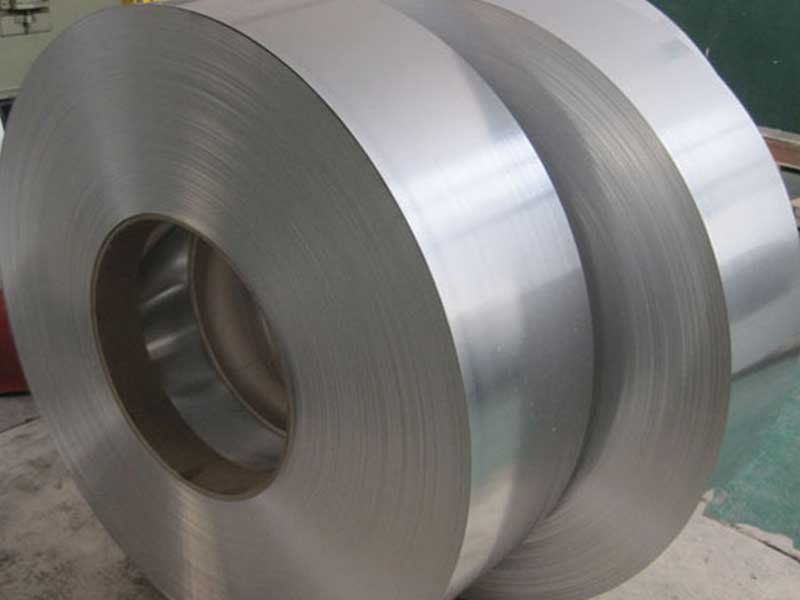
0.9mm Aluminum Coil Strip 1060 3003
When engineers and buyers talk about “0.9 mm aluminum coil strip 1060 3003,” they are usually looking for a very specific balance: ultra-consistent thin gauge, predictable forming behavior, and stable surface quality for downstream processing. From the outside, it looks like a simple thin metal ribbon. In reality, it is a carefully engineered material system where alloy design, temper, and production standards come together to support high‑volume, high‑precision applications.
Why 0.9 mm is a “sweet spot” thickness
At 0.9 mm, aluminum strip sits at an interesting boundary between sheet and foil behavior:
- It is thin enough to be easily coiled, slit, and roll‑formed with modest forces.
- It remains stiff enough to hold shape, resist denting better than thinner gauges, and provide dimensional stability.
- It offers weight savings compared with 1.0–1.2 mm material, often without sacrificing required strength, especially in non‑structural or lightly loaded parts.
For OEMs and fabricators, this means less material cost and lower transport weight, while still having a product that can be processed on standard equipment for cutting, stamping, deep drawing, or bending.
1060 vs 3003: two alloys, two behaviors
Although both 1060 and 3003 are non‑heat‑treatable alloys, they behave differently because of their chemistry and microstructure.
From a buyer’s perspective, 1060 aluminum strip is the “pure” option:
- Nominal aluminum content around 99.6%
- Very soft, very ductile, excellent for deep drawing and complex bending
- Highest electrical and thermal conductivity among common commercial alloys
- Outstanding corrosion resistance in most atmospheres and many chemicals
3003 aluminum strip is the “workhorse” manganese alloy:
- Aluminum with about 1–1.5% manganese
- Noticeably stronger than 1060 at the same temper
- Still very formable, but with higher yield strength and better impact resistance
- Improved resistance to some forms of pitting and general corrosion compared to pure aluminum
Choosing between them often comes down to priorities:
- For busbars, electrical enclosures, and heat‑transfer components where conductivity is critical, 1060 takes the lead.
- For HVAC fins, architectural trims, cookware, and general‑purpose formed components needing a bit more strength but still good formability, 3003 is more common.
Typical properties at 0.9 mm thickness
At this thickness, rolling practice and temper control have a big impact. Indicative mechanical property ranges (values vary by standard and producer) are:
1060-H14 (strain‑hardened, half hard)
- Tensile strength: about 95–120 MPa
- Yield strength (0.2% offset): about 60–90 MPa
- Elongation (A50): ~15–25%
3003-H14
- Tensile strength: about 130–180 MPa
- Yield strength: about 110–150 MPa
- Elongation (A50): ~10–20%
Even in the same temper designation, 3003 delivers a clear strength advantage, while 1060 retains a softer, more compliant feel under tooling.
Alloy chemistry: what is really inside the strip?
Below are typical chemical composition ranges for 1060 and 3003 according to common standards such as GB/T, ASTM B209, and EN equivalents. Exact values differ slightly by region, but the functional roles of each element are consistent.
1060 Aluminum Coil Strip – Typical Chemical Composition (wt%)
| Element | Content (approx.) |
|---|---|
| Al | ≥ 99.60 |
| Si | ≤ 0.25 |
| Fe | ≤ 0.35 |
| Cu | ≤ 0.05 |
| Mn | ≤ 0.03 |
| Mg | ≤ 0.03 |
| Zn | ≤ 0.05 |
| Ti | ≤ 0.03 |
| Others (each) | ≤ 0.03 |
| Others (total) | ≤ 0.10 |
3003 Aluminum Coil Strip – Typical Chemical Composition (wt%)
| Element | Content (approx.) |
|---|---|
| Al | Balance |
| Mn | 1.0 – 1.5 |
| Cu | 0.05 – 0.20 |
| Si | ≤ 0.60 |
| Fe | ≤ 0.70 |
| Zn | ≤ 0.10 |
| Ti | ≤ 0.05 |
| Others (each) | ≤ 0.05 |
| Others (total) | ≤ 0.15 |
From a functional perspective:
- High Al content in 1060 maximizes conductivity and softness.
- Mn in 3003 creates a finer, more stable grain structure and raises strength without killing formability.
- Trace Cu in 3003 slightly boosts strength and can influence corrosion behavior, especially in aggressive environments.
Temper choices and how they shape performance
Temper designations like O, H12, H14, H18 are more than codes on a certificate; they are direct indicators of how the strip will behave in your press or forming line.
Common tempers for 0.9 mm 1060 and 3003 coil strip include:
- O (annealed): maximum ductility, minimum strength. Ideal for deep drawing, spinning, or bending with small radii. Easily reshaped but more prone to handling dents.
- H12 / H14 (quarter‑hard / half‑hard): moderate work hardening. A balanced choice for general‑purpose stamping, bending, roll forming, and light structural elements.
- H16 / H18 (three‑quarter‑hard / full‑hard): highest strength in the strain‑hardened series, reduced elongation. Used where stiffness and spring‑back control are more important than extreme formability.
For fine‑tuned applications, producers may supply intermediate or stabilized tempers (for example, H24, H26) to hold a stable hardness after forming and brief heating cycles, such as paint baking.
The is matching temper to process. A progressive die line forming intricate shapes might need 1060‑O or 3003‑O to avoid cracks. A simple profile bent in a press brake and then powder‑coated may work best with 3003‑H14 or H24 to maintain flatness and rigidity.
Dimensional and surface standards
High‑volume production depends on repeatable strip geometry. Typical parameters and standards for 0.9 mm coil strip include:
- Thickness tolerance: Usually referenced to ASTM B209, EN 485, or GB/T standards. For 0.9 mm, common tolerances are in the range of ±0.03 mm, though tighter control is available upon request.
- Width tolerance: Often ±0.5 mm or better depending on slitting accuracy and coil width.
- Flatness: Controlled edge wave, center buckle, and cross‑bow to enable high‑speed feeding and precision stamping. Producers may declare an “I‑shape” flatness specification for demanding applications.
- Surface finish: Mill finish, brushed, or lightly textured depending on application. Requirements for roughness (Ra) and surface defects (scratches, roll marks, white/black lines) are usually agreed in technical specifications.
Protective films or interleaving paper can be applied to maintain surface quality for visible or highly reflective components, such as decorative panels or reflectors.
Implementation standards and quality frameworks
To support global supply chains, 0.9 mm aluminum coil strip in 1060 and 3003 is typically produced under well‑recognized standards and quality systems, such as:
- Product standards like ASTM B209, EN 485/573, GB/T 3880 for rolled aluminum sheet and strip
- Quality management systems such as ISO 9001 for process consistency
- Environmental and energy standards such as ISO 14001 and ISO 50001 at larger mills
For customers, what matters most is traceability and consistency:
- Each coil should be traceable back to a melt and production lot.
- Test certificates (mill test reports) should show chemical composition, mechanical properties, thickness and width measurements, and temper verification.
- Some applications, especially in HVAC, automotive, or electrical industries, may require extra testing such as conductivity checks, bend tests, or grain size analysis.
Application‑driven view of 0.9 mm 1060/3003 strip
Thinking from the application backwards is often the best way to specify the right product.
For engineers designing:
- Electrical conductors, busbars, shielding plates: 1060 at O or H12/H14 temper provides high conductivity and easy bending, with light weight and good corrosion resistance.
- Heat‑exchange fins, evaporator and condenser components: 3003 at H14/H16 offers a strong, corrosion‑resistant base for fins that will be expanded, corrugated, and bonded to copper or aluminum tubes.
- Kitchenware, cookware substrates, and household appliances: 3003‑O or H14 combines good formability for deep drawing with better dent resistance than pure aluminum.
- Architectural trims, ceiling grids, light enclosures: 3003‑H14/H24 with controlled surface finish, ready for anodizing or coating, holds dimension and appearance over time.
For all these uses, the 0.9 mm gauge offers a pragmatic balance: thin enough to process efficiently, thick enough to survive forming, installation, and everyday use.
Bringing it together
0.9 mm aluminum coil strip in 1060 and 3003 alloys is much more than a commodity product. It is a finely tuned material platform where composition, temper, thickness control, and surface management are all adjusted to fit a specific manufacturing reality.
- 1060 gives maximum purity, conductivity, and softness for deep forming and electrical applications.
- 3003 adds strength and durability while preserving excellent workability and corrosion resistance.
- Proper temper selection and adherence to recognized standards ensure that what arrives on the line behaves as expected in every punch, bend, and draw.
For buyers and engineers, a clear specification that includes alloy, temper, thickness and width tolerances, surface requirements, and applicable standards is the to turning this apparently simple 0.9 mm strip into a stable, high‑performance component in your production chain.
https://www.alusheets.com/a/09mm-aluminum-coil-strip-1060-3003.html