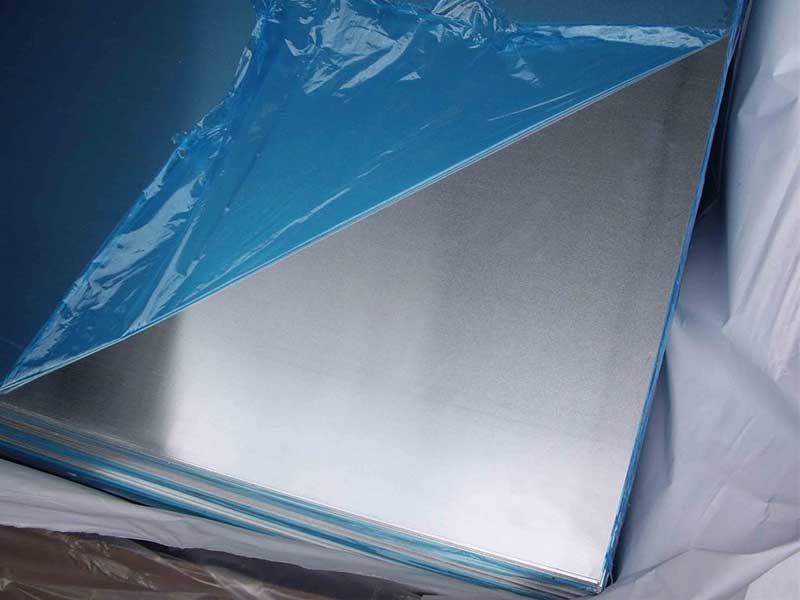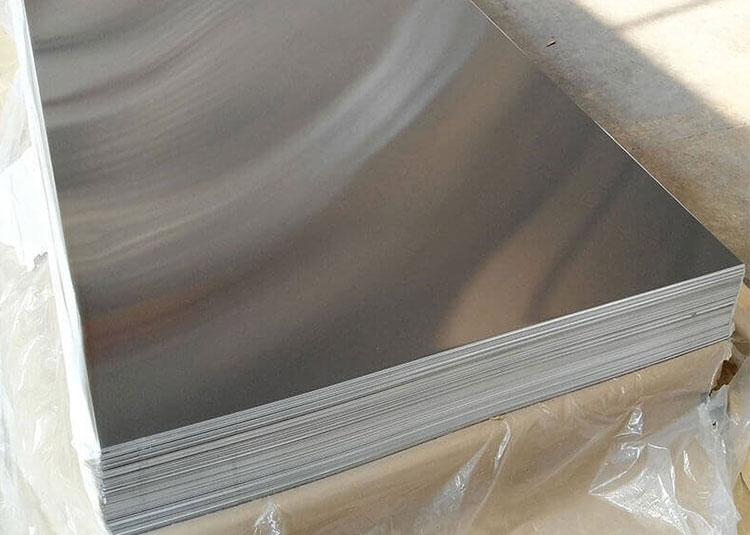
T5 T6 aluminum sheet
T5 T6 Aluminum Sheet: Beyond Temper Codes – How Microstructure Shapes Real-World Performance
When engineers talk about “T5” or “T6” aluminum sheet, they often treat these as simple temper labels. In reality, the difference between T5 and T6 is a microstructural strategy that directly controls strength, formability, thermal stability and long‑term reliability of components.
1. What Do T5 and T6 Actually Mean?
1.1 Temper designation in context
Aluminum sheet designation follows:
Alloy series + temper (e.g., 6061‑T6, 6082‑T5).
- Alloy: Chemistry (e.g., 6000 series Al‑Mg‑Si, 7000 series Al‑Zn‑Mg‑Cu).
- Temper: Thermal–mechanical history (how the microstructure was “tuned”).
The T temper family: Thermally treated to produce stable tempers other than F, O or H.
1.2 T5 vs T6 microstructural logic
Both are artificial‑aging tempers for heat-treatable alloys (2xxx, 6xxx, 7xxx etc.), especially 6000 series for sheet.
T5 – Artificially aged from an elevated‑temperature fabrication
Typical evolution:
- Material is extruded/rolled/formed at high temperature (partial solution of soluble phases).
- Rapid cooling from that hot state (often air or controlled quench).
- Artificial aging (typically 160–220 °C) to reach required mechanical properties.
Result:
- Moderate to high strength.
- Better dimensional stability after forming at elevated temperature.
- Often slightly more ductile than full T6, depending on alloy.
T6 – Solution heat-treated + quenched + artificially aged
Typical evolution:
- Solution treatment (e.g., ~525–545 °C for 6xxx): Solubles in solid solution.
- Rapid quench to retain supersaturated solid solution.
- Artificial aging near the peak‑strength condition.
Result:
- Higher peak strength than T5.
- Lower elongation (less formable afterward).
- Higher hardness and better fatigue strength; more prone to quench distortion and residual stress.
difference in practice:
- T6 = highest strength/rigidity for a given alloy sheet; choose when structure is designed for stiffness or load‑bearing.
- T5 = slightly “softer” but more formable and thermally stable from the as‑shaped condition; useful when strength matters, but post‑processing/forming is still required.
2. Common Alloys Available in T5 and T6 for Sheet
In sheet and plate form, these combinations are typical for Al‑Mg‑Si (6xxx) alloys:
- 6061‑T6 (occasionally T5 plate)
- 6063‑T5 / T6 (more common for extrusions but also sheet in some regions)
- 6082‑T6 (structural sheet and plate)
- 6005A‑T5 / T6 (primarily profiles/sheets for structural/façade applications)
Among these, 6061‑T6 sheet and 6082‑T6 plate are by far the most widely used where high strength with good corrosion resistance and weldability is required.
Below we focus on a representative alloy, 6061‑T5 / T6, which illustrates typical characteristics for T5/T6 aluminum sheet.
3. Chemical Composition – Example: 6061 Alloy (T5/T6)
3.1 Chemical composition (typical limits, wt.%)
| Element | 6061 Alloy Range (%) |
|---|---|
| Si | 0.40 – 0.80 |
| Fe | ≤ 0.70 |
| Cu | 0.15 – 0.40 |
| Mn | ≤ 0.15 |
| Mg | 0.80 – 1.20 |
| Cr | 0.04 – 0.35 |
| Zn | ≤ 0.25 |
| Ti | ≤ 0.15 |
| Others, each | ≤ 0.05 |
| Others, total | ≤ 0.15 |
| Al | Balance |
Microstructural perspective:
- Mg + Si → Mg₂Si precipitates during aging ŧ main strength mechanism.
- Cu, Cr refine precipitate structure and improve strength & toughness.
- Reasonable Zn, Fe, Mn contents help control grain size and texture without harmful coarse intermetallics (if processed correctly).
4. Mechanical and Physical Parameters (Representative 6061‑T5 / T6 Sheet)
4.1 Mechanical properties (typical)*
| Property | 6061‑T5 | 6061‑T6 |
|---|---|---|
| Tensile Strength, Rm | ~240–260 MPa | ~275–310 MPa |
| Yield Strength, Rp0.2 | ~160–190 MPa | ~240–275 MPa |
| Elongation (gauge L0=50mm) | ~10–14 % | ~8–12 % |
| Brinell Hardness (HBW) | ~70–80 | ~85–95 |
*Values vary by product standard (GB/T, EN, ASTM/AA), thickness and supplier. Use mill test certificates for design-critical work.
4.2 Physical properties (approx.)
- Density: 2.70 g/cm³
- Elastic modulus: ~69–71 GPa
- Thermal conductivity: ~170–200 W/(m·K)
- Coefficient of thermal expansion: ~23–24 × 10⁻⁶ /K (20–100 °C)
- Electrical conductivity: ~40–43 % IACS (T6 slightly lower than F/O tempers due to precipitation)
5. Implementation Standards and Norms
5.1 International and regional product standards
Depending on markets, T5/T6 aluminum sheet/plate are often produced to:
- ASTM / AA (North America)
- ASTM B209 – Aluminum and Aluminum‑Alloy Sheet and Plate.
- Alloy & temper: e.g., 6061‑T6, 6082‑T6 etc.
- EN (Europe)
- EN 485‑1/2/4 – Wrought aluminium and aluminium alloys – sheets/plates.
- EN 573 – Chemical composition.
- GB/T (China and other regions using GB for reference)
- GB/T 3880 – General wrought aluminum plate and strip.
- GB/T 3190 – Chemical composition limits.
- JIS (Japan)
- JIS H4000 series (sheet/plate, tempers T5/T6 as specified).
5.2 Temper standards (definition and property requirements)
- ASTM B918 / B918M – Heat Treatment of Wrought Aluminum Alloys (guidelines for T5/T6 processes).
- ISO 2107 / EN 515 – Tempers designation; define T5/T6 in terms of process route and minimum property sets.
Manufacturers certify:
- Alloy designation (e.g., 6061),
- Temper (T5 or T6),
- Chemical analysis,
- Mechanical properties (yield, tensile, elongation),
- Dimensional tolerances / flatness.
6. How T5/T6 Tempering Works in Practice
From a functional point of view, temper selection is “parameter engineering”: heat and time control precipitate type, size and distribution.
6.1 Typical process flow for 6061‑T6 sheet
- Hot rolling / plate casting
- Cast slab → homogenization → hot rolling to intermediate gauge.
- Solution heat treatment
- Furnace: ~525–545 °C, controlled soak.
- Goal: dissolve Mg₂Si + modify Fe‑rich phases for cleaner microstructure.
- Rapid quench
- Water/quench polymer at controlled temperature and agitation.
- Critical to prevent premature coarse precipitation.
- Stretching / level‑rolling (optional)
- Relieves internal stresses, reduces distortion during service/machining.
- Artificial aging (T6)
- Hold at ~160–190 °C for several hours.
- Produces fine, dense β'' / β' (Mg₂Si) precipitate network — peak strength condition.
- Final cutting, flattening, inspection, packaging
6.2 T5 vs T6 aging curves
- If you plot strength vs. aging time:
- Under‑aged (T4-like): high ductility, lower strength.
- Peak‑aged (T6): highest hardness/strength; precipitates near optimal size and distribution.
- Over‑aged (T7/T73-like): slightly lower strength, better stress‑corrosion and high‑temperature stability.
T5 can be thought of elevated‑temperature formed → controlled aging from that partially dissolved condition — a deliberate compromise between formability and final strength without a full solution/quench cycle.
7. Functional Advantages of T5/T6 Aluminum Sheet
7.1 Structural efficiency
- Higher specific strength than mild steel (strength per unit weight).
- Weight saving ≈ 40–60% vs. steel at comparable stiffness levels (depending on design).
- T6 particularly beneficial in flat plate structures like floors, panels, covers needing minimal deflection.
7.2 Corrosion resistance
- Al‑Mg‑Si alloys (6061/6082) are inherently corrosion‑resistant.
- T5 and T6 temper plates often used bare, or with:
- Anodizing (for façade, transport, consumer products).
- Powder coating or PVDF coating (architecture).
- Microstructural stability in T6 (fine precipitates) resists pitting and general corrosion if exposed surfaces are kept clean.
7.3 Weldability
- TIG, MIG, laser weldable with optimized filler (e.g., ER4043, ER5356).
- After welding:
- HAZ can locally move from T6 back to an over-aged / softened condition similar to T4–T5.
- Design must account for reduced HAZ strength versus base T6 material.
- T5 base material has slightly lower peak strength; the relative loss in HAZ can be less drastic.
7.4 Machinability and formability
- T6: excellent machinability – clean chips, good surface finish; formability reduced vs. soft tempers (O/T4).
- T5: often chosen when moderate forming still required (shallow drawing, bending with reasonable radii) after aging, while exerting control over residual stress.
8. Applications: Where T5/T6 Aluminum Sheet Excels
8.1 Transportation: Trucks, buses, trailers, rail
- Exterior body panels (T5 when large panels still need shaping; T6 for flat load‑bearing floor plates).
- Trailer floors & side walls (e.g., 6082‑T6 plate for heavy point load resistance).
- Bus frames, luggage racks — combination of extrusions and sheets in T6 temper.
Functional perspective:
- Weight reduction ⇒ higher payload, better fuel efficiency.
- T6 sheets maintain dimensional stability over long spans, reducing vibration and “oil canning”.
8.2 Marine and offshore structures
- Deck plates, wheelhouse structures, superstructures: usually 5xxx for higher Mg, yet 6xxx T6/T5 sheets appear in areas needing frame stiffness and machinability (e.g., mounting plates, equipment panels).
- Dock and gangway plates with anti-slip patterns.
Why T6:
- Combination of corrosion‑resistant chemistry (Mg₂Si) with high yield strength; easy machining for hardware installations.
- Typical protective systems: anodizing + marine coatings.
8.3 Mechanical equipment and machine bases
- Machine tables, fixtures, jigs using 6061‑T6/6082‑T6 plates.
- Robotics, semiconductor equipment mounts: need flatness, stiffness and good machinability.
Here the microstructure matters:
- T6 temper ⇒ high stiffness and stable precision under load and minor thermal cycles.
- T5 sometimes preferred when welded/local‑formed stiffeners are integrated; T6 achieved locally or globally later.
8.4 Construction and architectural use
- Building façades (formed panels using T5), window frames (mostly extrusions, but sheet infill), canopy covers and roof sheets.
- For façades:
- T5/T6 6xxx sheets can be anodized or PVDF coated with excellent color stability.
- Increased strength permits thinner sheets for large panel spans, improving cost/weight/fastening loads.
8.5 Aerospace / defense (non‑critical parts)
Direct primary aircraft structures rarely use 6xxx; however:
- Ramps, tool platforms, ground handling equipment, aircraft interiors use 6061‑T6 sheet for light, stiff panels.
- UAV drones and support masts often use T6 sheet because of high stiffness-to-weight coupled with good machinability.
8.6 Renewable energy & electronics
- Solar frame mounting plates, supports – corrosion‑resistant, light for rooftops.
- Heat sinks, electronic chassis (where thermal performance + machinability needed):
- T6: good thermal conductivity + mechanical stiffness + precise machining → stable installation of PCBs and components.
9. Choosing Between T5 and T6: A Design-Centric View
Think of the choice as a balance among 4 variables: Strength, Formability, Distortion, Process sequence.
9.1 When to choose T6
Select T6 aluminum sheet when:
- Maximum yield/tensile strength is needed → stiffer structure or leaner gauge.
- Most forming is done before the final temper, or forming needs are low (simple bends with proper radius).
- High machining accuracy and stable stiffness are more important than deep forming.
- Service loads include cyclic bending or pressure → improved fatigue strength gives margin.
Typical examples:
- Load‑bearing plates/floors, machine table tops, structural brackets and frames, high‑precision equipment bases.
9.2 When to choose T5
Select T5 aluminum sheet when:
- Only moderate strength upgrade over T4 is needed, with minimal distortion from solution/quench.
- Product emerges hot from extrusion/rolling and will not be fully solution‑quench treated — artificial aging fine‑tunes final mechanical performance.
- You still need to perform moderate forming or shaping after aging.
- Cost and process simplicity are priority over extracting the last bit of strength.
Typical examples:
- Drawing‑formed building panels, vehicle skins requiring roller‑forming, movable partitions, non‑critical frames where strength requirements are modest.
10. Practical Design and Processing Notes
10.1 Thickness range and tolerances
Common ranges (will vary by mill):
- Sheet: ~0.2 mm – 6.0 mm
- Plate: 6.0 mm – 200+ mm
Tighter flatness is easier with T6 (post‑stretching), but:
- Thick plates may carry higher residual stress; CNC machining can cause “spring‑off” if not stress‑relieved.
- Many producers offer precision cast + T6 aged plates with special stress-relief routes.
10.2 Minimum bend radii (approximate guidelines for 6xxx in T5/T6)
- Bending axis transverse to rolling direction; outer fiber R:
- 6061‑T6: about 3–4 × sheet thickness (t) or more for crack‑free external fibers.
- 6061‑T5: may bend slightly tighter (2–3 × t), always verify by test.
- Hot forming or pre‑aging (T4 → T6 after forming) sometimes used for deep bends.
10.3 Surface treatments
Typical:
- Anodizing (decorative or hard anodizing):
- T6 / T5 6000 sheets anodize uniformly with proper pretreatment.
- Powder coating, liquid paint, PVDF:
- Enhances UV + corrosion resistance, enables color consistency for architecture & transport.
Pre‑anodizing / pre‑paint treatments (cleaning, conversion coating) are vital for consistent adhesion, especially in T5/T6 with stable surface oxides.
11. Example Chemical Property and Mechanical Property Tables for Design Docs
Below is a condensed example set often appended to specifications. Always adjust to the exact applicable standard and alloy.
11.1 Example: 6061 Aluminum Alloy – Chemical Composition Table
| Alloy | Si | Fe | Cu | Mn | Mg | Cr | Zn | Ti | Others Each | Others Total | Al |
|---|---|---|---|---|---|---|---|---|---|---|---|
| 6061 | 0.40–0.80 | ≤0.70 | 0.15–0.40 | ≤0.15 | 0.80–1.20 | 0.04–0.35 | ≤0.25 | ≤0.15 | ≤0.05 | ≤0.15 | Balance |
11.2 Example: 6061‑T5/T6 Sheet – Minimum Mechanical Properties* (thickness ≤ 12.5 mm, illustrative only)
| Temper | Tensile Strength Rm (MPa) | Yield Strength Rp0.2 (MPa) | Elongation A50 (%) |
|---|---|---|---|
| T5 | ≥ 230 | ≥ 160–170 | ≥ 10 |
| T6 | ≥ 260–275 | ≥ 240 | ≥ 8–10 |
*Check the specific standard (ASTM B209, EN 485, GB/T 3880, etc.) for exact numbers.
Rather than vanilla labels, T5 and T6 tempers define distinct microstructural strategies:
- T6: solutionized, quenched and peak‑aged for maximum strength and stiffness → best when panels bear load, resist deflection and allow high‑precision machining.
- T5: cooled from fabricating temperature and then aged to moderated strength → best when you need reasonable strength plus formability, reduced quench‑induced distortion and simpler processing.
By how alloy chemistry (Mg‑Si precipitates), heat treatment parameters, and structural criteria interact, you can choose T5/T6 aluminum sheet not just by habit or supplier list, but as a deliberate engineering decision — tailoring weight, performance, manufacturability, and lifecycle cost to the exact function of your product.