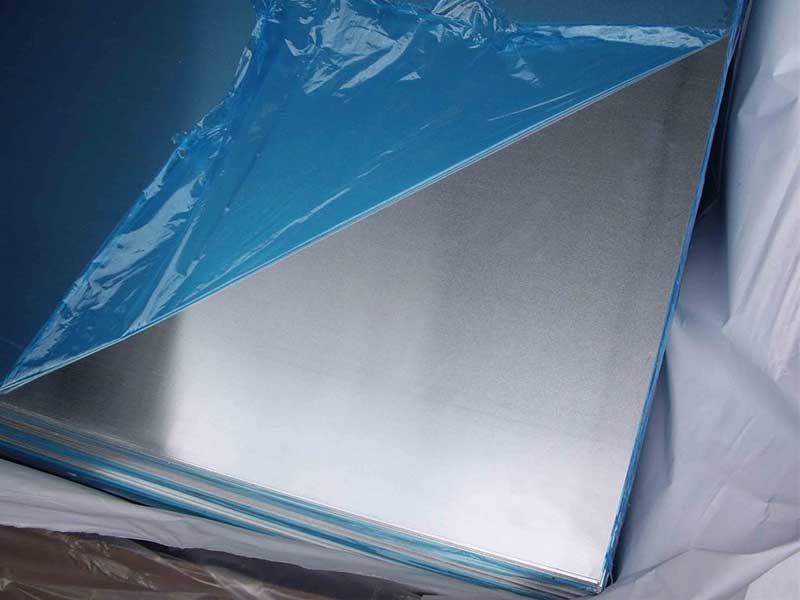
Anodized aluminum sheet 5A06
When people talk about anodized aluminum sheets, they usually mean decorative cladding or consumer products. 5A06 is different. It’s a high‑magnesium, high‑strength structural alloy first—its anodized surface is a serious bonus, not the main purpose.
If you’re considering anodized 5A06 sheet, it helps to stop treating it like a “pretty façade” and start seeing it as a corrosion‑resistant structural skin. From that perspective, many design and purchasing decisions become much clearer.
1. What Makes 5A06 Different?
1.1 Alloy Type and “Character”
5A06 is an Al‑Mg alloy (similar family to 5083/5086) with high magnesium content (~6%) and low Fe/Si. Its personality:
- Built for welded structures
- Resistant to marine and industrial corrosion
- Maintains good toughness at low temperatures
- Responds well to anodizing in terms of corrosion resistance, more than for luxury “decor” finishes
In short: it’s for workhorse components where looks, weight, and lifespan all matter.
1.2 Typical Chemical Composition of 5A06
| Element | Content (wt%) |
|---|---|
| Mg | 5.8 – 6.8 |
| Mn | 0.5 – 0.8 |
| Fe | ≤ 0.4 |
| Si | ≤ 0.4 |
| Cu | ≤ 0.1 |
| Zn | ≤ 0.2 |
| Ti | ≤ 0.05 |
| Cr | ≤ 0.05 |
| Others (each) | ≤ 0.05 |
| Others (total) | ≤ 0.15 |
| Al | Balance |
High Mg content is both the strength source and the fatigue risk in bad environments; anodizing is partly how we “tame” that.
2. Why Anodize 5A06 Sheet? (The Real Reasons)
From a structural point of view, anodizing 5A06 sheet is about managing risks over time:
Corrosion reserve
The anodic film acts as sacrificial armor, particularly valuable in:- Marine atmosphere / splash zones
- De‑icing salt environments
- Industrial marine (SO₂, Cl⁻, etc.)
Welded joint protection
5A06 is famously weldable. But weld zones are always more vulnerable. Correct post‑weld anodizing can even up corrosion behavior between base metal and weld.Dimensional & appearance stability
Structural cladding and shells of equipment don’t just fail—they age visually:- Blotchiness and localized pitting can trigger premature replacement, even if safe.
- Anodizing slows this “cosmetic aging,” especially important where clients demand long‑term visual uniformity.
Friction and wear control
A hard anodic layer (especially hard anodizing) increases surface hardness:- Improves sliding characteristics in guides, panels, access doors
- Reduces galling when metal panels rub during vibration
3. Mechanical Properties: Base Metal vs. Anodized Surface
Anodizing mostly affects the surface. Mechanical design for 5A06 still relies on base alloy properties in a chosen temper.
3.1 Typical Mechanical Properties (Sheet)
(Common values for guidance; for exact design use applicable standards and MTR data.)
5A06‑O (Annealed)
| Property | Typical Value |
|---|---|
| Tensile strength Rm | 265 – 305 MPa |
| 0.2% proof Rp0.2 | 115 – 145 MPa |
| Elongation (A50) | 15 – 22 % |
| Brinell hardness HB | ~70 – 80 |
5A06‑H112 / H116 (Strain-hardened, not fully specified)
| Property | Typical Value |
|---|---|
| Tensile strength Rm | 290 – 340 MPa |
| 0.2% proof Rp0.2 | 130 – 190 MPa |
| Elongation (A50) | 10 – 18 % |
| Brinell hardness HB | ~80 – 90 |
point: Anodizing adds:
- Surface hardness ~250–400 HV (conventional anodizing)
- Minimal effect on bulk yield/tensile strength (film is thin vs. section)
Design still follows base‑metal data; anodizing is a surface engineering layer.
4. Anodizing 5A06: Parameters That Actually Matter
For 5A06, production details play a much larger role than brochure specs. Three questions define your anodizing plan:
- What is the service environment?
- What is more critical: aesthetics or structural life?
- What welds and formed areas exist in the sheet structure?
4.1 Typical Anodizing Types for 5A06 Sheet
- Decorative / protective sulfuric acid anodizing (Type II in many systems)
- Hard anodizing (Type III), for wear and longer life
- Chromic acid anodizing (less common today; sometimes used as a primer base)
For wide sheet components, the most widely used is sulfuric acid anodizing with optional sealing.
Reference process baseline (sulfuric anodizing)
- Electrolyte: 15–20% H₂SO₄
- Temperature: 18–22 °C
- Current density: 1.0–1.5 A/dm² (can be tuned)
- Time: 20–40 min
- Film thickness:
- 5–10 μm for indoor/light duty
- 15–25 μm for outdoor, marine or industrial use
- Sealing: hot deionized water, nickel acetate, or other approved seal
5. The “5A06 Effect”: How Composition Influences Anodized Appearance
Mg‑rich alloys do not behave like 6063 decorative extrusion alloys during anodizing.
- Color tendency:
5A06 tends toward a grayish or slightly dull tone for natural anodizing. Do not expect mirror‑like silver from mill finish sheets. - Higher alloy content = more active dissolution
If process control is poor, you can get:- Uneven film thickness
- Streaking or “grain flow” appearance
- Weld zones behave differently
MIG/TIG filler and weld metallurgy can appear darker or with different reflectance under the same anodizing conditions.
Implication:
If your design demands pristine architectural uniformity, 5A06 is a structural first, decorative second choice. If moderate aesthetic variation is acceptable (ships, rail cars, engineering hulls), its corrosion performance outweighs tonal imperfections.
6. Standards and Technical Framework
6.1 Alloy and Product Standards (Typical References)
Depending on region, 5A06 aligns roughly with marine‑type Al‑Mg alloys; use actual regional standards for specs and acceptance:
- GB/T for Chinese 5A06 wrought products (plates, sheets)
- Similar families:
- EN AW‑5083 / 5086 (not identical, but conceptually close)
- ISO 6361 / 6892 (aluminum and mechanical testing)
- For metamaterials testing: EN, ASTM, GB relevant for tensile, hardness, corrosion testing
6.2 Anodizing Standards
Examples (select those relevant to your project/region):
- ISO 7599: Anodizing of aluminum and alloys – General specifications
- ISO 10074: Hard anodizing
- GB/T 8013 series: Methods for anodizing of aluminum (China)
- MIL‑A‑8625 (still used conceptually) – Types II & III anodizing classification
- EN 12373 series (older but still cited for process guidance)
Internally, many large users have company process specifications stricter than public standards, defining:
- Min./max. film thickness
- Sealing quality criteria
- Color and gloss tolerances
- Adhesion and abrasion tests
7. Sheet Temper Selection Before Anodizing
One common mistake is specifying temper only for structural reasons and ignoring its impact on later surface treatment.
7.1 Common Tempers for Anodized 5A06 Sheet
5A06‑O
- Best formability, reliable welding
- Slightly softer surface; anodizing compensates
- Good choice for deep‑drawn or complexly formed parts
5A06‑H112 / H116
- Higher strength for panels and shells
- Stable dimensions and good flatness
- Suitable for hull plating, vehicle skins, structural covers
Guideline:
- If part has heavy cold forming (deep bends, draw), choose O, form, then anodize.
- If part is mainly flat/curved with moderate shaping, H112/H116 works fine and yields higher load capacity.
8. Processing Route: How to Get Consistent Anodized 5A06 Sheet
View the entire life of the part as an integrated process:
8.1 Step 1 – Base Material Control
- Choose reputable mill with:
- Certified 5A06 chemistry
- Documented Mg control and low impurities (Fe, Cu)
- Order with:
- Tight thickness tolerance
- Required flatness (important for large pans or structural skins)
- Defined temper (O / H112 / H116)
8.2 Step 2 – Pretreatment Before Anodizing
Even well‑made 5A06 can look poor if pretreatment is sloppy.
Common stages:
- Degreasing/cleaning (alkaline or neutral)
- Etching (alkaline desmut or acid, carefully controlled to avoid over‑attack of Mg‑rich phases)
- Desmutting (often nitric- or mixed-acid based; ensures clean metallic surface)
- Rinse sequence to avoid contamination
For 5A06:
- Control etch temperature and time tightly; high Mg alloys can roughen too quickly.
- For large visible panels, run test coupons from the same sheet batch.
8.3 Step 3 – Anodizing Itself
production parameters to pay attention to with 5A06:
- Current distribution: wide sheets need good cathode design and busbar contact to avoid shade variation.
- Temperature stability: Mg‑rich alloys are more prone to “burning” in hot local zones.
- Time‑to‑film target, not time only: control film thickness by measurement, not just minutes.
8.4 Step 4 – Coloring (Optional)
5A06 can be:
- Left natural (slightly grayish metal tone)
- Dyed (organic) — dark colors hide small tonal variations but can make weld contrast visible
- Electrolytically colored — bronze to black shades with better UV stability
Tip: If using welding, create a finish standard with weld sample for client approval. The appearance of weld beads under anodizing often surprises non‑engineers.
8.5 Step 5 – Sealing
For structural sheets, sealing is not optional; it is the main barrier against:
- Pitting initiation
- Staining and smut formation
- Early gloss loss
Common options:
- Hot deionized water sealing (boiling ~95–100 °C)
- Nickel acetate sealing (improved stability, common in architecture)
- Cold sealing systems for sensitive parts (must comply with regional environmental regulations)
Specify measurable sealing quality (e.g., dye spot test, loss of mass test, impedance/test per ISO), not only “sealed yes/no.”
9. Design Use Cases: Where Anodized 5A06 Sheet Makes Sense
9.1 Marine & Offshore
- Hull and superstructure plating (especially around splash zones)
- Deckhouses, wheelhouses, external doors and panels
- Cable trays, protective covers exposed to salt spray
Advantages:
- High Mg = good base corrosion behavior + anodic coating = extended service life
- Less repainting or touch‑up than painted mild steel or zinc‑coated steels
9.2 Transportation (Rail, Special Vehicles)
- Exterior skins for rail cars and metro stock
- Bus side panels and roof skins in coastal cities
- Special‑purpose road tankers and containers
Here, anodizing:
- Reduces maintenance repaint cycles
- Helps keep a consistent appearance over the trainset or fleet
- Resists graffiti cleaners better than plain mill finish
9.3 Industrial Equipment Enclosures
- Compressor housings, pump covers in corrosive plants
- Inspection doors, paneling on chemical or food‑processing equipment
- Structural covers on desalination or power plants near sea
Benefit:
Neutral appearance, strong structural backing, long‑term cleanliness compared with painted steel shells.
10. Common Pitfalls and How to Avoid Them
Expecting “decorative alloy” gloss from 5A06
- Reality: 5A06 is for structural durability, not mirror polish.
- Mitigation: Use sample boards under your actual anodizing line before committing.
Specifying thickness but ignoring film thickness tolerance/outdoor class
- For serious environments, specify:
- ≥15 μm anodic coat for standard outdoor
- ≥20–25 μm for marine/industrial, preferably hard or thick anodizing
- For serious environments, specify:
Welding after final anodizing
- This ruins the coating around the joint, forcing local repair that never matches.
- Correct sequence: form → weld → finish machine → anodize.
Not differentiating interior vs. exterior sheets
- Can save cost by:
- Using thinner films inside (5–10 μm)
- Reserving thicker, better sealed anodizing for exterior panels
- Can save cost by:
No acceptance criteria
- For procurement: define at least:
- Alloy/temper standard
- Mechanical property band or reference standard
- Film thickness (min/typical)
- Sealing type and test
- Color difference ΔE tolerance if relevant
- For procurement: define at least:
11. Practical Specification Template (Example)
For engineering specifications and RFQs, wording like below is far more effective than “5A06 anodized” alone:
Material: 5A06 aluminum alloy sheet per , temper H116.
Thickness: 3.0 ± 0.1 mm, mill certificate required.
Finish: Sulfuric acid anodizing per ISO 7599, Class 25 (nominal 20–25 μm).
Color: Natural (uncolored), sealed in nickel acetate, water conductivity <30 μS/cm during sealing.
Anodic coating thickness: min 18 μm; average ≥ 20 μm (eddy current measurement).
Acceptance: No visually obvious streaks on 3 m viewing distance; weld areas acceptable with tonal difference.
Corrosion: No pitting deeper than 0.2 mm after salt spray test per .
Adjust thickness, temper, and standards for your region and duty level.
- Not a purely decorative skin, but a structural armor plate that’s light enough to form and strong enough for demanding use.
- The alloy composition (high Mg) that gives it strength and weldability makes correct anodizing more important and slightly more sensitive.
- Performance depends not just on “5A06 + anodized” but on tempering, welding plan, anodizing parameters, and sealing quality.
- Once well specified and properly processed, anodized 5A06 sheet delivers a rare combination:
- Structural reliability
- Corrosion resistance in hard environments
- Stable, professional appearance over a long service life.
https://www.alusheets.com/a/anodized-aluminum-sheet-5a06.html