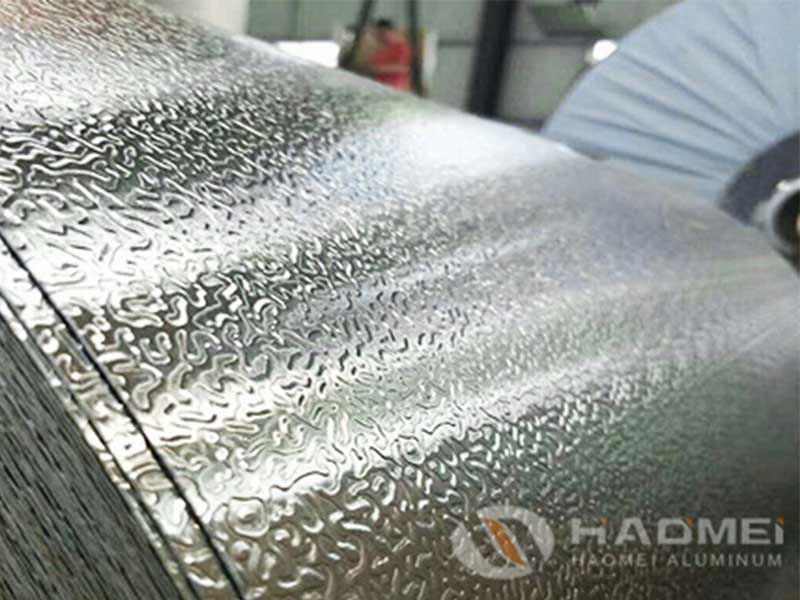
Stucco Embossed Aluminium Coil Sheet A1050
Stucco Embossed Aluminium Coil Sheet A1050 is often described as a "surface" product, but its real value shows up deeper than appearance. Think of it as a functional skin: a light, corrosion-resistant aluminum sheet whose embossed texture quietly improves durability, handling, and performance in real installations. When customers choose A1050 stucco embossed coil, they are not only selecting an alloy-they are selecting a practical interface between metal, environment, and end-use requirements.
A1050: the "purity-driven" alloy behind the texture
A1050 belongs to the 1xxx series, known for high aluminum content and reliable corrosion resistance. With minimum 99.50% Al, it is not designed to win strength contests; it is designed to deliver consistency, formability, and excellent surface behavior. This is why A1050 is widely used where shaping, rolling, insulating, cladding, or decorative protection matters more than structural load-bearing.
The stucco embossed pattern then becomes more than a visual finish. It helps hide minor scratches, reduces fingerprint visibility, improves stiffness perception, and can enhance the way coatings, laminations, or insulation jackets "sit" against the surface.
The stucco emboss: small geometry, big practical advantages
Embossing introduces controlled, repeating micro-relief on the aluminum surface. In day-to-day use, that texture brings several quiet advantages:
Better scratch camouflage during transport and fabrication
Warehouses, shipping lines, and installation sites are unforgiving. The stucco pattern makes scuffs less noticeable and helps the finished product look cleaner for longer.
Improved handling and reduced sticking
Flat, smooth coils can "block" or stick when stacked, and they may feel slippery during handling. Embossed surfaces offer more grip and reduce contact area, which can improve workability and reduce surface-to-surface adhesion in some applications.
Functional aesthetics for exposed surfaces
In architectural trims, appliance panels, and enclosure skins, the embossed texture provides a premium industrial look without needing heavy coatings.
Potential thermal and interface benefits in insulation jacketing
For pipe wrap and HVAC insulation cladding, the surface texture can help reduce visible waviness, and it can tolerate minor impacts better than smooth sheet.
Typical functions and applications
A1050 stucco embossed aluminum coil sheet is most commonly chosen for "protective and presentable" roles rather than primary structural roles.
Insulation jacketing and lagging
One of the most established uses is outer jacketing for thermal insulation in industrial pipelines, tanks, and HVAC ducts. The coil is formed into wraps, elbows, and covers. The corrosion resistance of high-purity aluminum helps in humid environments, while the stucco emboss resists jobsite wear.
Refrigeration and cold-chain equipment panels
Refrigerators, freezers, and cold-room panels benefit from a surface that stays visually consistent and is easy to wipe down. A1050's formability supports bending and shaping in production.
Building cladding, ceilings, and trims
Where lightweight metal skin is required, stucco embossed A1050 offers a balance of appearance and practicality. It is especially useful in soffits, interior metal liners, and decorative protective layers.
Appliance and enclosure skins
Electrical housings and general enclosures sometimes use embossed aluminum to hide handling marks and maintain a uniform look over time.
Technical parameters customers commonly specify
In purchasing and engineering discussions, the "right coil" is usually defined by a compact set of parameters:
Alloy: A1050 (equivalent family: AA1050)
Temper: commonly O (annealed), H14, H24, H16, H26 depending on forming needs and stiffness expectations
Thickness: typically 0.3–2.0 mm for many jacketing and panel uses, with wider availability depending on supplier capability
Width: commonly 500–1250 mm; custom slit widths are typical
Inside diameter: often 150 mm, 300 mm, 505 mm depending on coil system and downstream equipment
Surface: stucco embossed, one side or both sides; mill finish or with protective film; optional coating or color finish
Emboss pattern: "orange peel" or classic stucco texture; depth and pitch may be specified when appearance or fit is critical
Because embossing slightly changes effective stiffness and surface contact behavior, it's wise to confirm whether thickness tolerance is measured before or after embossing, and how the supplier defines pattern depth.
Standards and implementation viewpoint: "consistency is the real performance"
Customers often focus on alloy and thickness, but implementation standards are what keep coil quality consistent across shipments. Commonly referenced standards include:
ASTM B209 for aluminum and aluminum-alloy sheet and plate (widely used for flat-rolled requirements)
EN 485 series for aluminum and aluminum alloy sheet, strip and plate (mechanical properties and tolerances)
EN 573 for chemical composition (when European chemical compliance is required)
JIS H4000 / JIS H4160 family in some Asian procurement contexts
For insulation jacketing in particular, buyers may also align with project specifications that reference thickness, temper, and surface finish requirements suited to outdoor exposure, fastening methods, and service temperatures.
Tempering conditions: choosing the "behavior" you want
Temper is where A1050 becomes tailored for the job. Since the alloy is naturally soft, temper selection determines whether the sheet behaves like a pliable wrap or a more spring-resistant skin.
O temper (annealed) is preferred when deep forming, tight bending radii, or complex shapes are needed. It reduces cracking risk and makes fabrication forgiving.
H14 and H24 are common "half-hard" style conditions used when customers want better flatness and dent resistance than O temper, while still maintaining reasonable formability.
Higher H tempers increase strength and stiffness but reduce bendability. They can be suitable for panels where rigidity is valued, but they require more care in forming operations.
If the coil will be roll-formed, pressed, or bent at the jobsite, temper selection is best made based on minimum bend radius requirements, expected handling impacts, and whether edges will be hemmed or seamed.
Chemical composition table (A1050 / AA1050 typical limits)
Below is a commonly used composition range for AA1050-type material. Exact limits can vary slightly by standard and supplier, so procurement should reference the applicable standard in the purchase order.
| Element | Composition (wt.%) |
|---|---|
| Aluminum (Al) | ≥ 99.50 |
| Silicon (Si) | ≤ 0.25 |
| Iron (Fe) | ≤ 0.40 |
| Copper (Cu) | ≤ 0.05 |
| Manganese (Mn) | ≤ 0.05 |
| Magnesium (Mg) | ≤ 0.05 |
| Zinc (Zn) | ≤ 0.05 |
| Titanium (Ti) | ≤ 0.03 |
| Others (each) | ≤ 0.03 |
| Others (total) | ≤ 0.10 |
This high-purity chemistry is the foundation for corrosion resistance and excellent workability, especially important when the embossed surface must remain clean and uniform after forming.
A distinctive way to judge A1050 stucco embossed coil: "surface reliability per square meter"
Instead of evaluating it like a structural metal, evaluate it like a protective layer. Every square meter is expected to do three jobs at once: stay presentable, resist the environment, and cooperate with fabrication. A1050 delivers corrosion stability; the stucco emboss delivers everyday toughness; the chosen temper delivers the forming behavior. When those three align with your application, the coil performs with very low drama-which is exactly what most customers want.
For buyers, the fastest route to the right selection is to confirm alloy A1050, choose temper based on forming method, specify thickness and width, and define the emboss pattern and surface protection needs. Done correctly, Stucco Embossed Aluminium Coil Sheet A1050 becomes a dependable "finish layer" that keeps products and projects looking better, lasting longer, and installing faster.
https://www.alusheets.com/a/stucco-embossed-aluminium-coil-sheet-a1050.html