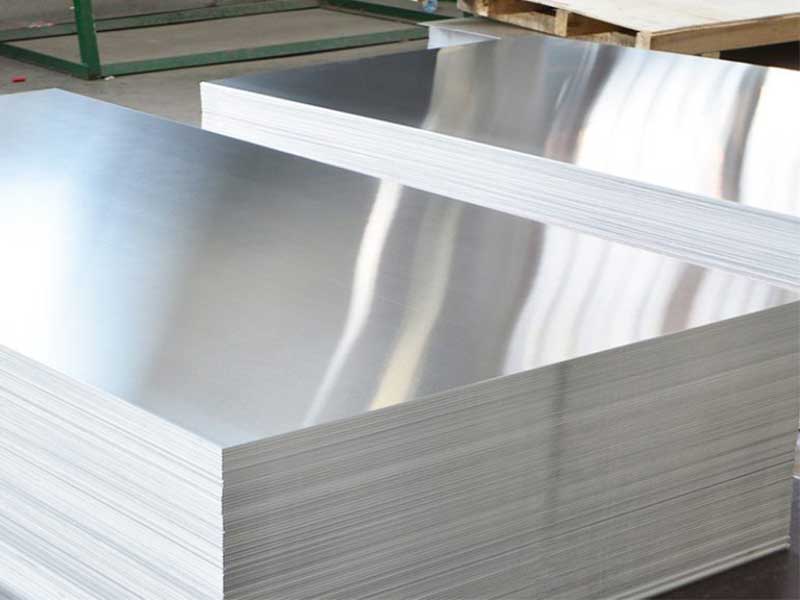
Aluminum Plate A5005 for Trailer Trucks H14 H32 H34
Aluminum Plate A5005 for Trailer Trucks H14 H32 H34: Built for the Road, Tuned for Real-World Fabrication
Trailer trucks live in a harsh middle ground: constant vibration, road salt, rainwater, UV exposure, cargo abrasion, and the everyday reality of dents and impacts. Choosing an aluminum plate for trailers isn't only about "lightweight metal." It's about selecting an alloy and temper that behaves predictably when it's cut, bent, welded, riveted, sealed, and then pushed down the highway for years.
Aluminum Plate A5005 in tempers H14, H32, and H34 is often selected for trailer skins, side panels, interior linings, doors, partitions, splash guards, toolboxes, and general trim components-places where corrosion resistance, surface quality, and manageable forming matter as much as strength. From a practical fabrication perspective, 5005 is a "quiet performer": it doesn't demand exotic handling, yet it consistently rewards good shop practice with clean finishes and stable service life.
Why A5005 Makes Sense on Trailer Trucks
A5005 belongs to the 5xxx series, meaning magnesium is the primary alloying element. That magnesium is the reason this plate tends to hold up well against atmospheric corrosion and road environments. Many trailer components see wet-dry cycles and exposure to chlorides; 5005's corrosion behavior, coupled with sensible sealing and drainage design, helps reduce cosmetic and structural degradation over time.
Another reason fabricators like 5005 is its surface response. Trailer bodies are as much about appearance as function. 5005 is known for uniform anodizing response compared with some other 5xxx alloys, making it attractive when panels will be anodized or when a consistent finish is needed under paint or coatings. Even when not anodized, the plate typically presents a clean, consistent surface for painting and adhesive bonding if the right pretreatment is used.
H14, H32, and H34 from a Trailer Builder's View
Temper is where "the same alloy" becomes three very different shop experiences.
H14 indicates strain hardened to about half-hard. In daily fabrication, H14 is often chosen when you want a solid bump in stiffness over annealed material, but still need reasonable formability for bending, hemming, or mild shaping. It's a common choice for panels that must resist oil-canning and keep their geometry during fastening.
H32 is strain hardened and then stabilized. Stabilization is important for 5xxx alloys because it helps reduce the chance of property changes over time and improves consistency after forming. In trailer applications, H32 is frequently chosen as the "balanced" option: good strength, good forming, and reliable behavior when the part sees temperature variation and vibration.
H34 is a step stronger than H32. It's used when you want higher rigidity and dent resistance in thin gauges, or when the panel spans larger distances between supports. The trade-off is reduced formability compared with H32; bending radii should be more conservative, and forming trials are smart if the geometry is tight.
A helpful way to think about these tempers in trailer work is this: H14 is cooperative, H32 is predictable, and H34 is confident. Selecting among them depends on whether your priority is easier forming, a stable all-rounder, or extra panel stiffness.
Typical Parameters Customers Ask For
A5005 aluminum plate can be supplied in a wide range of sizes for trailer fabrication, and orders are often tailored to minimize scrap.
Common thickness range for trailer-related plate and sheet uses typically falls between 1.0 mm and 6.0 mm, though heavier plate may be used for brackets, steps, or protective sections depending on design. Standard widths commonly include 1000 mm, 1220 mm, 1250 mm, and 1500 mm, with lengths such as 2000 mm, 2440 mm, 2500 mm, and 3000 mm. Custom cutting is frequently used to match trailer panel layouts and reduce handling time.
Surface options typically include mill finish, one-side protective film, or finish-ready surfaces intended for coating. For trailer exteriors, many buyers prioritize low waviness, consistent reflectivity, and film protection to prevent transit scratches.
Implementation Standards and Supply Conditions
When customers specify A5005 plate for trailer trucks, they usually need clarity on standards, tolerances, and verification.
Commonly referenced standards for wrought aluminum plate and sheet include ASTM B209 for aluminum and aluminum-alloy sheet and plate. For chemical composition and temper designation consistency, EN 573 and EN 515 are often used in international supply contexts, and JIS H4000 series standards may appear depending on the sourcing region. In practice, what matters is that the supplier can provide traceable material certification, temper verification, and dimensional tolerances aligned with the purchasing specification.
For trailer manufacturing, it is also normal to request documentation such as MTC/COC, heat number traceability, and surface inspection criteria, particularly when panels will be painted or used as visible exterior skins.
Fabrication Notes: Cutting, Bending, Joining, and Finishing
A5005 is generally friendly to shearing, sawing, and CNC routing. Clean edges help coatings last longer, so deburring and edge sealing are good habits-especially where water can sit.
For bending, temper selection is crucial. H32 usually provides a comfortable window for press brake work with acceptable bend radii. H34 may require larger radii to avoid edge cracking, especially if bending across the rolling direction. If your design includes tight hems, returns, or complex forming, H14 or H32 is often safer than H34.
For joining, 5005 can be welded, but many trailer assemblies rely heavily on riveting, mechanical fastening, adhesives, or hybrid joints to manage distortion and production speed. If welding is planned, confirm filler selection and perform procedure checks; as with most aluminum, surface cleanliness and oxide removal are essential. For painted trailer bodies, pay attention to pretreatment and primer compatibility, since long-term coating performance is as much about preparation as it is about alloy choice.
Chemical Composition of Aluminum Alloy 5005
Below is a typical chemical composition table for Aluminum Alloy 5005. Actual values may vary by producer and must meet the applicable standard limits on the mill test certificate.
| Element | Composition (wt.%) |
|---|---|
| Silicon (Si) | ≤ 0.30 |
| Iron (Fe) | ≤ 0.70 |
| Copper (Cu) | ≤ 0.20 |
| Manganese (Mn) | ≤ 0.20 |
| Magnesium (Mg) | 0.50–1.10 |
| Chromium (Cr) | ≤ 0.10 |
| Zinc (Zn) | ≤ 0.25 |
| Titanium (Ti) | ≤ 0.20 |
| Others (each) | ≤ 0.05 |
| Others (total) | ≤ 0.15 |
| Aluminum (Al) | Balance |
Magnesium is the headline ingredient, providing solid corrosion resistance and strength without making fabrication overly difficult. Low copper content supports corrosion performance, which is particularly relevant for road environments.
What to Specify When Ordering A5005 for Trailer Trucks
A fast, clear purchase specification reduces back-and-forth and helps ensure the plate behaves correctly on your production line. Most trailer buyers include alloy designation A5005, temper H14 or H32 or H34, thickness, width, length, quantity, and the required standard such as ASTM B209. It's also smart to state surface requirements, protective film needs, permitted defects for appearance-critical panels, and whether the material will be painted or anodized.
A Practical Takeaway
A5005 in H14, H32, and H34 isn't just "aluminum plate." It's a toolkit for trailer builders who want corrosion resistance, stable looks, and fabrication-friendly strength. Pick H14 when forming ease leads, choose H32 when you want the most balanced and repeatable performance, and step up to H34 when panel stiffness and dent resistance are the priority. In the real world of trailer trucks, that kind of targeted temper choice is what keeps a body looking straight, staying quiet, and lasting longer on the road.
https://www.alusheets.com/a/aluminum-plate-a5005-for-trailer-trucks-h14-h32-h34.html