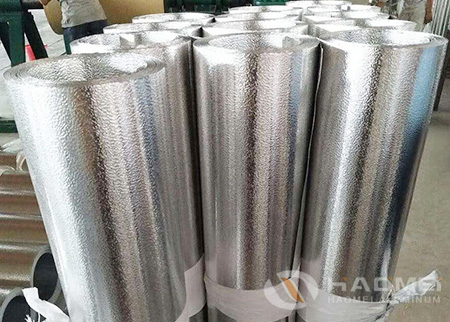
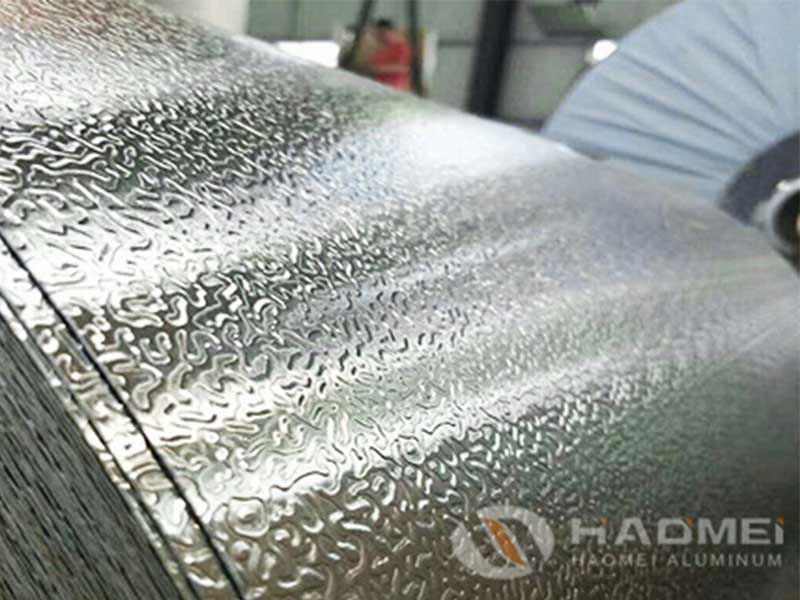
Embossed aluminum sheet A1050 A1060 A1070 A1100 H14
01/02 2026
Embossed aluminum sheet in grades A1050, A1060, A1070, and A1100 with temper H14 is a popular material for decorative, protective, and functional cladding. Its raised surface pattern improves aesthetics and slip resistance while preserving the lightweight, corrosion-resistant nature of pure aluminum.
Alloy Family and Temper
| Item | Description |
|---|
| Alloy series | 1000-series commercially pure aluminum (A1050, A1060, A1070, A1100) |
| Purity range | Approx. 99.0% – 99.7% Al (depending on grade) |
| Temper | H14 (half-hard, strain-hardened only) |
| Typical thickness range | 0.20 – 3.00 mm (can vary per supplier) |
| Typical width range | 600 – 1600 mm |
| Surface finish | Embossed / patterned, mill finish, or embossed + coated (optional) |
| Common patterns | Orange peel, stucco, diamond, pebble, hammered, or customized |
H14 temper gives a good balance of formability and strength, making it suitable for cladding, panels, and light-structure applications that require easy forming but higher rigidity than soft temper (O).
Chemical Composition
While exact composition can vary slightly by standard and producer, the following tables summarize typical ranges for each alloy. Values are in weight percent (%).
A1050 Chemical Composition (Typical)
| Element | Si | Fe | Cu | Mn | Mg | Zn | Ti | Others (each) | Others (total) | Al (min) |
|---|
| % | ≤0.25 | ≤0.40 | ≤0.05 | ≤0.05 | ≤0.05 | ≤0.05 | ≤0.03 | ≤0.03 | ≤0.10 | ≥99.50 |
A1060 Chemical Composition (Typical)
| Element | Si | Fe | Cu | Mn | Mg | Zn | Ti | Others (each) | Others (total) | Al (min) |
|---|
| % | ≤0.25 | ≤0.35 | ≤0.05 | ≤0.03 | ≤0.03 | ≤0.05 | ≤0.03 | ≤0.03 | ≤0.10 | ≥99.60 |
A1070 Chemical Composition (Typical)
| Element | Si | Fe | Cu | Mn | Mg | Zn | Ti | Others (each) | Others (total) | Al (min) |
|---|
| % | ≤0.20 | ≤0.25 | ≤0.04 | ≤0.03 | ≤0.03 | ≤0.04 | ≤0.03 | ≤0.03 | ≤0.10 | ≥99.70 |
A1100 Chemical Composition (Typical)
| Element | Si + Fe | Cu | Mn | Mg | Zn | Ti | Others (each) | Others (total) | Al (min) |
|---|
| % | ≤0.95 | 0.05–0.20 | ≤0.05 | ≤0.05 | ≤0.10 | ≤0.05 | ≤0.05 | ≤0.15 | ≥99.00 |
These alloys are essentially unalloyed aluminum with small additions that slightly tune strength and workability while keeping excellent electrical and thermal conductivity.
Mechanical and Physical Properties (H14 Temper)
Values below are typical for embossed aluminum sheet in H14 temper. Actual data will depend on thickness and production route; they should be used as reference, not as guaranteed minimums.
Mechanical Properties
| Alloy | Temper | Tensile Strength Rm (MPa) | Yield Strength Rp0.2 (MPa) | Elongation A50 (%) | Typical Hardness (HB) |
|---|
| A1050 | H14 | 75 – 95 | 65 – 85 | 4 – 12 | 22 – 30 |
| A1060 | H14 | 80 – 100 | 70 – 90 | 3 – 12 | 23 – 32 |
| A1070 | H14 | 70 – 95 | 60 – 85 | 4 – 14 | 20 – 30 |
| A1100 | H14 | 95 – 125 | 75 – 105 | 3 – 10 | 27 – 35 |
Physical Properties
| Property | Typical Value (1000 series) |
|---|
| Density | ~2.70 g/cm³ |
| Melting range | ~645 – 660 °C |
| Thermal conductivity | ~220 – 235 W/(m·K) |
| Electrical conductivity | ~55 – 60 % IACS (depends on purity) |
| Coefficient of linear expansion | ~23.6 × 10⁻⁶ /K (20–100 °C) |
| Elastic modulus | ~69 GPa |
| Poisson’s ratio | ~0.33 |
Features of Embossed 1000-Series Aluminum Sheet
Surface Texture and Anti-Slip Performance
| Feature | Benefit |
|---|
| Raised embossed pattern | Enhanced grip and reduced slip in wet or oily environments |
| Visual depth and light diffusion | Attractive decorative effect, hides minor dents and scratches |
| Improved stiffness | Embossed structure increases rigidity at the same nominal thickness |
| Easy cleaning | Non-porous metal surface; suitable for hygienic applications |
The embossing pattern acts like small ribs that stiffen the sheet, allowing weight savings compared with flat sheet at equal perceived rigidity.
Corrosion Resistance and Durability
| Property/Aspect | Performance in A1050–A1100 H14 |
|---|
| General atmospheric corrosion | Excellent in rural and urban atmospheres |
| Resistance to many chemicals | Good resistance to water, many organic compounds, mild industrial atmospheres |
| Galvanic behavior | More anodic than most metals; avoid direct contact with less noble materials |
| Surface protection options | Anodizing, PVDF coating, polyester paint, or color coating available |
High aluminum purity gives these grades excellent natural corrosion resistance without heavy alloying additions.
Formability and Workability
| Process | Suitability (H14, embossed) | Notes |
|---|
| Bending | Good | Recommended larger radii than O temper to avoid cracking |
| Roll forming | Very good | Common for cladding profiles, decorative strips |
| Deep drawing | Fair to good (depending on pattern) | Embossing may slightly limit very deep draws |
| Cutting / shearing | Excellent | Clean edges with standard equipment |
| Punching | Excellent | Emboss pattern requires attention to die clearance |
| Welding (TIG/MIG) | Good for flat zones | Prefer welds on non-embossed edges or use filler compatible with 1xxx |
Typical Dimensions and Tolerances
Exact ranges vary by mill and order quantity, but the table below shows popular commercial sizes.
| Parameter | Typical Range / Option |
|---|
| Thickness (mm) | 0.20 – 3.00 (embossed effective thickness) |
| Width (mm) | 600 – 1600 |
| Coil inner diameter | 405, 505, 508, or 610 mm |
| Coil weight | 0.5 – 3.0 tons (customizable) |
| Flatness | As per ASTM/EN/GB standards or customer spec |
| Edge type | Mill edge or slit edge |
Note that actual measured thickness includes both base sheet and partial height of the emboss, so design calculations should consider nominal base thickness when strength is critical.
Surface Patterns and Finishes
Common Embossing Patterns
| Pattern Type | Visual Effect | Typical Use Cases |
|---|
| Stucco / Orange peel | Diffuse, irregular pattern | Building cladding, insulation jacketing, duct wrap |
| Diamond / Checker | Geometric raised diamonds | Anti-slip flooring, stair treads, truck body panels |
| Pebble / Leather | Fine, rounded bumps | Decorative interior panels, appliance skins |
| Hammered | Irregular hammered-metal look | Decorative ceilings, exhibition booths, interior design |
Optional Surface Treatments
| Treatment | Function and Benefit |
|---|
| Clear anodizing | Increases corrosion resistance, hardens surface, keeps metallic look |
| Color anodizing | Adds decorative color with durable oxide layer |
| PVDF coating | Excellent UV resistance and color retention for façade applications |
| Polyester coating | Economical color finish; suitable for indoor and mild outdoor use |
| Laminated film | Protective or decorative plastic film for interior decoration |
Main Applications
Building and Construction
| Application Scenario | Role of Embossed Sheet |
|---|
| Exterior wall cladding | Lightweight, corrosion-resistant façade with textured appearance |
| Roofing and soffits | Reflective surface reduces heat gain; pattern hides imperfections |
| Ceiling and interior panels | Attractive, easy to clean, and simple to install |
| Door and elevator decoration | Impact-resistant surface with premium appearance |
The combination of low weight and stiffness allows cost-effective large panels that are easy to handle on site.
HVAC, Insulation, and Industrial Use
| Use Area | Function and Advantages |
|---|
| Duct and pipe insulation jacketing | Protects insulation, resists weathering, and improves aesthetics |
| Cold room and refrigeration panels | Moisture-resistant, hygienic surface for food and pharma spaces |
| Equipment covers and casings | Light, corrosion-resistant protective shells around machinery |
| Chemical and power plants | Jacketing for hot piping and vessels, especially stucco finish |
Embossed surfaces are popular over insulation because they retain shape better, resist denting, and conceal handling marks.
Transportation and Automotive
| Application | Benefit of A1050–A1100 Embossed Sheet |
|---|
| Truck and trailer body | Weight-saving panels, improved anti-slip performance |
| Bus and coach interior | Decorative wall and ceiling panels with easy cleaning |
| Caravan and container panels | Weather-resistant skins with good stiffness |
Higher-purity alloys keep weight low while the embossed pattern provides both strength and visual appeal.
Appliances and Consumer Products
| Product Segment | Example Uses |
|---|
| Household appliances | Refrigerator liner panels, decorative fronts, side panels |
| Furniture and fixtures | Cabinet fronts, partition walls, exhibition systems |
| Lighting and décor | Reflector backs, diffusing panels, decorative trimmings |
The pure aluminum grades also provide good reflectivity, useful in lighting and energy-efficient designs.
Advantages at a Glance
| Advantage Category | Description |
|---|
| Lightweight | ~1/3 the density of steel, reducing structural load and transport cost |
| Corrosion resistance | Excellent natural protection; optional anodizing or coating for harsh climates |
| Formability | Suitable for bending, rolling, and moderate forming even in H14 |
| Aesthetic versatility | Multiple patterns, finishes, and colors available |
| Thermal and electrical | High conductivity, ideal for insulation jacketing and thermal applications |
| Recyclability | 100% recyclable without loss of core properties |
Selection Guide: A1050 vs A1060 vs A1070 vs A1100
| Requirement / Priority | Recommended Alloy | Reasoning |
|---|
| Maximum purity & conductivity | A1070 | Highest aluminum content, best for electrical / thermal emphasis |
| General jacketing & cladding | A1060 or A1050 | Good balance of cost, purity, and workability |
| Slightly higher strength | A1100 | Small copper addition improves strength while keeping good formability |
| Cost-sensitive decorative use | A1050 / A1100 | Widely available and economical |
All four alloys share many characteristics; choice often depends on local standards, stock availability, and specific conductivity or strength needs.
Embossed aluminum sheet in grades A1050, A1060, A1070, and A1100 H14 offers a combination of:
- Lightweight yet stiff textured surface
- Excellent corrosion resistance and good formability
- Decorative patterns that also improve slip resistance
- Wide suitability for building cladding, insulation jacketing, HVAC, transport, and appliances
By selecting the appropriate alloy, thickness, pattern, and surface treatment, customers can optimize performance, appearance, and cost for their specific application.
1050
1060
1070
1100
https://www.alusheets.com/a/embossed-aluminum-sheet-a1050-a1060-a1070-a1100-h14.html