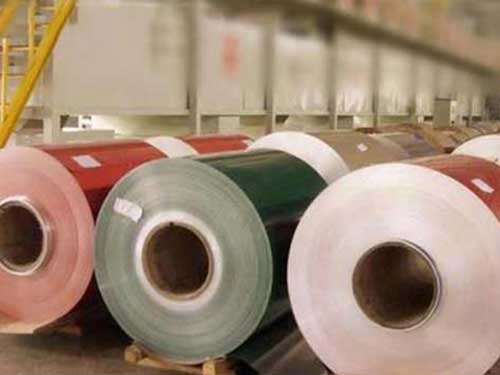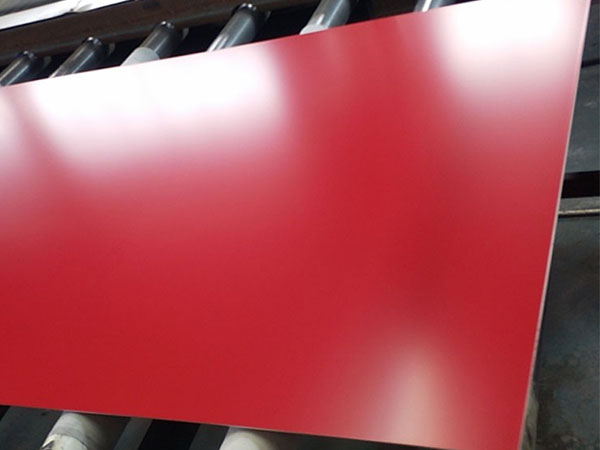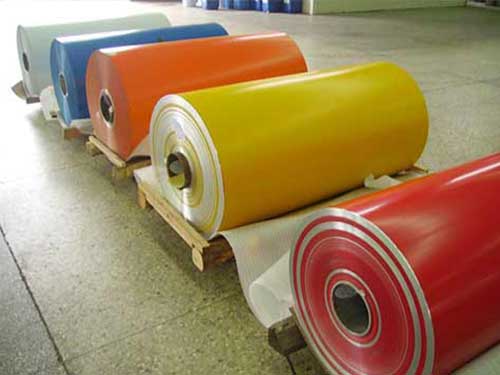
0.21-1.5mm PVDF Aluminium Coil
0.21–1.5mm PVDF Aluminium Coil: A Thin Material That Carries Big Architectural Responsibility
When people talk about PVDF aluminium coil, they often describe it as "weather-resistant" or "color-stable." That's true, but it's only half the story. In the 0.21–1.5mm thickness range, PVDF coated aluminum coil becomes a highly controllable surface-engineering material: light enough to form and fabricate efficiently, yet strong enough to hold its shape, protect substrates, and deliver a long service life outdoors. It's less like a simple sheet product and more like a pre-finished system-one that merges corrosion protection, aesthetics, and manufacturability into a single coil.
This thickness window is also where PVDF shows its practical value most clearly. Coils around 0.21–0.50mm are commonly chosen for roll-forming, ceiling systems, shutters, and interior/exterior trim where weight and bending performance matter. Coils from 0.60–1.5mm enter structural cladding territory-facades, composite panels, parapets, column covers, soffits, and signage-where stiffness and dent resistance become more important. In both cases, PVDF's job is not only to look good, but to keep the aluminum stable against UV, humidity, pollutants, salt spray, and temperature cycling.
What PVDF Coating Really Does on Aluminium Coil
PVDF is a fluoropolymer coating system known for its chemical inertness and strong carbon–fluorine bonds. On aluminum coil, that translates into three functional advantages customers feel immediately during use:
Color integrity over time in sunlight, especially on high-exposure building skins. PVDF resists chalking and fading far better than common polyester coatings, which helps designers keep the original visual intent longer.
A barrier layer that slows down atmospheric corrosion. Aluminum already forms a natural oxide film, but PVDF adds a more robust, engineered protection against aggressive environments, including coastal or industrial zones.
A low-maintenance surface. Dirt release is improved because PVDF surfaces tend to have lower surface energy, making routine washing more effective and reducing the tendency for staining.
These are not abstract benefits. They directly affect warranty expectations, maintenance budgets, and whether a project keeps its "new" appearance after years of weather.
Typical Product Parameters for 0.21–1.5mm PVDF Aluminium Coil
PVDF coated aluminum coil is usually supplied as prepainted coil, produced through continuous coil coating lines. The parameters below are common ranges that buyers evaluate for fabrication compatibility and end-use performance:
Thickness range: 0.21–1.5mm
Common thickness selections: 0.25mm, 0.30mm, 0.40mm, 0.50mm, 0.60mm, 0.70mm, 0.80mm, 1.0mm, 1.2mm, 1.5mm
Width: typically 600–1600mm (custom slitting available)
Coil ID: 405mm or 505mm (common industrial standards)
Coil weight: often 2–5 tons depending on logistics and line capability
Surface finish: solid, metallic, mica, matte, satin, high gloss, textured (depending on paint system)
Coating system: PVDF (commonly 70% PVDF resin)
Top coat thickness: typically 20–30 μm for architectural use
Primer thickness: typically 5–8 μm
Back coat thickness: typically 5–10 μm (service coating) or as specified
Gloss: customizable, commonly 10–80 (60°)
Color standard: RAL, Pantone, or customer sample matching
Because this is coil stock, consistency matters as much as peak performance. Buyers often focus on thickness tolerance, coating thickness uniformity, and adhesion performance after bending or roll-forming.
Implementation Standards and Quality References
PVDF aluminium coil is commonly produced and inspected with reference to international standards covering aluminum substrate, coil coating quality, and mechanical property verification. Depending on the region and project type, typical references include:
Aluminum alloy and temper standards: ASTM B209, EN 485, EN 573, JIS H4000
Prepainted coil coating performance: AAMA 2605 (widely used for architectural PVDF coatings), EN 13523 series (coil coating test methods), ASTM D tests for adhesion, impact, and flexibility
General coating thickness and inspection: ISO 2808 (film thickness), ASTM D3359 (cross-hatch adhesion), ASTM D2794 (impact resistance), ASTM D2244 (color difference)
For architectural projects where service life is central, AAMA 2605 is often the shorthand requirement, because it sets expectations for chalk resistance, color retention, and film integrity in outdoor exposure.
Alloy Choices and Tempering: Matching Formability with Strength
In the 0.21–1.5mm PVDF coil category, the "right" aluminum alloy is not about a single best option-it's about the forming method, stiffness requirements, and corrosion environment.
3000 series (manganese alloyed), especially 3003 and 3105, is a common choice for coated architectural coil. It offers a balanced combination of corrosion resistance and formability, making it friendly for bending, roll-forming, and profiling.
5000 series (magnesium alloyed), such as 5052, is selected when higher strength and better performance in more aggressive environments are desired. It is often used for applications needing improved dent resistance, better fatigue behavior, or more demanding outdoor exposure.
Temper selection often determines whether the coil behaves beautifully in fabrication or cracks at a bend radius. Common tempers include:
H14 or H24 for a practical balance of strength and forming performance
H16 or H18 for higher hardness and improved flatness/stiffness, often used where forming is limited
O temper when extreme formability is required, though it is less common for some coil coating supply chains
When specifying a 0.21–0.40mm coil for tight roll-forming, a softer temper can reduce micro-cracking risk at edges and corners. When specifying 1.0–1.5mm cladding sheets where stiffness matters, a harder temper can improve panel feel and reduce oil-canning tendency, but requires appropriate bend radius control.
Chemical Composition Table (Typical Reference)
Actual composition depends on the exact standard and mill certificate. Below is a typical reference for commonly used alloys in PVDF coated aluminum coil.
| Alloy | Si (%) | Fe (%) | Cu (%) | Mn (%) | Mg (%) | Cr (%) | Zn (%) | Ti (%) | Al |
|---|---|---|---|---|---|---|---|---|---|
| 3003 | ≤0.60 | ≤0.70 | 0.05–0.20 | 1.0–1.5 | ≤0.05 | - | ≤0.10 | - | Balance |
| 3105 | ≤0.60 | ≤0.70 | ≤0.30 | 0.3–0.8 | 0.2–0.8 | ≤0.20 | ≤0.40 | ≤0.10 | Balance |
| 5052 | ≤0.25 | ≤0.40 | ≤0.10 | ≤0.10 | 2.2–2.8 | 0.15–0.35 | ≤0.10 | - | Balance |
For projects needing a documented quality trail, mill test certificates, coating batch records, and compliance declarations to the chosen standards are often as important as the alloy itself.
Applications: Where 0.21–1.5mm PVDF Coil Performs Best
This product thrives where designers want a finished surface but fabricators need speed. PVDF coil allows manufacturers to avoid post-painting, reducing VOC exposure, shortening production cycles, and improving coating consistency across long runs.
Architectural facades and wall cladding benefit from PVDF's UV stability and chemical resistance, especially in sun-heavy regions or urban environments with pollutants.
Aluminum composite panel (ACP) skins often use PVDF-coated coil as the facing material, where bond strength, coating integrity, and long-term color retention define the perceived quality of the panel.
Roofing trims, soffits, gutter systems, and edge caps use thinner gauges for efficient forming, while still relying on PVDF to resist chalking and rain-borne contamination.
Signage, canopies, column covers, and decorative profiles depend on PVDF's ability to hold color and gloss while tolerating handling, bending, and installation wear.
A Distinctive Way to Think About It: PVDF Coil as "Pre-Built Outdoor Reliability"
In practice, 0.21–1.5mm PVDF aluminium coil is not just a metal sheet with paint. It is a controlled combination of alloy chemistry, temper, coating architecture, and testable performance. Its function is to arrive at the fabricator already optimized: stable color, protective film, predictable forming behavior, and standardized verification. When specified carefully-matching thickness, alloy, temper, and PVDF system to the application-it becomes one of the most efficient ways to deliver long-lasting architectural surfaces at scale.
https://www.alusheets.com/a/021-15mm-pvdf-aluminium-coil.html