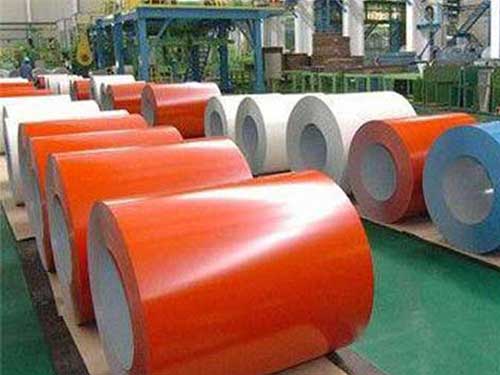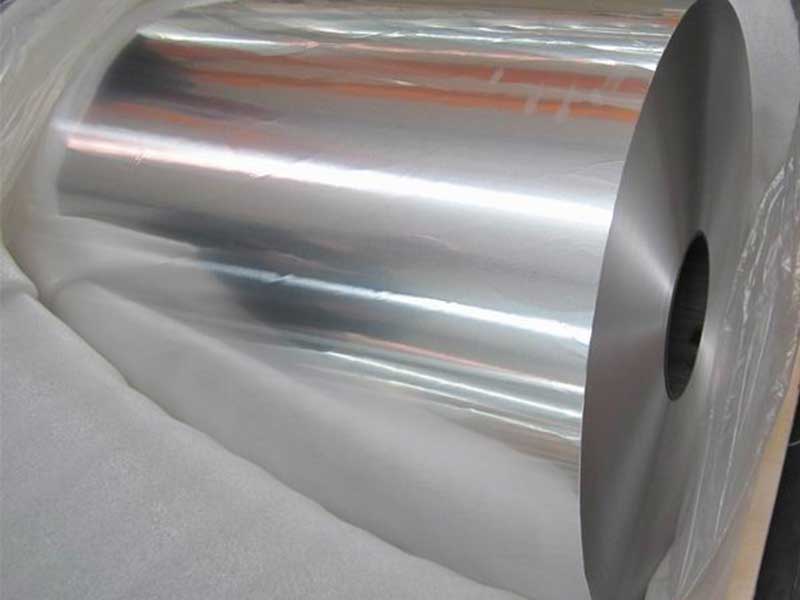
Thickness 0.4mm 0.8mm Aluminium Coil
In aluminium processing, thickness is not just a number on a drawing; it is a personality. A 0.4mm aluminium coil behaves like a quick, responsive instrument-easy to form, easy to cut, eager to follow a radius. A 0.8mm aluminium coil feels more like a sturdy tool-still formable, but with a firmer voice, better resistance to denting, and a broader comfort zone in handling and installation. Looking at these two gauges from a "behavior-first" perspective helps buyers choose not only what meets the specification, but what will run smoothly on the line, survive real service conditions, and produce consistent appearance.
What thickness really changes in production
The jump from 0.4mm to 0.8mm is a doubling of thickness, but in practice it often feels like a change in "process temperament." At 0.4mm, the coil is more sensitive to flatness, residual stress, and surface handling. It can show waviness more readily after slitting or recoiling, and it telegraphs minor roller marks or scratches into visible defects-especially under bright anodized finishes or high-gloss paint.
At 0.8mm, the coil carries more stiffness, which usually improves feeding stability in stamping lines, roll forming, or automated bending. It tolerates handling a bit better and resists oil-canning in panels. That said, 0.8mm requires more forming force, can spring back more noticeably depending on alloy/temper, and may demand tighter control of bend radii to prevent cracking in hard tempers.
The best thickness is often decided by the "hidden" realities: how many times it will be uncoiled and recoiled, how long it will sit in storage, whether the plant has tension-leveling, and whether operators work with gloves and protective interleaving to protect the surface.
Alloy selection: the thickness's best companion
Thickness alone does not guarantee performance. Alloy family and temper determine how the coil "moves" under the press or brake.
The 1xxx series such as 1050 and 1060 are the pure-aluminium classics. They offer excellent corrosion resistance, high reflectivity, and very good formability, making them friendly choices for 0.4mm coil in insulation jacketing, lamp reflectors, and general forming where high strength is not required. They are soft by nature, so dent resistance is limited, and they are not the first choice where structural stiffness matters.
The 3xxx series such as 3003 and 3105 are the practical workhorses. They balance formability and strength and are common in roofing, cladding, shutters, and painted coil applications. Many customers find 3003 H14 in 0.8mm thickness to be a stable "middle ground" for forming and surface finish.
The 5xxx series such as 5052 and 5754 bring magnesium for higher strength and improved fatigue behavior, with excellent corrosion resistance in many environments. They are often chosen when 0.8mm is expected to hold shape, resist denting, or endure harsher service. For marine or coastal exposure, 5052 and 5754 are frequently preferred over 3xxx alloys.
For heat-treatable strength, 6xxx such as 6061 can be used, but in thin coils it is less common for wide architectural coil coating lines because forming windows are narrower and temper control becomes more critical. When used, it is often for specific engineered components, not broad-area cladding.
Temper: the "mood setting" for 0.4mm and 0.8mm
Temper is where the coil's personality becomes predictable. Soft tempers like O are the most forgiving for deep drawing or tight bends, making them suitable when 0.4mm must bend sharply without cracking. Strain-hardened tempers like H14 or H24 are widely used for general forming, providing better rigidity and handling stability, especially at 0.8mm.
When appearance matters, temper also affects surface consistency after forming. Softer material can show "orange peel" or local stretching patterns more easily in severe forming, while harder tempers can crack at tight radii. The correct choice is usually a balance between bend radius, part geometry, and cosmetic tolerance.
Implementation standards and typical delivery conditions
For global supply, aluminium coil is commonly produced and inspected under widely recognized standards. Selection depends on region and end use.
Common standards include ASTM B209 for aluminium and aluminium-alloy sheet and plate, EN 485 for European sheet/strip, and JIS H4000 series in Japanese contexts. Coil coating often follows EN 1396 or relevant prepainted aluminium standards depending on the system, plus the paint supplier's performance guarantees.
Typical supply conditions worth confirming in the purchase specification include coil ID and OD, coil weight, edge condition, surface finish, and protective film. For thin gauges like 0.4mm, packaging quality is not a luxury; it is a yield factor. Good moisture barrier wrapping, desiccant, edge protectors, and stable pallets reduce transit and warehouse defects such as oxidation staining, pressure marks, and edge damage.
The surface: where thin coil tells the truth
If there is one area where 0.4mm and 0.8mm diverge sharply, it is surface sensitivity. Thin coil is honest: it reveals everything. Minor scratches, roll marks, and tension leveling chatter can show up after painting or anodizing, and even more so under directional brushing.
Surface quality is typically specified as mill finish, bright finish, brushed, or one-side good. For coated products, the substrate requirements become even more important: cleanliness, controlled roughness, and consistent oxide condition help paint adhesion and appearance. When ordering, clarifying whether the application is "decorative critical" or "industrial standard" prevents mismatched expectations.
Typical applications: thinking in "risk and reward"
0.4mm aluminium coil often wins when weight, flexibility, and forming ease matter most. It is common in insulation jacketing, ceiling systems, light-gauge trims, reflector components, and certain shutter slats where the design relies on formed shapes rather than raw thickness stiffness.
0.8mm aluminium coil often wins when the part must feel solid in the hand, resist dents, hold flatness over spans, or survive assembly without deforming. It appears in cladding panels, appliance panels, equipment covers, sign backplates, and many architectural details where installers appreciate a more stable gauge.
The "risk" of 0.4mm is cosmetic and handling sensitivity; the "reward" is effortless forming and lighter logistics. The "risk" of 0.8mm is higher forming load and potentially more springback; the "reward" is robustness and a calmer production process.
Chemical composition table (typical, wt.%)
Below are common alloys used for 0.4mm and 0.8mm coils. Ranges vary slightly by standard; values shown are typical reference limits used in trade.
| Alloy | Si | Fe | Cu | Mn | Mg | Cr | Zn | Ti | Al |
|---|---|---|---|---|---|---|---|---|---|
| 1050 | ≤0.25 | ≤0.40 | ≤0.05 | ≤0.05 | ≤0.05 | - | ≤0.05 | ≤0.03 | ≥99.50 |
| 1060 | ≤0.25 | ≤0.35 | ≤0.05 | ≤0.03 | ≤0.03 | - | ≤0.05 | ≤0.03 | ≥99.60 |
| 3003 | ≤0.60 | ≤0.70 | 0.05–0.20 | 1.0–1.5 | ≤0.05 | - | ≤0.10 | - | Bal. |
| 3105 | ≤0.60 | ≤0.70 | ≤0.30 | 0.3–0.8 | 0.2–0.8 | ≤0.20 | ≤0.40 | ≤0.10 | Bal. |
| 5052 | ≤0.25 | ≤0.40 | ≤0.10 | ≤0.10 | 2.2–2.8 | 0.15–0.35 | ≤0.10 | ≤0.10 | Bal. |
| 5754 | ≤0.40 | ≤0.40 | ≤0.10 | ≤0.50 | 2.6–3.6 | ≤0.30 | ≤0.20 | ≤0.15 | Bal. |
If your production story is about fast forming, tight bends, low weight, and cost-efficient material usage, 0.4mm is often the elegant answer-especially in 1050/1060 O or 3003 H14 depending on strength needs. If your story is about stable feeding, reduced handling defects, better dent resistance, and calmer installation, 0.8mm often pays back in yield and customer satisfaction-commonly in 3003/3105 for coated products or 5052/5754 where toughness and corrosion resistance must be felt, not just calculated.
In the end, thickness is the visible attribute, but behavior is the real specification. When buyers choose aluminium coil by how it will act in their hands, their machines, and their customers' environments, 0.4mm and 0.8mm become less like "thin versus thick" and more like two well-matched tools-each excellent, when used in the role it was born to play.
https://www.alusheets.com/a/thickness-04mm-08mm-aluminium-coil.html