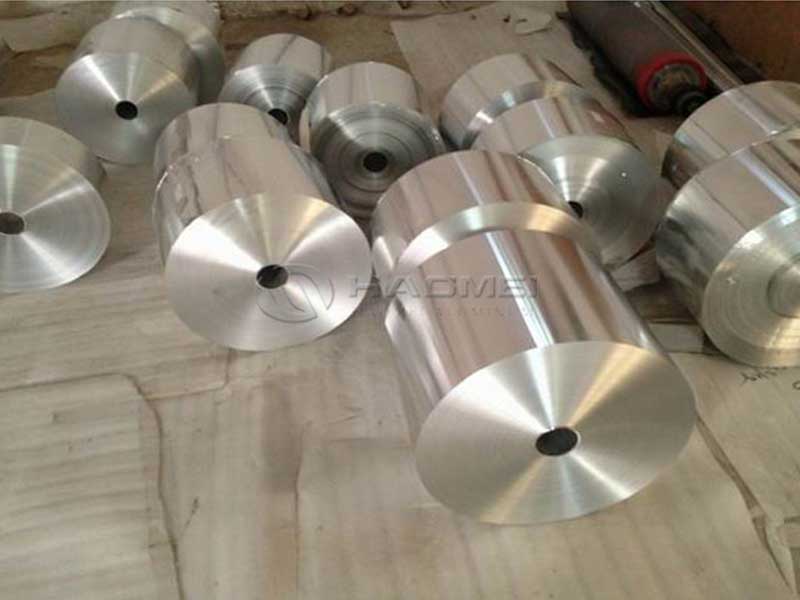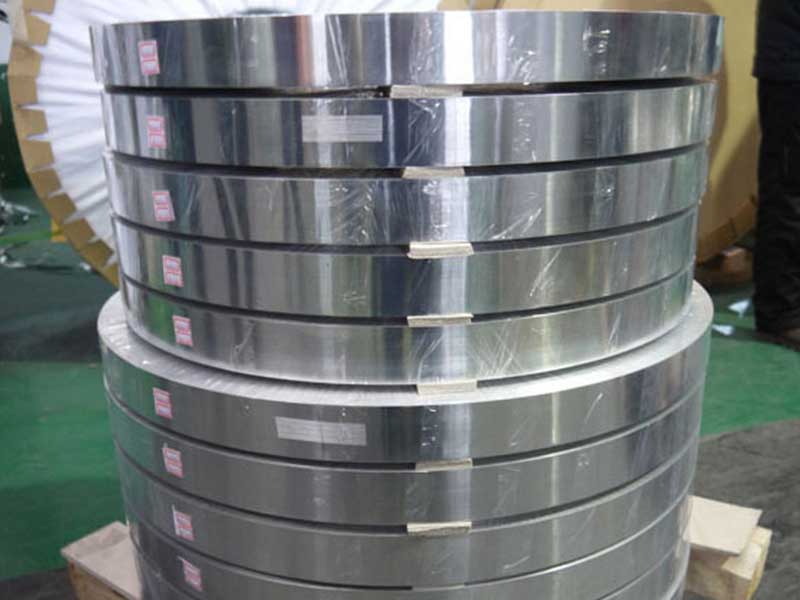
Aluminum strip foil for blister pills foil packaging
In pharmaceutical packaging, the humble blister is often treated as a plastic formality-transparent cavities holding tablets like beads in a tray. Yet the true "guardian layer" is frequently the aluminum strip foil lidding, the part that must make a promise: each dose stays chemically stable, mechanically intact, and traceable from line to patient. Viewed from this angle, aluminum strip foil is less a commodity and more a controlled, engineered barrier system whose success depends on alloy choice, temper, microstructure, coating chemistry, and heat-seal behavior.
What makes blister lidding foil different from ordinary foil
Blister pills foil packaging typically uses aluminum strip foil as a lidding stock that is printed, coated, and heat-sealed to a formed web such as PVC, PVDC-coated PVC, PP, PET, or cold-form Alu-Alu structures. The foil must be thin enough for push-through opening, yet strong enough to survive printing, lamination, die-cutting, transport vibration, and the sudden stress concentration created when a patient presses a tablet through.
The distinctive feature of aluminum here is its "dense lattice barrier." Unlike polymer films where permeation is managed through thickness and chemistry, aluminum provides near-zero transmission paths for oxygen, moisture, and light when the foil is pinhole-free and properly handled. That "when" matters: blister foil performance is often limited not by intrinsic material permeability, but by defects, coating discontinuities, or seal imperfections introduced during conversion.
Typical blister lidding foil thickness ranges from about 20–30 μm for push-through applications, often around 25 μm as a widely used balance point. For child-resistant or higher robustness designs, slightly thicker structures may be selected, but machinability and consumer opening force then become part of the engineering trade-off.
Alloy and temper: choosing a foil that behaves predictably on the line
From an aluminum alloy perspective, blister lidding foil most commonly uses AA 8011 or AA 8021, selected not for high strength like aerospace alloys, but for consistent foil rolling behavior, good elongation, controlled inclusions, and low pinhole tendency at thin gauges.
AA 8011 is a workhorse option with very good formability and cost efficiency. AA 8021 is often chosen when converters want higher cleanliness and improved barrier reliability at low thickness, particularly where pinhole sensitivity is critical. Both are typically supplied in an "O" temper (fully annealed) for blister lidding. The annealed temper provides the ductility needed for embossing, printing, and especially the push-through event, where foil must tear in a controlled manner rather than crack prematurely.
Typical mechanical targets used in industry for blister lidding foil include tensile strength roughly in the range of 60–110 MPa and elongation commonly above 3–4%, depending on thickness, temper, and supplier process controls. These are not merely lab numbers; they correlate with web handling stability and the "feel" of push-through.
Implementation standards and regulatory expectations are equally important. Foil for pharmaceutical packaging is commonly produced under quality systems aligned with ISO 9001 and, where applicable to pharma supply chains, GMP-oriented controls. Many customers also expect compliance with relevant packaging material regulations such as EU food-contact frameworks when the coated side may have indirect contact considerations, and with internal pharmacopeia-aligned extractables/odor requirements. While blister lidding foil is not a drug product, it is treated as a critical component where traceability, cleanliness, and controlled change management are mandatory.
The real barrier system is foil plus coatings, not foil alone
A distinctive way to think about blister lidding is as a "three-interface engineering" problem: ink-to-foil adhesion, primer-to-ink anchoring, and heat-seal lacquer-to-forming-web bonding. The aluminum substrate is only one layer in a composite behavior. Failures tend to occur at interfaces.
The outer side is typically printed and overcoated for abrasion resistance and legibility. The inner side carries a heat-seal lacquer designed to bond to the blister forming film under defined temperature, dwell time, and pressure. Seal integrity is the difference between an inert dose and a compromised one.
Common lacquer chemistries include vinyl-based and acrylic systems, tailored for the target forming web:
- PVC and PVDC-coated PVC often use lacquers that provide strong adhesion at moderate sealing temperatures and tolerate the plasticizer content of PVC.
- PP and PET typically require different seal layers due to their higher sealing temperatures and different surface energies.
- For high-barrier cold-form structures, lidding may be optimized for consistent peel/push-through behavior and robust sealing across broader parameter windows.
Seal strength targets vary by design and market expectations, but practical blister packaging often aims for seals that resist leakage and delamination during distribution while still allowing controlled push-through opening. Too strong a seal can cause tablet damage; too weak can lead to channel leaks and moisture ingress. This is why converters characterize seal strength across a "heat-seal window," not at a single temperature.
Pinholes, cleanliness, and why metallurgy matters at microns
At 25 μm thickness, blister foil is unforgiving. A microscopic hard inclusion, rolling debris, or surface scratch can become a pinhole or a stress riser. That's why melt cleanliness, filtration, degassing, and rolling oil control are not background details-they are functional requirements.
Surface condition also matters: blister foil typically requires low surface roughness for consistent coating weight and uniform sealing, yet enough "tooth" (with primer systems) for print anchorage. Many suppliers specify surface energy and cleanliness requirements indirectly through dyne level or wettability tests after coating/priming.
Typical chemical composition reference (wt.%)
Actual supplier limits vary by standard and customer specification. The table below gives widely used typical ranges for common blister foil alloys:
| Alloy | Si (%) | Fe (%) | Cu (%) | Mn (%) | Mg (%) | Zn (%) | Ti (%) | Al |
|---|---|---|---|---|---|---|---|---|
| AA 8011 | 0.50–0.90 | 0.60–1.00 | ≤0.10 | ≤0.20 | ≤0.05 | ≤0.10 | ≤0.08 | Balance |
| AA 8021 | ≤0.15 | 1.20–1.60 | ≤0.05 | ≤0.20 | ≤0.05 | ≤0.10 | ≤0.08 | Balance |
These limits are chosen to balance rollability, strength/ductility in foil gauges, and defect control. For blister lidding, the "chemical" discussion is less about corrosion resistance and more about how composition influences intermetallic population, which then influences pinhole rate and tear behavior.
Applications: beyond "standard blister" into design intent
Aluminum strip foil for blister pills foil packaging appears in a wide range of formats, but the application logic can be grouped by the problem it solves.
For moisture- or oxygen-sensitive drugs, the foil becomes the decisive barrier layer. Even when the formed web is only moderate barrier (like PVC), a high-integrity lidding foil with strong seals can significantly extend shelf life by limiting ingress paths to the cavity edges and seal perimeter.
For light-sensitive formulations, aluminum's opacity is a built-in photoprotection system. This is not just a convenience; it can reduce reliance on opaque pigments in forming films, simplifying recyclability decisions for some designs.
For high-speed packaging lines, foil must run cleanly. Stable coefficient of friction, low dusting from coatings, consistent gauge, and controlled curl are critical. In practice, many "foil problems" on blister lines are actually curl/flatness issues that lead to misregistration, poor sealing pressure distribution, or intermittent wrinkling that becomes a leak path.
For anti-counterfeiting and traceability, aluminum foil is a high-quality printing substrate. It supports fine text, QR codes, and covert features, while also providing tamper evidence: any cavity pushed through leaves irreversible deformation.
A distinctive viewpoint: blister foil as a calibrated fracture device
That means the "best" blister lidding foil is not the strongest foil. It is the foil whose alloy, temper, and coating stack produce repeatable fracture mechanics at the point of use while maintaining barrier and seal integrity for months or years beforehand. The manufacturing line wants toughness and stability; the patient wants predictable opening; the drug wants isolation. Aluminum strip foil is the rare packaging material that has to satisfy all three by being both durable and intentionally breakable-an engineered contradiction that, when done well, quietly protects billions of doses.
https://www.alusheets.com/a/aluminum-strip-foil-for-blister-pills-foil-packaging.html