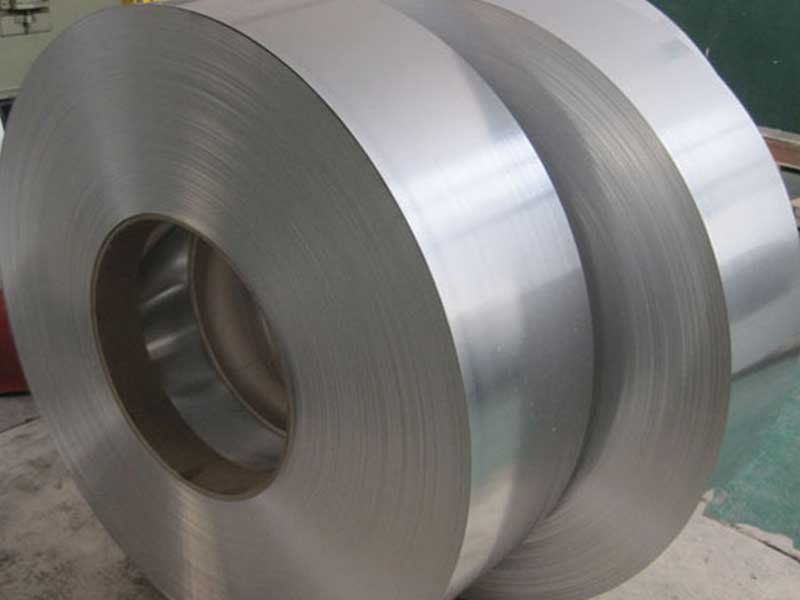
Soundproof Fireproof Designs Aluminum Strip Metal
Soundproof Fireproof Designs with Aluminum Strip Metal: A System Engineer’s Perspective
Designing for silence and safety is no longer a niche requirement. Modern buildings, vehicles, and industrial systems must be acoustically controlled and fire-resilient at the same time. From a system engineer’s viewpoint, soundproof fireproof aluminum strip metal is not just a material; it is a controllable variable in a broader performance equation.
Why Aluminum Strip for Soundproof and Fireproof Design?
Steel and concrete may seem like obvious fire protection choices, while multilayer polymer composites often dominate acoustic design. Aluminum strip metal occupies an unusual and highly effective middle ground when you approach it as an engineered system element.
From an engineering perspective, aluminum strip offers:
- Lightweight stiffness for panel assemblies that need both sound insulation and structural integrity
- Non-combustible, self-protecting oxide surface for fire resistance
- Excellent formability in strip form for continuous production lines (coils, roll forming, stamping, bending)
- High reflectivity for radiant heat management and acoustic wave reflections when engineered correctly
- Predictable alloy and temper behavior according to global standards, crucial for repeatable performance
The true value emerges when aluminum strip is combined with core materials, damping layers, and coatings into a multi-layer or sandwich system. In that context, the strip becomes the controlling skin that defines fire behavior, mechanical response, and boundary conditions for sound transmission.
Viewing Aluminum Strip as a Function, Not Just a Material
When designing soundproof fireproof systems, it is useful to think of aluminum strip in terms of four functional roles:
- Structural shell
- Thermal and fire barrier
- Acoustic impedance layer
- Corrosion and durability shield
Each role translates directly into alloy, temper, thickness, and surface treatment choices. The engineer’s task is to balance these roles rather than maximize just one.
For example:
- A wall panel in a concert hall might emphasize acoustic damping and dimensional stability
- A door module in a data center might prioritize fire resistance and smoke sealing
- A battery enclosure in an EV might be tuned for fire containment, thermal shielding, and vibration control
The material decisions behind those roles are where technical details and standards become crucial.
Soundproof Design: How Aluminum Strip Behaves in Acoustic Systems
On its own, aluminum is not a soft, absorptive material; it is reflective and relatively stiff. This seems counterintuitive for soundproofing—until you view it in the context of system-level acoustic design.
acoustic functions of aluminum strip:
- Acts as a mass layer to reduce sound transmission, especially in mid to high frequencies
- Provides stiff boundaries that, when paired with damping cores, shift resonance frequencies away from sensitive bands
- Serves as a constraining layer in constrained-layer damping structures, where a viscoelastic core is sandwiched between two metal skins
In practice:
- Thicker strip increases surface density, improving transmission loss but also adding weight
- Softer tempers (like O or H14) admit minor plastic deformation, which can slightly alter modal behavior and reduce ringing in specific configurations
- Specific alloys can be selected to achieve targeted Young’s modulus–density combinations that match the acoustic design model
This is why in many acoustic doors, partitions, and machinery enclosures, you will find an aluminum strip outer shell paired with mineral wool, rock wool, phenolic foam, or viscoelastic damping cores. The aluminum strip gives you predictable acoustic boundary conditions and durable fire performance, while the core absorbs and dissipates sound energy.
Fireproof Design: Aluminum as a Controlled Fire Interface
Unlike polymers, aluminum does not burn. Instead, it forms a stable aluminum oxide (Al₂O₃) layer when exposed to elevated temperatures, which acts as a self-healing, protective surface.
From a fire-engineering perspective:
- Aluminum is classified as non-combustible and does not contribute fuel to a fire
- When adequately alloyed and dimensioned, it can maintain structural contribution up to a defined temperature range
- Its high reflectivity helps manage radiant heat flux, a subtle but important feature in fire-protective cladding and shields
However, designers must consider:
- Aluminum’s mechanical strength drops as temperature rises; fire resistance is achieved through a system (insulation, cavity design, supports), not the metal alone
- Correct alloy choice can improve softening temperature and creep resistance under fire conditions
- Fire test performance must be proven against standards like EN 13501, ASTM E119, UL 10C, or similar, depending on the end-use
Well-designed aluminum strip systems are often used as outer skins for A1 or A2 fire-rated constructions when combined with non-combustible cores.
Typical Alloys and Tempers for Soundproof Fireproof Aluminum Strips
From a system engineer’s angle, different alloy families act like different “behavior profiles.” For soundproof fireproof strip products, several alloy groups are especially important:
1xxx series (pure aluminum, such as 1050, 1060, 1100)
Excellent corrosion resistance and formability. Used where extreme workability is needed and high strength is not critical; often in acoustic cladding or inner liners.3xxx series (e.g., 3003, 3004, 3105)
Manganese-alloyed, better strength than pure aluminum with good corrosion resistance. Widely used in building panels, acoustic baffles, and fire-safe interior claddings.5xxx series (e.g., 5005, 5052, 5754)
Magnesium-alloyed, with significantly improved strength and good weldability. Excellent for load-bearing acoustic doors, fire-rated enclosures, and structural panels where mechanical performance under thermal stress matters.6xxx series (e.g., 6061, 6063) in strip or narrow coil
Al–Mg–Si alloys that are heat-treatable. Used when a higher strength-to-weight ratio is required, often in system components where machining or precision forming is needed.
Temper Choices: Controlling Behavior under Vibration and Heat
Temper describes the mechanical processing state of the alloy and is as important as the alloy itself. In soundproof fireproof aluminum strip designs, temper is a tuning mechanism.
Common temper options for strip include:
O (annealed)
Very soft, maximum formability. Useful in deeply formed elements, curved acoustic baffles, and complex-shaped fire barriers where folding and shaping are intensive. Some designers exploit its slightly lower stiffness to reduce ringing.H12 / H14 / H16 / H18 (strain-hardened)
Different levels of cold work. Higher H numbers indicate higher strength and hardness. H14 and H16 are popular for architectural strips where good stiffness is needed without making forming difficult.H24 / H26 (strain-hardened and partially annealed)
Balanced strength and formability, often chosen for façade panels, enclosure skins, and partition strips that must maintain integrity in fire and under acoustic loads.T4 / T6 (for 6xxx series)
Solution heat treated and naturally aged (T4) or artificially aged (T6). Provides higher strength for mechanically demanding components, but the design must address the strength loss at elevated temperatures.
Choosing a temper is essentially choosing how the material will respond to stress, vibration, and temperature throughout its service life.
Dimensional and Mechanical Parameters for Aluminum Strip
In soundproof fireproof applications, optimizing performance often means carefully controlling specific parameters rather than chasing maximum values.
Relevant parameter ranges for typical architectural and industrial strips:
- Thickness range: from about 0.15 mm for lightweight acoustic linings up to around 3.0 mm for structural doors and panels
- Width range: from narrow 10–50 mm strips for gaskets, edge bands, and joints up to 600–1600 mm coils for large panels or continuous cladding systems
- Tensile strength: roughly 60–260 MPa, depending on alloy and temper; chosen according to load and fire deformation criteria
- Yield strength: often 20–230 MPa, for deformation limits under acoustic, wind, or blast loads
- Elongation: typically 5–30 %, important for forming operations and crash / impact resilience
- Surface roughness (Ra): controlled for coating adhesion and acoustic interface behavior
- Flatness and camber control: critical in long strip components where acoustic leakage and fire gaps must be minimized
These values are always refined with reference to standards such as EN 485, EN 573, ASTM B209, and OEM specifications.
Implementation Standards and Compliance Framework
For products intended for soundproof and fireproof systems, compliance is not optional; it is the backbone of market access and liability control. From a system integration viewpoint, aluminum strip must align with three main groups of standards:
Material and dimensional standards:
- EN 573 series for chemical composition of wrought aluminum alloys
- EN 485 and EN 515 for mechanical properties and tempers of wrought products
- ASTM B209 for aluminum and aluminum-alloy sheet and plate
- ISO 6361 for wrought aluminum and aluminum-alloy sheets, strips, and plates
Fire and safety standards (system-level):
- EN 13501 for fire classification of construction products and building elements
- EN 1364 / EN 1634 for fire resistance of non-loadbearing elements and doors
- ASTM E84 (surface burning), ASTM E119 (fire tests of building construction)
- UL 10B / UL 10C for fire tests of door assemblies
Acoustic and building performance standards:
- ISO 10140 for laboratory measurement of sound insulation of building elements
- ISO 717 for rating of sound insulation (Rw values)
- EN 14195 and related standards for metal framing and lining systems
Aluminum strip is usually certified at the material level, while composite panels, doors, or partitions are tested at the system level. A well-designed strip product is therefore standards-ready, with clear traceability of chemistry, temper, and mechanical data.
Chemical Properties Table: Typical Alloys for Soundproof Fireproof Strips
The following table summarizes typical chemical compositions for several commonly used alloys in soundproof fireproof aluminum strip applications. Values are approximate and expressed in weight percent (wt. %) with aluminum as the balance.
| Alloy | Si max | Fe max | Cu max | Mn | Mg | Cr max | Zn max | Ti max | Others (each / total) | Aluminum (Al) |
|---|---|---|---|---|---|---|---|---|---|---|
| 1050 | 0.25 | 0.40 | 0.05 | 0.05 | 0.05 | 0.05 | 0.05 | 0.03 | 0.03 / 0.10 | ≥ 99.50 |
| 1060 | 0.25 | 0.35 | 0.05 | 0.03 | 0.03 | 0.03 | 0.05 | 0.03 | 0.03 / 0.10 | ≥ 99.60 |
| 1100 | 0.95 | 0.95 | 0.05–0.20 | 0.05–0.20 | 0.05 | — | 0.10 | 0.05 | 0.05 / 0.15 | Remainder |
| 3003 | 0.60 | 0.70 | 0.05–0.20 | 1.0–1.5 | 0.05 | 0.10 | 0.10 | 0.05 | 0.05 / 0.15 | Remainder |
| 3004 | 0.30 | 0.70 | 0.25 | 1.0–1.5 | 0.8–1.3 | 0.05 | 0.25 | 0.05 | 0.05 / 0.15 | Remainder |
| 3105 | 0.60 | 0.70 | 0.30 | 0.30–0.8 | 0.20–0.8 | 0.05 | 0.40 | 0.10 | 0.05 / 0.15 | Remainder |
| 5005 | 0.30 | 0.70 | 0.20 | 0.20 | 0.50–1.1 | 0.10 | 0.25 | 0.05 | 0.05 / 0.15 | Remainder |
| 5052 | 0.25 | 0.40 | 0.10 | 0.10 | 2.2–2.8 | 0.15–0.35 | 0.10 | 0.03 | 0.03 / 0.15 | Remainder |
| 5754 | 0.40 | 0.40 | 0.40 | 0.40–1.0 | 2.6–3.6 | 0.30 | 0.20 | 0.15 | 0.05 / 0.15 | Remainder |
These alloy chemistries allow engineers to adjust:
- Mechanical stiffness and strength for vibration and load-bearing
- Corrosion resistance in humid or polluted environments
- Weldability for sealed joints in fireproof acoustic doors and panels
- Surface treatment compatibility for anodizing, painting, or laminate bonding
Integrating Aluminum Strip into Soundproof Fireproof Systems
From the unique standpoint of system architecture, aluminum strip’s impact is magnified when you look beyond single panels and consider entire assemblies.
Examples of integration strategies:
In a fire-rated acoustic door, aluminum strip may be used as:
– The external skin bonded to mineral wool or composite cores
– Edge bands and frame profiles controlling smoke leakage and mechanical stability
– Concealed reinforcement strips around hardware cutouts to maintain integrity in fire testsIn a machine enclosure or acoustic hood, aluminum strip could serve as:
– Outer cladding with perforations in selected regions, carefully calculated for both acoustic absorption and venting
– Cable and pipe penetration collars, where high-temperature resistance and ease of sealing are essentialIn façade and curtain wall systems, it often appears as:
– Narrow strip for joint covers, spandrel panel reinforcement, and firestop interfaces
– Coil-based laminated panels with non-combustible cores that provide both acoustic insulation and A2 fire classification when tested as a system
Successful implementation is about detailing: consistent strip thickness, precise tolerances, compatible coatings, and documented material data all tied to performance tests.
Surface Treatments and Coatings: Acoustic and Fire Synergy
Surface treatments on aluminum strip are frequently treated as decorative or corrosion-protection steps, but they also influence acoustic and fire performance.
Common treatments include:
Anodizing
Thickens the natural oxide layer, improving corrosion resistance and surface hardness without adding combustible components. Suitable where metallic appearance is desired and fire safety is critical.PVDF or polyester coil coatings
Organic layers engineered to meet fire performance standards. High-quality, fire-rated coatings contribute minimally to flame spread and smoke while providing UV durability. Critical for exterior acoustic panels that double as fire barriers.Ceramic or inorganic fire-resistant coatings
Applied where enhanced thermal barrier behavior is required; these can provide additional resistance to surface flame attack and heat flux.Adhesive and laminate systems
For bonded acoustic layers, adhesive selection must be compatible with the fire rating target. Low-smoke, halogen-free, and high-temperature-resistant adhesives ensure the integrity of multilayer assemblies.
The system engineer’s task is to ensure that every layer—metal, coating, adhesive, core—supports both acoustic and fire requirements concurrently.
Why a System Engineer Prefers Aluminum Strip for Dual-Performance Designs
From this vantage point, soundproof fireproof aluminum strip metal is attractive not just because it meets a single property target, but because it is:
- Predictable: standardized alloys, tempers, and tolerances produce repeatable performance in models and in real tests
- Configurable: thickness, temper, and width are easily adapted to different acoustic, mechanical, and fire profiles
- Compatible: works with a wide range of core materials, sealants, coatings, and fastening systems
- Scalable: coil-based supply chains support high-volume, continuous manufacturing for panels, doors, cladding, and modular systems
When you look at it through the lens of system-level performance—rather than as a simple metal sheet—aluminum strip becomes a powerful design variable for engineers tasked with delivering quiet, safe, and compliant spaces and products.
https://www.alusheets.com/a/soundproof-fireproof-designs-aluminum-strip-metal.html