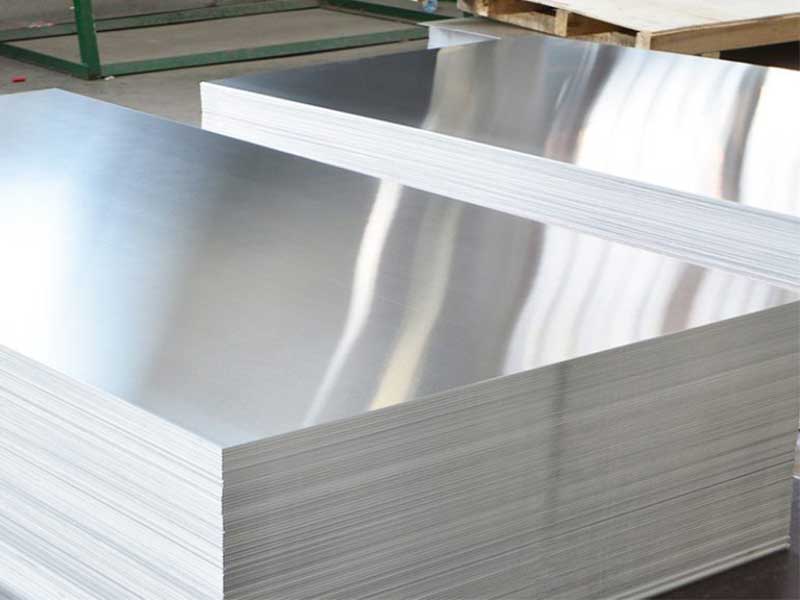
Aluminum sheet 1050 1060 1100 3003
Aluminum Sheet 1050, 1060, 1100, 3003: How To Choose The Right Grade At A Glance
When people talk about “aluminum sheet,” they often mean very different things. A pure, highly conductive sheet for a busbar? A rust‑resistant skin for an air duct? A deep‑drawn lamp housing?
Hidden behind those everyday applications are a few quietly hard‑working alloys: 1050, 1060, 1100 and 3003. They all sit in the 1xxx and 3xxx series, which means they are non‑heat‑treatable, corrosion‑resistant, and easy to form. But each one brings a slightly different personality to the job.
Below is a practical, customer‑focused view of these four aluminum sheet grades: what they are, how they differ, and how to read the technical language (temper, standards, chemical composition) in a way that connects directly to real‑world use.
A Simple Way To Think About These Alloys
Instead of memorizing numbers, imagine a spectrum:
- At one end is ultra‑pure aluminum: very soft, very ductile, extremely conductive.
- At the other end is slightly alloyed aluminum: still easy to form, but stronger and more stable.
1050 and 1060 sit near the “pure” end, 1100 nudges slightly toward higher strength with a touch of copper, and 3003 moves further into the “workhorse” category with manganese alloying.
That’s the core idea. Everything else—temper, standards, chemical composition—simply fine‑tunes where each sheet fits in your project.
Alloy 1050 Aluminum Sheet: Purity As A Feature
1050 aluminum contains about 99.5% aluminum. It is often chosen when conductivity and formability are more important than mechanical strength.
characteristics:
- Very high electrical and thermal conductivity
- Excellent ductility, ideal for deep drawing and spinning
- Outstanding corrosion resistance in most normal atmospheres
- Very easy to weld and braze
Typical uses:
- Electrical busbars and conductors
- Heat sinks and heat exchanger components
- Decorative panels and nameplates
- Chemical equipment where aggressive strength is not required
Because of its purity, 1050 is not a “high strength” alloy. In applications where the sheet is supported or where the load is low, it performs extremely well and is cost‑effective.
Alloy 1060 Aluminum Sheet: The Practical Pure Grade
1060 aluminum is similar to 1050, but with about 99.6% aluminum. In many markets, 1050 and 1060 are used interchangeably where ultra‑high purity plus affordability is desirable.
characteristics:
- Slightly higher purity than 1050, with comparable performance
- Excellent formability, easy bending and deep drawing
- High reflectivity, useful in lighting and decorative applications
- Stable corrosion resistance, especially in indoor or mildly corrosive environments
Typical uses:
- Lighting reflectors and lamp bases
- Power distribution equipment and busbars
- Foil stock and thin sheet for insulation products
- Kitchenware and food handling equipment
If you are choosing between 1050 and 1060 for general sheet applications, the decision often comes down to local standard availability, stock sizes, and specific conductivity requirements.
Alloy 1100 Aluminum Sheet: A Little Copper, A Little More Strength
1100 aluminum maintains a high purity level (approximately 99.0% aluminum) but introduces a small amount of copper. That subtle change lifts its strength slightly while retaining excellent workability and corrosion resistance.
characteristics:
- Better strength than 1050/1060, while still very formable
- Very good weldability and brazeability
- Excellent corrosion resistance, also suitable for chemical and food environments when properly finished
- Good appearance and anodizing response for decorative parts
Typical uses:
- Storage tanks, pipe insulation cladding
- Building and architectural decoration panels
- Chemical and food processing equipment
- Nameplates, signage, shallow drawn parts
1100 is often the choice when a designer wants “commercially pure” aluminum with just enough strength margin to feel safer in slightly more demanding service.
Alloy 3003 Aluminum Sheet: The Everyday Workhorse
3003 aluminum belongs to the 3xxx series and is alloyed mainly with manganese (about 1.0–1.5%). That small addition has a big effect: higher strength, good fatigue resistance, and better performance in many formed and loaded parts, without sacrificing easy fabrication.
characteristics:
- Significantly higher strength than 1050/1060/1100
- Excellent formability, especially in softer tempers like O and H14
- Very good corrosion resistance, particularly to atmospheric and mild chemical exposure
- Better resistance to impact and vibration compared with pure alloys
Typical uses:
- Air conditioning and refrigeration fins and panels
- Roofing, cladding, guttering, and building envelopes
- Fuel tanks, oil tanks, and liquid containers
- Cookware, pressure vessels (within appropriate design limits)
- Deep‑drawn or spun parts needing both formability and strength
3003 is often the “default” lightweight structural sheet for non‑heat‑treatable applications where welding, forming, and durability all matter.
Temper: O, H12, H14, H18 And More
The same alloy can behave very differently depending on temper. Temper describes the amount of cold work (hardening) or heat treatment the sheet has undergone. For non‑heat‑treatable alloys like 1050, 1060, 1100, 3003, cold work is the main tool for tuning properties.
Common tempers for these sheets:
O (Annealed):
- Softest, maximum ductility
- Best for deep drawing, spinning, complex bending
H12 / H14 (Quarter‑hard / Half‑hard, naming may vary by standard):
- Balanced strength and formability
- Frequently used for general stamping, moderate drawing, and panels
H16 / H18 (Three‑quarter‑hard / Full‑hard):
- Higher strength and hardness
- Lower elongation, suitable for flat panels where minimal forming is needed
From a buyer’s perspective, temper is the fine‑tuning knob. If your part has sharp bends or deep draws, choose a softer temper. If the part stays flat and must carry a bit more load, move toward harder tempers.
Implementation Standards You’ll Often See
In the aluminum sheet market, material is usually supplied to well‑known standards to ensure consistent properties and traceability. Depending on region, you may encounter:
- ASTM B209: Standard Specification for Aluminum and Aluminum‑Alloy Sheet and Plate
- EN 485 / EN 573: European standards covering chemical composition and mechanical properties
- GB/T 3880 (China): General standard for wrought aluminum and aluminum alloy plates, sheets and strips
- JIS H4000 series (Japan): Aluminum and aluminum alloy sheet and strip standards
These standards define:
- Permitted chemical composition ranges
- Mechanical property requirements for each temper
- Dimensional tolerances (thickness, width, length, flatness)
- Testing and inspection methods
When specifying or purchasing 1050, 1060, 1100, or 3003 sheet, referencing the relevant standard plus alloy and temper (for example, “3003 H14, ASTM B209”) makes your requirements clear and reduces the risk of mis between supplier and user.
Typical Chemical Composition (Reference Values)
The following table gives typical composition ranges for these alloys. Exact values can vary slightly by standard and producer, but the ranges illustrate their personalities.
| Alloy | Si (%) | Fe (%) | Cu (%) | Mn (%) | Mg (%) | Zn (%) | Others each (%) | Others total (%) | Al (%) |
|---|---|---|---|---|---|---|---|---|---|
| 1050 | ≤0.25 | ≤0.40 | ≤0.05 | ≤0.05 | ≤0.05 | ≤0.05 | ≤0.03 | ≤0.10 | ≥99.50 |
| 1060 | ≤0.25 | ≤0.35 | ≤0.05 | ≤0.03 | ≤0.03 | ≤0.05 | ≤0.03 | ≤0.10 | ≥99.60 |
| 1100 | ≤0.95* | ≤0.95* | 0.05–0.20 | ≤0.05 | — | ≤0.10 | ≤0.05 | ≤0.15 | ≥99.00 |
| 3003 | ≤0.60 | ≤0.70 | ≤0.05 | 1.0–1.5 | ≤0.05 | ≤0.10 | ≤0.05 | ≤0.15 | Remainder Al |
*In 1100, silicon and iron are often given as a combined limit (Si + Fe).
From a design standpoint:
- Higher aluminum content in 1050/1060 drives conductivity and softness.
- Copper in 1100 slightly increases strength and reduces some corrosion resistance in very aggressive media, but is generally benign in normal use.
- Manganese in 3003 significantly increases strength and improves general performance without sacrificing formability.
Matching Alloy To Application: A Quick Practical Guide
If you think in terms of function rather than numbers, selection becomes straightforward:
Need maximum conductivity and easy forming with low load?
- Look to 1050 or 1060 in soft or half‑hard tempers.
Need a bit more strength but still want a “pure aluminum” feel?
- Consider 1100, especially for tanks, cladding, or decorative panels.
Need a robust, everyday sheet that forms well and carries more stress?
- Choose 3003, particularly in H14 or similar tempers.
Beyond this, your supplier can assist in checking exact mechanical properties, thickness availability, and surface finish to match your process—whether you are deep drawing cookware, stamping enclosure covers, or fabricating HVAC systems.
https://www.alusheets.com/a/aluminum-sheet-1050-1060-1100-3003.html