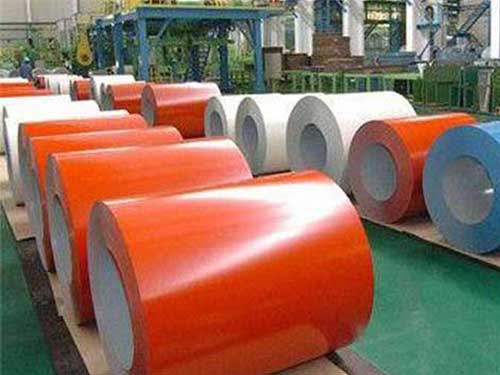
Pvdf color coated aluminum coil 1050
PVDF color coated aluminum coil 1050 is one of those materials that feels deceptively simple: an ultra-clean aluminum base, wrapped in a weather-defying fluoropolymer skin, delivered in coil form for fast manufacturing. Yet the more you look at it, the more it resembles a "quiet workhorse" engineered for visual consistency, corrosion resistance, and reliable forming in real-world production lines. If you need a bright, stable façade color, a hygienic interior panel, or a reflective trim that must stay good-looking for years, PVDF-coated 1050 coil is often the practical, low-risk choice.
Why alloy 1050 makes PVDF coating feel more "honest"
Aluminum 1050 is a commercially pure aluminum alloy, typically around 99.5% Al. Compared with stronger 3xxx or 5xxx alloys, it's not chosen for structural strength. It's chosen for what it does extremely well: excellent corrosion resistance, high ductility, and very consistent surface behavior. That last point matters for coating.
PVDF (polyvinylidene fluoride) coatings are prized for UV durability and color retention. But even the best paint system can only look as good as the substrate beneath it. The cleaner chemistry of 1050 helps reduce surprises like uneven surface reactions, pinholing sensitivity, or inconsistent gloss across batches. In other words, if your priority is a stable appearance and smooth coil-coating performance, 1050 is often the calm, predictable foundation.
What "PVDF color coated" really means in daily use
PVDF coil coating is not just "paint." It's a carefully built film system, normally including pretreatment, primer, and a PVDF topcoat. The PVDF resin structure resists photodegradation better than common polyester coatings, so it's widely used for exterior architectural applications. When people say "it holds color," what they mean is the coating is less prone to chalking, fading, and gloss loss under long-term sunlight, heat, and moisture cycles.
Common application scenes include building curtain wall panels, fascia, roofing accessories, aluminum composite panel skins, signage, cladding trims, and other components where aesthetics and weatherability are central.
Typical parameters customers care about
PVDF color coated aluminum coil 1050 is typically supplied as a prepainted coil for roll forming, stamping, bending, and panel fabrication. While exact offerings vary by manufacturer, the following ranges are common in market supply and project specifications:
- Base alloy: AA1050 / EN AW-1050A
- Temper options: O (annealed), H14, H16, H18, sometimes H24 depending on thickness and forming needs
- Thickness range: about 0.20–2.00 mm commonly used for coated coil
- Width range: typically 20–1600 mm (custom slit widths available)
- Coating system: PVDF topcoat with primer, usually 2-coat or 3-coat systems
- Coating thickness: commonly 20–25 μm PVDF topcoat on the exposed side, with total paint system often around 25–35 μm; back coat typically 5–15 μm depending on use
- Gloss: matte, satin, or high gloss depending on resin and pigment package
- Color: RAL, Pantone, metallics, custom matching; special mica/metallic pigments are available with process controls
- Protective film: optional PE film for fabrication protection
A practical purchasing mindset is to start from the forming process and exposure environment. For aggressive forming or deep bends, softer tempers like O or H14 reduce cracking risk. For flatter panels requiring better rigidity, H16 or H18 can be appropriate, as long as bend radii and tooling are aligned with the temper.
Implementation standards and common specification references
PVDF coated coil is typically produced via continuous coil coating lines. Project specifications may reference a combination of alloy standards and coating/performance standards. Commonly referenced standards include:
- Aluminum alloy and temper: ASTM B209 (Aluminum and Aluminum-Alloy Sheet and Plate), EN 485 (Aluminum and aluminum alloys - sheet, strip and plate), JIS H4000 series (depending on region)
- Coating performance tests and paint film evaluation: ASTM D3359 (adhesion), ASTM D2794 (impact), ASTM D523 (gloss), ASTM D3363 (pencil hardness), ASTM B117 (salt spray), ASTM G154/G155 (accelerated weathering)
- Architectural PVDF performance requirements are often aligned with AAMA 2605 guidelines when specified for building exteriors, depending on the coating supplier's certification and system design.
If your application is truly exterior architectural cladding with long-life appearance requirements, confirming that the PVDF system meets or aligns with AAMA 2605 performance expectations is a common "shortcut" to confidence.
Alloy tempering and forming considerations
AA1050 is often chosen because it behaves kindly on the shop floor. Still, temper selection changes how it feels in your hands and how it behaves on a press brake:
- O temper emphasizes maximum ductility and best forming; it is forgiving for tight bends and complex shapes
- H14 is a popular balance of formability and stiffness for general panel work
- H16/H18 offer higher hardness and strength but require larger bend radii and more careful tooling to avoid microcracks at the bend, especially with thicker paint systems
For PVDF coated products, a real-world rule is that "paint follows the metal." If the substrate is overstressed at the bend, the coating can craze or crack. Matching temper, thickness, coating thickness, and bend radius is the difference between a clean corner and a rejected batch.
Chemical composition and typical properties of AA1050
Below is a commonly used reference table for AA1050 chemistry. Exact limits can vary slightly by standard (ASTM/EN/JIS), so final values should follow the agreed specification and mill test certificate.
AA1050 Typical Chemical Composition (wt.%)
| Element | Content (wt.%) |
|---|---|
| Al | ≥ 99.50 |
| Si | ≤ 0.25 |
| Fe | ≤ 0.40 |
| Cu | ≤ 0.05 |
| Mn | ≤ 0.05 |
| Mg | ≤ 0.05 |
| Zn | ≤ 0.05 |
| Ti | ≤ 0.03 |
| Others (each) | ≤ 0.03 |
| Others (total) | ≤ 0.10 |
Because 1050 is high-purity, it offers strong corrosion resistance in many environments and excellent electrical/thermal conductivity, though those are not always the main reasons for choosing PVDF-coated coil.
The coating system: where durability is built
A PVDF color coated coil is not defined only by the topcoat resin. The pretreatment and primer are equally responsible for adhesion and corrosion resistance. Typical coil coating lines use chemical conversion pretreatment (often chrome-free systems today), followed by a corrosion-resistant primer and then the PVDF topcoat. Cure temperature and line speed control final film integrity.
For buyers, two small details often make a big difference:
- Pretreatment quality and uniformity influence long-term edge creep and underfilm corrosion resistance
- Primer selection influences adhesion and flexibility, especially for forming-heavy parts
A distinctive way to choose: think like the building, not the buyer
Instead of asking only "Is it PVDF?" it helps to ask "What will this surface experience every day?" Coastal salt, desert UV, industrial pollutants, temperature swings, frequent cleaning, and even the direction of sunlight all shape how the coating ages. PVDF on 1050 is a combination that performs calmly under exposure because the substrate is stable and the topcoat is built to resist UV attack.
What to request when sourcing PVDF color coated 1050 coil
To keep procurement fast and reduce back-and-forth, customers often specify the essentials up front: alloy and temper, base thickness and coil width, color code and gloss, coating structure and dry film thickness (front/back), intended forming process, protective film requirements, and performance tests (adhesion, impact, bend, salt spray, and weathering reference). This approach aligns the coil supplier's paint system and process settings with the way you will actually fabricate and install the product.
PVDF color coated aluminum coil 1050 is, ultimately, a material for people who want the surface to stay quiet: quiet in color shift, quiet in corrosion behavior, and quiet in production. When the substrate is pure and consistent and the coating is engineered for sunlight, you get a coil that doesn't demand attention after installation-which is exactly what most projects want.
https://www.alusheets.com/a/pvdf-color-coated-aluminum-coil-1050.html